.svg&w=384&q=75 "GoalGist logo")
Republic of Ireland's New UEFA Nations League Squad
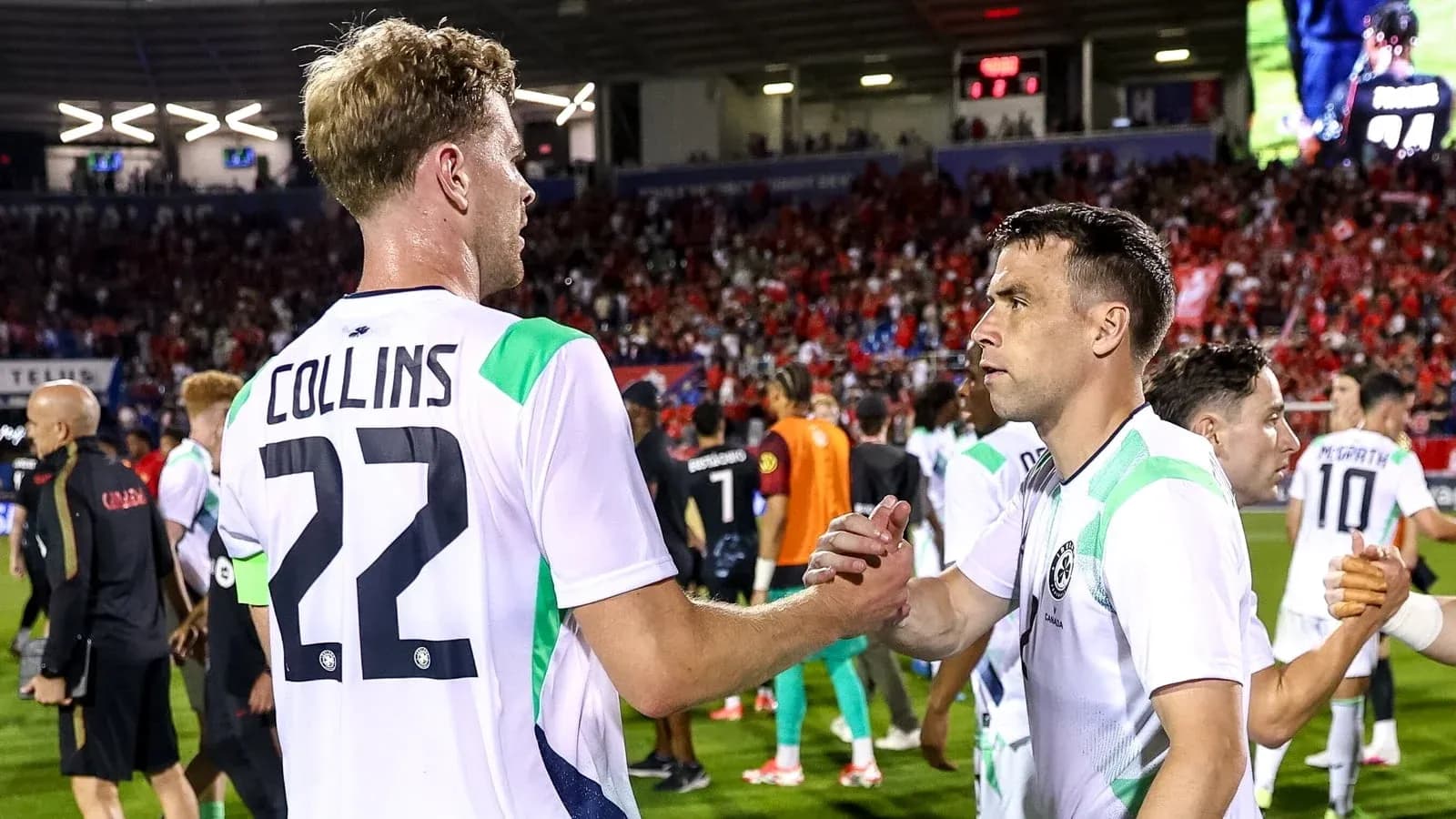
Séamus Coleman has been left out and captain Nathan Collins will not feature either as the Republic of Ireland step into a new UEFA Nations League campaign with a squad that leans hard into youth and opportunity.
Collins, who had been expected to lead the side, limped off in the first half of Brentford's 1-1 draw at Sunderland on 5 September. Brentford manager Keith Andrews later confirmed a calf injury and indicated the centre-back will only return to club duty after the international window, ruling him out of Ireland’s four-game block.
Coleman, meanwhile, is absent for different reasons. The veteran right back, out of contract and currently without a club, misses this window along with long-time international team-mate Robbie Brady, who is also unattached. Two pillars of the last decade are suddenly on the outside looking in.
New faces, new stakes
Their absence opens the door. Liam Kitching, fresh from helping Coventry City to Premier League promotion last season, has been handed his first senior call-up. The left-sided centre-back is back in the Championship on loan at Sheffield United, but now finds himself pitched into international contention at a pivotal moment for the national side.
He is not alone. Joel Bagan, the Cardiff City defender who operates primarily at left back, returns to the frame and could finally make his debut. The former under-21 international was initially named in the May squad for the friendly against Grenada before injury forced him out. This time he arrives as part of the main plan, not the footnote.
Up front, Hibernian striker Owen Elding is another uncapped option. The former Sligo Rovers forward has climbed his way through the club game and now stands on the edge of a first cap with Ireland, adding a fresh edge to a forward line already in flux.
Injury list grows
If the new blood brings energy, the injury list brings headaches.
Evan Ferguson, a key attacking reference point when fit, remains out with an ankle problem. Josh Cullen, so often the metronome in midfield, is sidelined by a knee issue. Both are classified as longer-term absentees and never came into realistic contention for this camp.
Mikey Johnston and Jack Taylor also miss out, dealing with ankle and knee injuries respectively. QPR defender Jimmy Dunne, who picked up a muscular problem earlier this month, is another casualty. He is still listed among the defenders, underlining how stretched the options have become.
The cumulative effect is clear: this is a squad patched together through form, fitness and necessity, one that leans heavily on players who have yet to establish themselves at this level.
Defensive reshuffle
Without Coleman and Collins, the back line takes on a very different shape.
Kitching’s inclusion strengthens the left side of central defence, where he will compete with the likes of John Egan and Liam Scales. Bagan offers natural cover at left back, alongside Ryan Manning, giving Ireland flexibility on that flank as they juggle personnel and systems.
James Abankwah (Udinese) and Jake O'Brien (Everton) add further depth in central areas, while Dara O'Shea (Ipswich Town) and Jimmy Dunne (Queens Park Rangers) round out a defensive unit that blends Championship experience with emerging talent. How quickly that group can settle will go a long way to defining this Nations League window.
Goalkeepers and engine room
In goal, there is stability. Caoimhin Kelleher (Brentford), Max O'Leary (West Bromwich Albion) and Gavin Bazunu (Bolton Wanderers) form a familiar trio. Each has had meaningful club minutes, each will feel they have a genuine case to start.
Midfield is where the balance between graft and guile must be struck. Finn Azaz and Harvey Vale bring creativity from Southampton and Queens Park Rangers respectively, while Conor Coventry (Charlton Athletic), Jayson Molumby (West Bromwich Albion) and Jason Knight (Bristol City) supply legs, pressing and control.
Jamie McGrath, now at Hibernian, adds goal threat from deep, and Bosun Lawal (Stoke City) offers versatility, capable of operating in multiple roles. Without Cullen’s steady presence, the responsibility to dictate tempo spreads across that entire group.
Forward line under the microscope
Up front, there is no Ferguson, but there is no shortage of intrigue.
Owen Elding joins a forward unit that includes Adam Idah (Swansea City), Chiedozie Ogbene (Lincoln City), Troy Parrott (Real Betis), Rocco Vata (Watford), Jack Moylan (Cardiff City) and Tom Cannon (Sheffield United). It is a collection rich in pace and movement, if not yet in international goals.
Parrott arrives from La Liga experience, Idah and Ogbene carry Championship and lower-league sharpness, while Vata and Moylan represent the next wave of attacking talent. Cannon, like Kitching, comes in from Sheffield United with a point to prove.
A demanding schedule
There is little time for this reshaped group to settle. The Boys in Green open away to Kosovo at the Fadil Vokrri Stadium in Pristina next Thursday, a fixture that will test their defensive organisation and composure in hostile surroundings.
Three days later they face Israel in Debrecen, Hungary, in a game that could quickly shape the tone of the campaign. Then comes Austria at Aviva Stadium on Thursday, 1 October, a marquee home date that will demand both performance and result.
The window closes with a 'home' meeting against Israel played behind closed doors at Backa Topola in Serbia on Sunday, 4 October. No crowd, no familiar surroundings, but potentially everything on the line.
This is a squad without its captain, without its long-serving right back, and without several of its most reliable performers. It is also a squad bristling with players chasing first caps, new roles and bigger stages.
In a Nations League group that offers both danger and opportunity, Ireland are about to find out who is ready to lead the next chapter.