.svg&w=384&q=75 "GoalGist logo")
Real Madrid Loses CAS Appeal Over Homophobic Chants
The biggest club in European football has lost an argument it was never likely to win.
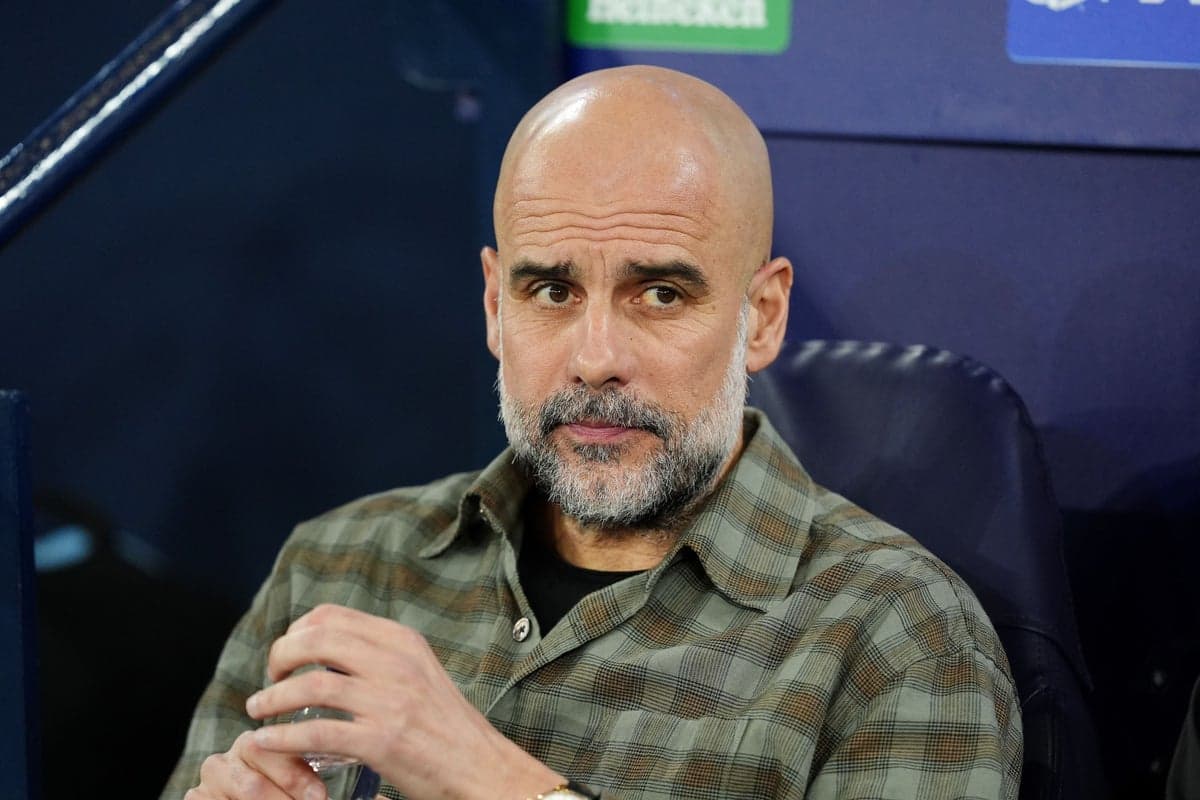
Real Madrid’s appeal against a Uefa sanction for homophobic abuse directed at Pep Guardiola has been thrown out by the Court of Arbitration for Sport (CAS), which upheld both the fine and the disciplinary measures imposed after last season’s Champions League tie against Manchester City.
In a detailed written verdict explaining its April decision, CAS described the chants as “of a severe discriminatory nature … far more serious and damaging than acceptable satire and banter.” That line cuts through any attempt to dress the incident up as terrace humour.
CAS backs Uefa – and its stance on homophobia
Uefa had fined Madrid €30,000 (£25,000) and placed the club on a two‑year probation, under which a small section of the Bernabéu must be closed for one Champions League home match if there is another similar incident.
Madrid challenged both the financial penalty and the probation order. CAS backed Uefa on every key point.
The case stems from the knockout play‑off second leg in February last year, when Madrid beat City 3-1. During the second half, a group of home fans launched into a chant about Guardiola, mocking his physique, accusing him of taking drugs and saying he would be seen in one of Madrid’s most gay‑friendly neighbourhoods.
An expert witness told the court the song carried an insinuation that the former Barcelona coach was “infected with HIV/AIDS”, a link the CAS panel treated as central to its assessment of the severity of the abuse.
The chant was filmed in the stadium, uploaded to social media and later submitted to Uefa by the Fare Network, which works with Fifa and Uefa to monitor discriminatory behaviour at major matches. The footage formed part of the core evidence.
Madrid’s defence dismissed
Madrid’s legal team tried to push the argument into the territory of free expression and football culture. They claimed that “expressions that are humorous, exaggerated or aimed at powerful institutions or public figures” must be read in context, and suggested Uefa could not be sure the offending chant even came from their own fans, hinting that Manchester City supporters might have been responsible.
They also attacked the Fare report, claiming it contained “very serious formal and substantive defects”.
CAS was not persuaded. The panel sided with Uefa’s view that the content and tone of the chanting crossed a clear line into discrimination, regardless of how some supporters might choose to package it.
Uefa’s wider battle
Uefa’s lawyers went well beyond the specifics of one match. In Lausanne last September, they set the incident against the long history of homophobia in football, arguing that it has “cast a long and deeply troubling shadow” over the game.
“For decades,” they said, “the sport has been marred by a culture of machismo, exclusion, prejudice, and hostility towards individuals based on their sexual orientation.” That intolerance, they argued, has shaped “the personal and professional lives of countless players, coaches and fans” and, in some cases, “led to tragic outcomes in the past.”
In that context, Madrid’s appeal was framed by Uefa as not just misguided but symbolic. Their lawyers told CAS that Madrid “should be the first fighting against those chants, instead of hiring high profile lawyers to file an appeal with the CAS.”
They also underlined the scale of the club’s resources. The €30,000 fine, they noted, represented roughly 0.03% of the more than €100m (£85m) Madrid earned in Champions League prize money that season. A slap on the wrist, financially speaking.
Legal battles on and off the pitch
The hearing in Switzerland unfolded against the backdrop of a much bigger power struggle. Madrid and Uefa have spent years locked in legal combat over the failed Super League project, a dispute that has tested the limits of Uefa’s authority and the ambitions of Europe’s biggest clubs.
That separate fight was finally settled three months ago, just as CAS judges were finalising their ruling in the homophobic abuse case. On this front at least, Uefa’s disciplinary framework has been emphatically reinforced.
A message before the next meeting
The timing is not lost on anyone. Madrid hosted City again in the Champions League in March, with the previous abuse case still hanging in the air. Before that tie, club officials reportedly met with fan groups to stress that Guardiola must not be targeted.
It was a quieter, more discreet move than the legal fireworks in Lausanne, but it may prove more important. CAS has drawn the line. The question now is whether the stands, and the clubs who fill them, are willing to stay on the right side of it.