.svg&w=384&q=75 "GoalGist logo")
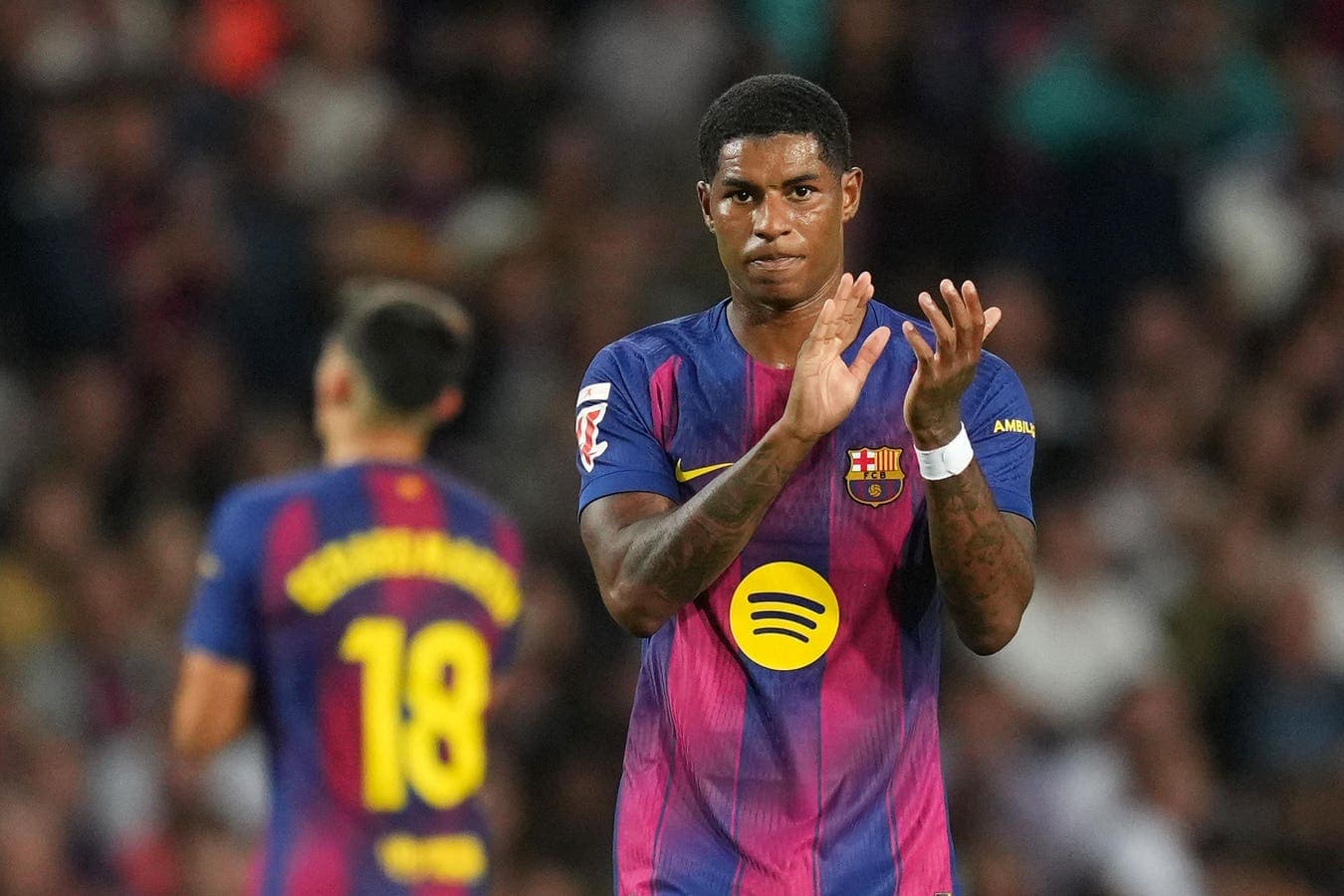
Rashford and Gordon: Barcelona's Attack Dilemma
When Anthony Gordon touched down in Barcelona, the reaction was instant. One big question cut through the noise: had the door just been slammed on Marcus Rashford?
Those around Rashford didn’t think so. Briefings from his camp stressed there was no panic, no late scramble to find alternatives. They knew the Gordon deal was coming and still believed there was room for the Manchester United forward in a revamped Barça front line.
On the surface, it sounds plausible. Rashford can operate across the attack: off the left, through the middle, even from the right when needed. Gordon, by contrast, is more of a specialist wide option, a high-intensity winger who hugs the flank and drives at full-backs. Different tools, different profiles. In theory, they could coexist.
The numbers tell a harsher story.
Gordon arrived for a lower fee and, crucially, on a far more modest salary. Rashford, even at a reduced transfer cost, comes with heavyweight wage demands. Over the life of a contract, Gordon could end up being the significantly cheaper project, which matters to a club still counting every euro.
That financial reality is why Rashford now risks drifting back into being Manchester United’s headache once this summer’s World Cup dust settles. A strong tournament with England would help, of course. A few standout performances in a Three Lions shirt could push him back into the shop window, restore some shine to a career that has flickered rather than burned in recent seasons.
Even then, Barça’s interest would likely come with caveats. Deco and his recruitment team are not ruling out another move, but the route is clear: a loan, not a blockbuster permanent signing. Rashford’s current temporary spell in Catalonia runs until June 30. Only after that expires would a fresh loan be considered, and only on terms that fit the club’s wage structure.
What keeps the conversation alive is his versatility. Barça’s attacking depth has looked fragile. Raphinha and Lamine Yamal have both spent time on the treatment table, and when Rashford slid in that superb assist for Robert Lewandowski from the right channel against Osasuna, it underlined his value as a flexible option rather than a luxury signing.
He can cover the flank. He can stretch defences. And he can, at least in theory, lead the line.
That last point matters. Barcelona are already working on life after Lewandowski. The plan is clear: secure Julian Alvarez as the long-term heir to the number 9 shirt once the Polish striker walks away at the end of his deal on June 30. The execution is anything but simple.
Every approach so far has hit a wall. Atletico Madrid and Real Madrid, who hold sway over Alvarez’s future, have pushed back against Barça’s advances. No green light, no compromise, just resistance.
In that kind of market, a player like Rashford starts to look less like a luxury and more like a calculated gamble. A short-term bridge. A multi-position forward who can plug gaps while the club waits for the right number 9 to finally break free.
Could there have been space for both Gordon and Rashford at the Camp Nou? On a tactics board, absolutely. On a balance sheet, that’s where the dream collides with the reality of modern Barcelona.