.svg&w=384&q=75 "GoalGist logo")
Christian Pulisic's Revival at Milan: A Fresh Start and Future with Liverpool
Christian Pulisic left Stamford Bridge with a Champions League winner’s medal in his bag and a nagging feeling that he’d never quite been trusted to be the main man. Milan offered that chance. San Siro, Serie A, a fresh start.
He has made it count.
In Italy, the 27-year-old has hit personal bests in front of goal, thrown himself into multiple roles across the frontline and become a crowd favourite in a hurry. The energy, the direct running, the willingness to take responsibility – all of it has played into a revival that feels like a statement.
Yet the story is already at a crossroads.
A new contract has been on the table for months. It remains unsigned. That hesitation has cracked a window open, and Europe’s elite are peering through it. Clubs know what a fully confident Pulisic looks like now. They have seen him carry the weight of expectation for club and country. They have seen him embrace pressure, not shrink from it.
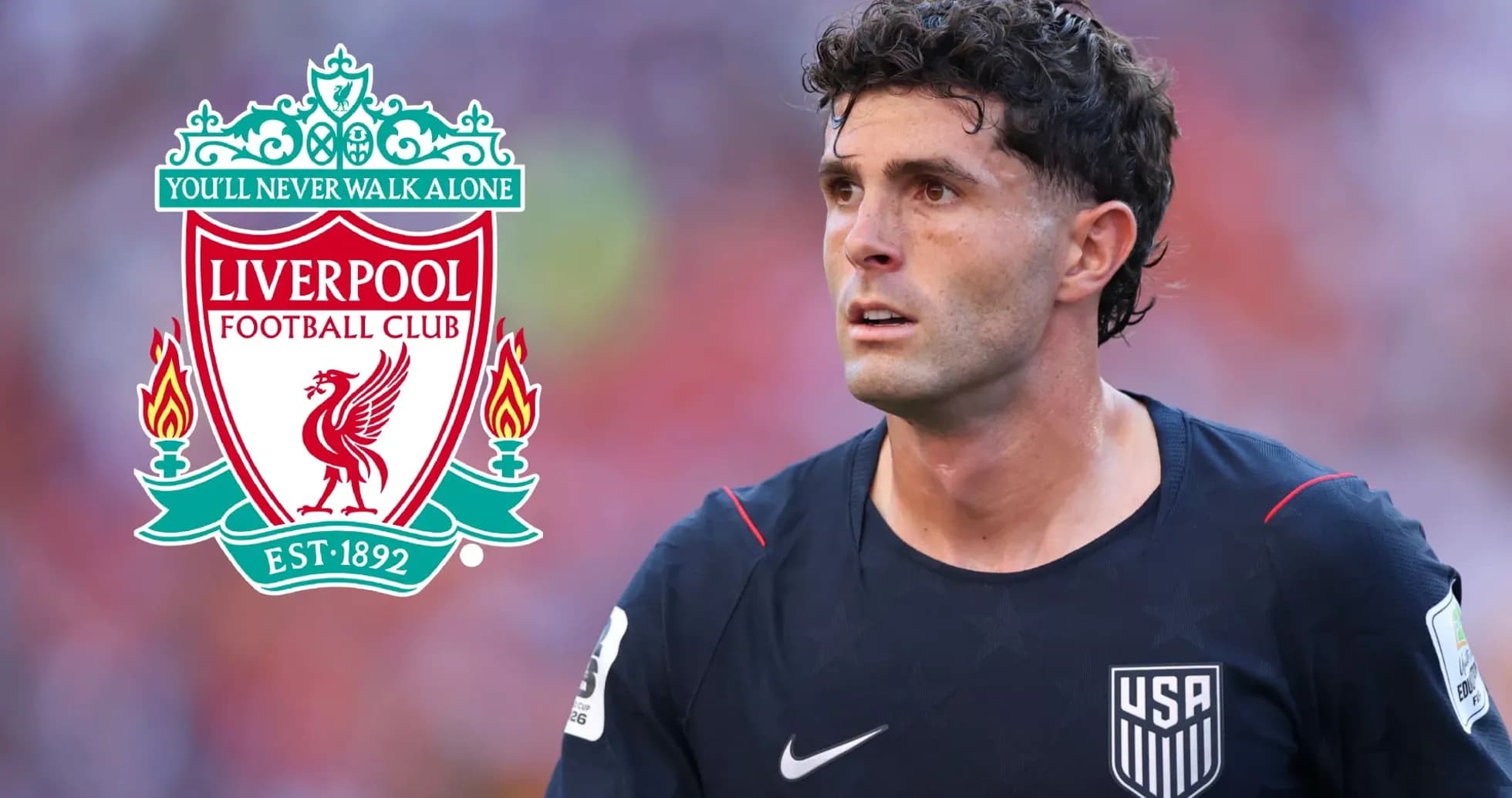
Among those watching closely: Liverpool.
Salah’s shadow and a vacancy on the right
Anfield has lost its “Egyptian King”. Mohamed Salah’s departure has left a yawning gap down the right, not just in goals and assists but in personality, aura, the certainty that something might happen every time he cuts inside.
Liverpool cannot simply replace that. They have to reimagine it.
Pulisic’s name fits naturally into that conversation. He runs hard, he presses, he breaks at pace, he scores. He is comfortable attacking from wide areas, drifting in, driving at defenders who hate every second of it.
Jonathan Spector, speaking to GOAL in association with UFL on mobile, can see the fit.
“I see that as well,” the former defender said. “I think in that sort of, I don't know if counterattacking style is the right way of putting it because that's not just what Liverpool is, but certainly when you see them go forward, they go at pace, and that is something that he does extremely well.
“He's confident, he's running at players. As a defender, it's a nightmare. It's worst-case scenario, when you have a player who is dynamic, and he's quick, shifty. That's the worst, last thing you want as a defender.”
That description could have been lifted from one of Pulisic’s best nights in a Chelsea shirt. The difference now is that those nights arrive more often.
Why Chelsea never quite worked
Pulisic’s time at Chelsea always felt like a promise half-kept. There were bursts of brilliance – that spell after the Covid restart, big Champions League performances – but never the sustained dominance many expected.
Spector did not sugar-coat it.
“He didn't produce to the level that the expectations were at Chelsea,” he said. “At a club like Chelsea, you have to. You could name a number of players, whether it's at Chelsea, Man United, Man City, who just didn't quite produce or didn't match the expectations. Those clubs have the ability to move on from players that are just not the right fit.”
This is the harsh truth of the modern super-club. Talent alone is not enough. Timing, system, manager, squad balance – all of it has to align.
“For me, so much of it is about having the right fit at the right time, and that is the biggest question mark in all of this,” Spector added. “You know, anyone who knows the game can pick a good player, anyone who is a casual fan can pick out a good player, but it's determining whether or not that player is going to be the right fit at the right time, and that's the really difficult piece of this.
“For me, Pulisic just wasn't the right fit at the right time at Chelsea. I think that's why he struggled and I don't know if that style of play suits him particularly well.”
Milan have given him something different: clarity, continuity, a defined role. The numbers and the performances have followed. That is precisely what makes him such an intriguing option for Liverpool, a club that thrives on high intensity and vertical football.
A World Cup frustration and what comes next
Away from club football, Pulisic remains the face of the USMNT. The armband might move, the supporting cast might change, but the expectation that he will decide big games has never shifted.
The 2026 World Cup on home soil was supposed to be his grand stage. Instead, the United States crashed out in the last 16, and the spotlight turned harsh. Every touch, every decision, every missed opportunity was dissected.
Spector recognises the disappointment but also the context.
“He for sure has one, maybe two World Cups in him, I would say,” he said. “I think maybe he didn't have his best World Cup, and I think that's a fair argument to make.
“He wasn't able to play in every match either, not in a rhythm like some of the other players. You play a game, you come out, and you're not in that same sort of rhythm, and you see each team, each game, they've gotten better and better.
“The individuals have gotten better and better, and you really see the top, the elite players, really just showing the quality that they have each and every game and getting better in each and every match. He didn't have that sort of consistency and continuity.”
The criticism that followed, in Spector’s view, went too far.
“I think some of the criticism he's had has been a bit harsh. I don't think it's quite fair to judge him to some of the other U.S. players that we've had in the past, just based on this small sample of matches. At the World Cup is when you expect your main players to do it.
“I still think he was really effective, he looked dangerous in moments. But I'm sure he would be the first to admit he wasn't at his best. I'm sure he's just as frustrated, if not more so, than anyone else.”
A difficult World Cup often acts as a pivot point in a player’s career. Some retreat. Others use it as fuel.
Pulisic has already shown in Milan that he can respond to doubts with output. With a contract decision looming and Liverpool searching for a new right-sided talisman, the next move he makes will define not just how Europe sees him – but what kind of legacy “Captain America” leaves on both sides of the Atlantic.