.svg&w=384&q=75 "GoalGist logo")
Plazma Youth Sport Games: Celebrating 30 Years of Youth Sports
On a raised platform above the Adriatic, the scene is almost surreal. Twenty children sit in a circle, heads bowed over chessboards, all facing the same opponent. Nigel Short, the grandmaster, shuffles from board to board, making a single move at each stop, the sea glittering behind him.
The kids are not there to be patronised. They are the best young chess players the Balkans can offer. Yet even that is not the strangest part. Between moves, some of them lean in to hear advice from their “celebrity coaches”: Ana Ivanovic, a former French Open champion; Sean Dyche, the ex‑Burnley manager; and, raising more than a few eyebrows on the Split seafront, the rightwing tech billionaire Peter Thiel.
This is the Plazma Youth Sport Games, and this summer in Split they are blowing out 30 candles.
The ‘Davos of sport’ on the Dalmatian coast
The Youth Sport Games (YSG) have been described by some of their more illustrious guests as “the Davos of sport”. The label fits. Every summer, big names from sport and politics descend on the Dalmatian coast, pose for photos, sit on panels, shake hands.
But the real story is not on the stage. It is on the courts, pitches and makeshift arenas spread across the city.
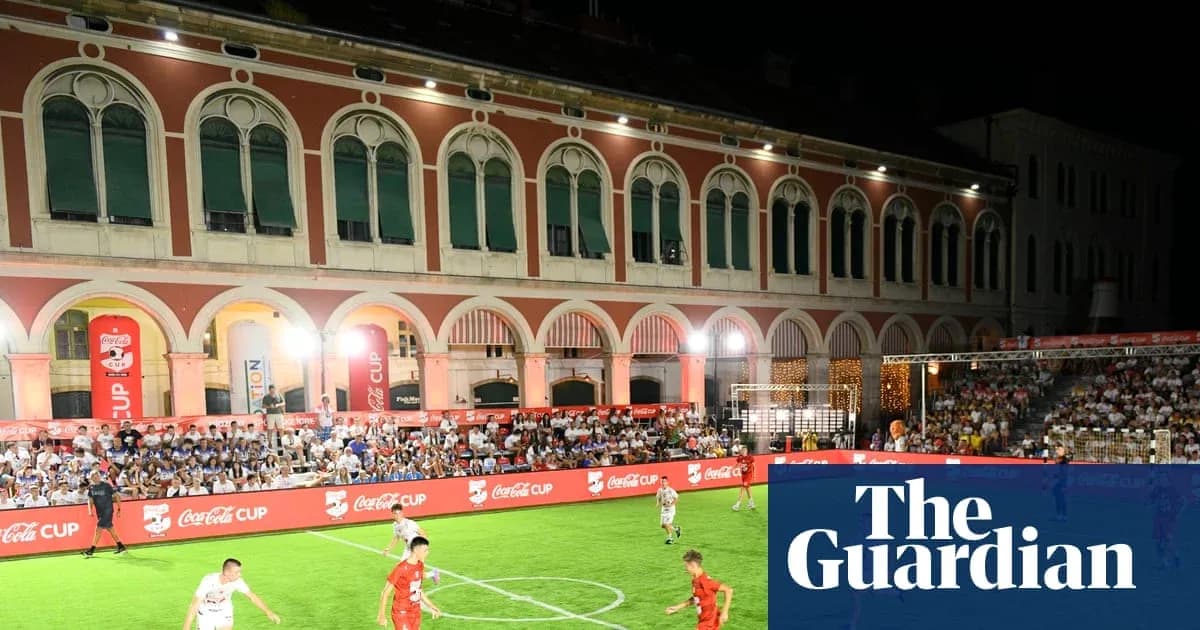
The YSG is now the biggest amateur sports event for children in Europe. Just under half a million young people from across Croatia, Bosnia and Herzegovina, Serbia, Slovenia and North Macedonia entered qualifying this year. Over one intense week in Split, the best of them meet to contest finals in 10 sports, from chess and athletics to 3v3 basketball.
The organisers insist this is more than a festival of results and medals. They push teamwork, collaboration, and the radical idea of putting phones away. They call Plazma both a sporting event and a “social project”. In practice, that means as much emphasis on kids hanging out, talking, and playing as on who wins the last point.
The pitch has worked. YSG has built a roster of ambassadors that would make some federations jealous: Zlatan Ibrahimovic, Slaven Bilic, Alastair Campbell and more. Visitors tend not to leave indifferent.
Dyche, who has thrown himself into the role, calls the Games “a brilliant, brilliant initiative”, and lights up when he recalls the girls’ mini-football final. “It was terrific, they were playing good football; getting properly stuck into each other, properly playing,” he said. “You could feel that they felt free and were being supported in that environment.”
Born from hard times, not soft power
For Dyche, the scale of the project underlines a contrast with his own country. “It seems to me that every time you try and get an initiative off in England, there’s a million rules and regulations that make it difficult,” he said. “I know how hard it can be to get funding too and times are tough for people.”
The irony is that the Plazma Games themselves were born in a period when “tough” barely covers it. Zdravko Maric founded the event in the shadow of the breakup of Yugoslavia and the Bosnian war. He was not chasing a grand diplomatic legacy. His motivation was brutally simple: to tackle drug problems among Croatian youth.
“It’s a lifetime project and we live with it every day,” says his brother, Slaven Maric, who has worked on the Games from the start. “But when Zladko started it we didn’t have an idea that it would develop into this. It’s not about sport or the results, its about social life, it’s about being together. There were many issues with drug abuse [then], now it’s about bringing the kids to spend sometime together in real life.”
That last phrase has become a mission statement. Getting children off their phones is a core message for the Games heading into 2026. Offers from esports brands to come on board have been politely but firmly turned down.
Split, a small city with a giant sporting shadow
Bringing the Games to Split added a fresh chapter to one of Europe’s most unlikely sporting strongholds.
The city’s contemporary population is only around 160,000, yet its honours list reads like a hall-of-fame roll call. Goran Ivanisevic, Wimbledon champion. Bernard Vukas, widely regarded as Croatia’s greatest footballer before Luka Modric. Branko Cikatic, kickboxing legend. Toni Kukoc, a three-peat NBA champion. Stipe Bozic, a mountaineer of global renown.
Walk through Split and the pride is literally under your feet. The city has its own Olympic “walk of fame”, celebrating 73 medal winners in Hollywood style. On the shoreline, locals play picigin, a homegrown sport that looks like a blend of volleyball and hackysack, played in the shallows with the hands and a single, battered ball.
In that context, the Youth Sport Games feel less like an import and more like an extension of the city’s identity. The bond runs deep. Slaven Bilic, another son of Split and a former Premier League player and manager, now serves as an ambassador.
“I’m not objective because I’ve known Zdravko for more than 30 years but it’s great that at a time when there’s a lot of negativity in the world that this can exist,” Bilic said. “Especially in this part of the world that is supposed to be unstable.”
Billionaires, brands and a bigger map
Three decades in, the question is no longer whether the Games will survive. It is how far they can stretch.
One obvious ambition is to expand the list of participating nations. North Macedonia took part for the first time this year. Ukrainian teams arrived as invited guests. Talks have been held with six other countries about joining in the coming years.
Corporate interest has followed the growth. Coca‑Cola is a partner. So are Topps and the Croatian telecom firm Telemach. Behind the scenes, the money is getting heavier. There are now 11 billionaires associated with the Games, several of whom have invested directly.
Among them, according to those close to the project, is Thiel, the founder of PayPal and Palantir and a mentor to the US vice-president, JD Vance. In Split, Thiel declined to explain his interest, ignoring questions and gliding down the riviera with his security detail.
Aleksander Ceferin, the Uefa president, has no such reluctance when it comes to the event itself. Uefa provides funding to YSG, and Ceferin sees it as proof that elite sport can feed the grassroots rather than drain them.
“I think that top sport, and the money that you get with top competition, should be used for the development of sport and this is the development of sport,” he said in Split. The line hung in the air, inviting comparison with Gianni Infantino’s attempts to sell a stake in the World Cup to private investors.
A star-studded kickabout to close the show
By Friday night, the serious business of finals and medals is done. The Games close with their own spin on Soccer Aid: a showpiece football match pitching a YSG select side against 11 all-stars.
On paper, it looks like a mismatch. The all-star team can call on Claude Makélélé, Pavel Nedved and Ibrahimovic. The local players counter with youth, adrenaline – and Dyche in the dugout.
The contest delivers what the week has promised: famous names, yes, but also laughter, hard tackles, and children playing as if this is the biggest game of their lives.
Building bridges. Forming memories. Getting properly stuck in.
As 30th birthdays go, it is not a bad way for a “social project” to announce that it has become something much bigger – and that it has no intention of slowing down.