.svg&w=384&q=75 "GoalGist logo")
Paul Scholes Questions Lammens' Goalkeeping Stature at Manchester United
Paul Scholes has never been shy about saying what Manchester United fans are thinking. This time, his gaze is fixed firmly on the man in gloves.
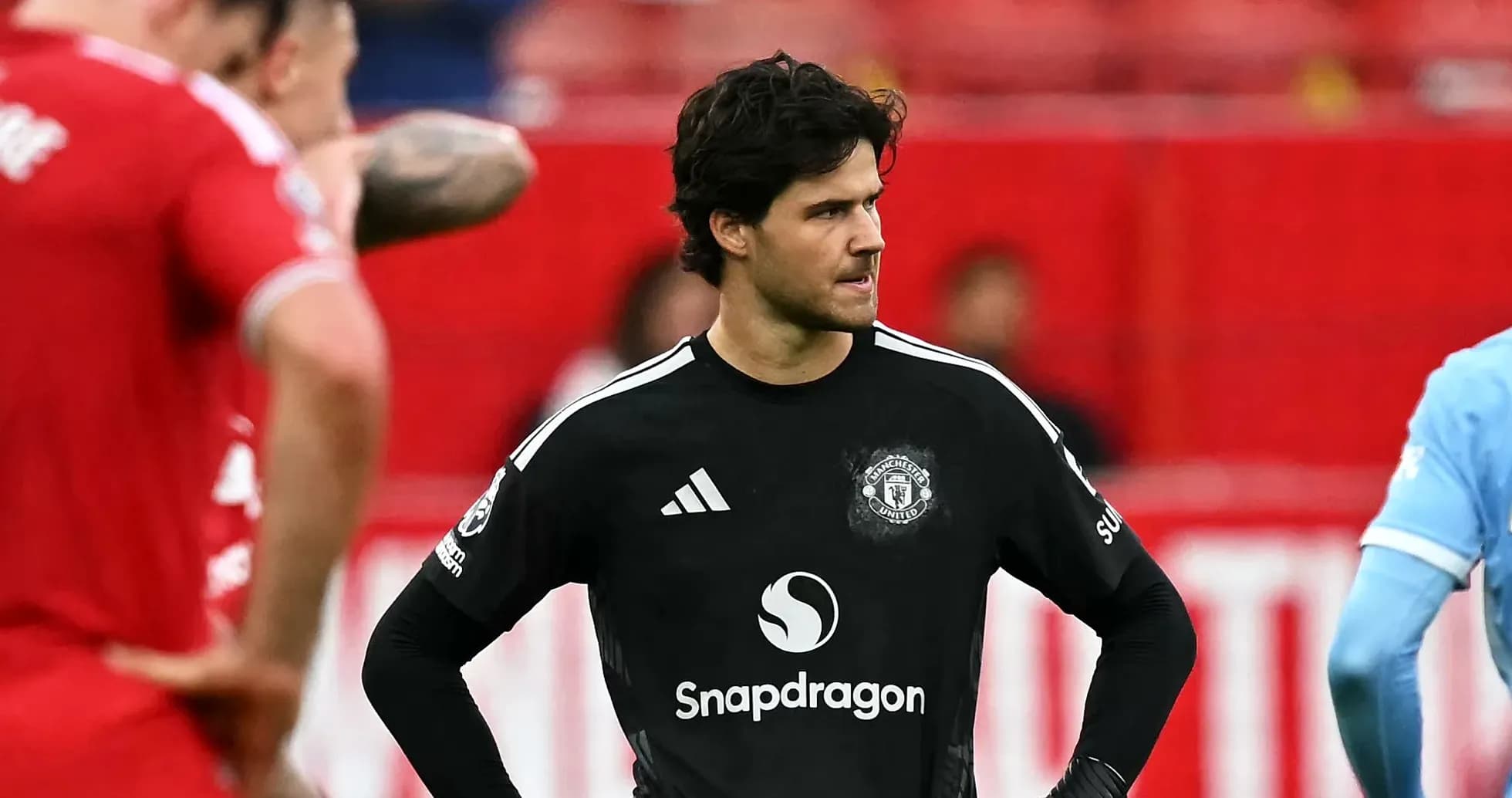
Lammens, 24, arrived from Royal Antwerp for £21.7 million last summer and has already pushed Altay Bayindir aside to claim the No.1 shirt. He has the shirt. Scholes is not yet convinced he has the stature.
On The Good, The Bad and The Football podcast, the former United midfielder cut straight to the heart of the issue: the standard required to win titles.
"What team have you seen win the Premier League without a top class goalkeeper?" he asked. "Lammens might be that, I don't know, I think the jury's probably still out on that and then you build from the back four."
That line – “jury’s still out” – hangs over United’s season like a quiet warning. Under Michael Carrick, the club is trying to piece together a new identity, one built on structure and clarity after years of drift. Scholes’ message is simple: any serious rebuild starts with a goalkeeper you can trust when everything is on the line.
He pointed to the blueprint already laid down elsewhere. Arsenal’s resurgence, he argued, began when they locked down their defensive base. "It's the way Arsenal started three or four years ago, defensively they have been absolutely brilliant. You need a top class goalkeeper.
"You think of Liverpool's team with Alisson, Raya at Arsenal, Man United with Peter Schmeichel and Edwin van der Sar. They've all got brilliant, brilliant goalkeepers. You start from the back, of course you do. Whether Michael's just got to be patient and wait for that, I don't know."
The names Schmeichel and Van der Sar are not thrown around lightly at Old Trafford. They are reference points, standards, shadows that loom over anyone who pulls on the United keeper’s jersey. Lammens knows that better than anyone.
The Belgian has already spoken about the brutal swing of English opinion and the weight of the club’s history. Reflecting last year on life in the Premier League, he said: "That's England for you. If things go badly, they can bury you deep, but if things go well, they praise you to the skies.
"I take that with a grain of salt, because to be mentioned in the same sentence as Schmeichel, I'm going to have to prove myself many more times. But I did find it a very nice compliment. I hope to play here for 10 years and be important, so that, like Schmeichel and Van der Sar, I can leave a legacy."
Those are the words of a goalkeeper who understands the scale of the challenge, who wants not just to survive at United but to belong in its history. Desire, though, is only part of the equation.
The timing of Scholes’ intervention is no coincidence. It comes on the back of a bruising Manchester derby in which Lammens could not keep out Erling Haaland. The defeat was not down to one man; United were outplayed across the pitch. Yet when the post-mortem began, Scholes went straight to the last line of defence, hinting that a truly elite keeper can be the difference in exactly these kinds of high-stakes afternoons.
This is the unforgiving reality of the position. Every save shapes a narrative. Every mistake feeds it. From now on, Lammens will play under the constant echo of Scholes’ assessment. Every clean sheet will be held up as evidence that he can grow into that “top class” bracket. Every slip will be used to argue the opposite.
For Carrick, the dilemma is clear. Does he double down on a young goalkeeper with the tools and temperament to develop into the role, or does he eventually look for a ready-made, proven solution to accelerate United’s climb back to the top?
For Lammens, the equation is even simpler. He either proves he belongs in the same breath as Schmeichel and Van der Sar, or United will go looking for someone else who does.