.svg&w=384&q=75 "GoalGist logo")
Nicolás Otamendi's Emotional Farewell to Argentina
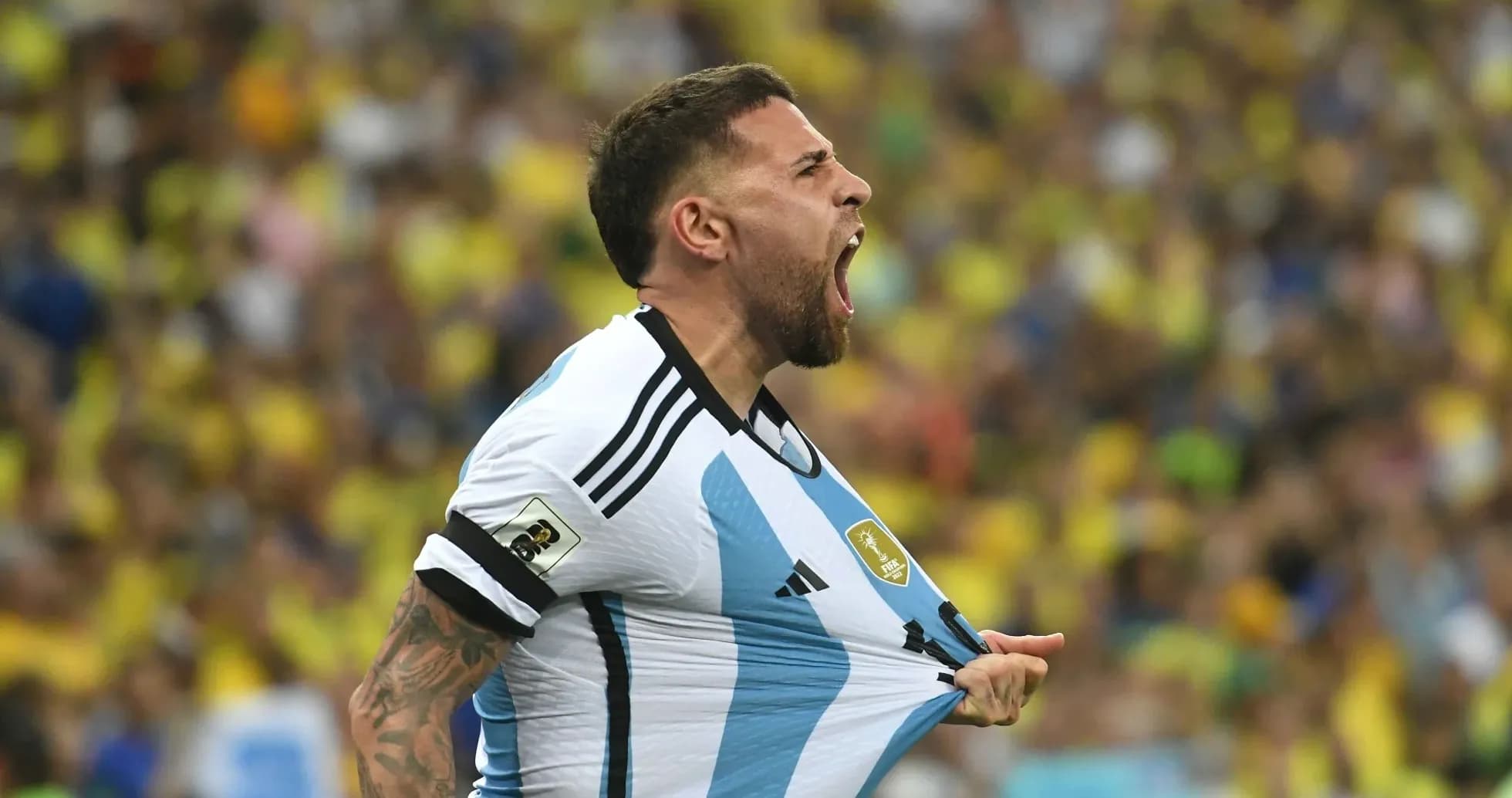
Nicolás Otamendi chose his own moment. Not in a packed stadium, not with a microphone in hand, but with a long, emotional message on his phone. On Wednesday, the veteran defender announced that the 2026 World Cup final would be his last act with the Argentina national team.
“Today, I’m writing the most difficult words I’ve ever had to,” he posted on Instagram.
For a player who built a career on tackles, duels and defiance, the hardest battle turned out to be saying goodbye.
He called the Argentina shirt “a childhood dream’’ and “the greatest privilege” of his football life. That shirt, he wrote, was something he “defended with all my heart, with pride, and with a sense of responsibility, knowing what it means to millions of Argentines.”
The wound of the 2026 World Cup final still stings. Otamendi did not hide from it. He admitted his regret over the defeat, but insisted he walks away “with the peace of mind that comes from giving it all.” For a player whose game was built on total commitment, there was no other way to leave.
He thanked the fans, who lived every tackle and clearance with him. He thanked his family, who rode out the storms and the glory. Then he turned to the future, urging the next generation of Albiceleste players to “never stop believing.”
His final line read like a closing curtain call: “Thank you, Argentina. Thank you for letting me fulfill my dream of becoming a world champion and wearing the most beautiful jersey in the world.”
A dressing room reacts
The response was instant. Former teammates, current stars and young hopefuls all crowded his comments with tributes, a digital guard of honour for a defender who had long been one of the dressing room’s loudest voices.
Alexis Mac Allister called him “an exemplar of fight, resilience and love for the shirt.” Germán Pezzella described him as “a guide for us all.” Those are not empty phrases in a group forged through finals, failures and, eventually, a World Cup triumph.
Names from different generations chimed in. Paulo Dybala, Marcos Senesi, Mariano Andujar and Gianluca Prestianni all added their thanks, a chorus of gratitude from players who either shared the pitch with him or grew up watching him anchor the back line.
Rodrigo de Paul went further. He dedicated a full Instagram story to the vice-captain, pulling back the curtain on their bond.
“From the day I got to the national team, you opened the door to your room, and since then we’ve held the same rituals,” he wrote. “My thanks to you, my brother, are eternal. You were an example to follow and one of the leaders of the beautiful story this team built. Thanks for everything, I’ll miss you.”
It was the kind of message that reveals what statistics never can: Otamendi was not just a name on the teamsheet. He was a pillar inside the group.
From iron starter to elder statesman
The announcement, emotional as it was, did not come as a shock. At 38, Otamendi was always likely to step aside as Lionel Scaloni reshaped his squad for the next cycle.
In Qatar 2022, he had been one of Scaloni’s most trusted starters, a constant presence alongside Cristian “Cuti” Romero in the heart of defence. Four years later, his role shifted. Lisandro Martínez took over as the main partner for Romero, and Otamendi moved into a support role, the experienced backup, the voice on the bench, the standard-bearer in training.
That transition summed up his evolution. Early in his career, he broke through at Vélez Sarsfield as a rugged, uncompromising defender, the kind who relished physical duels and rarely took a backward step. European moves followed, including spells at Manchester City and Benfica, where he carried the same abrasive edge and competitive fire.
He was never the tallest centre-back on the international stage at 1.83m, but he played like he was. His aerial dominance became a trademark, a mix of timing, aggression and sheer will. One image captures it better than any scouting report: Otamendi rising above 1.98m Harry Souttar in the round of 16 against Australia at the 2022 World Cup. The picture of him towering over the giant defender went viral, a snapshot of defiance, effort and refusal to yield.
That was Otamendi in a single frame.
A place among Argentina’s great defenders
Across nearly two decades, he turned that attitude into a legacy. Determination. Fierceness. Competitiveness. Those were his calling cards, and they leave a clear template for the defenders who will follow.
Argentina has produced giants at the back: Daniel Passarella, Oscar Ruggeri, Roberto Ayala. Otamendi now stands in that company, not just for trophies or appearances, but for the way he embodied the role. He was the defender who lived every duel as if it were his last, the veteran who kept demanding more from himself and those around him.
He exits the national team with a World Cup winner’s medal and the respect of a country that values grit as much as grace. The shirt will pass to younger shoulders. The standard he set will not.
The question now is simple: who will be brave enough to pick it up and carry it with the same fury?