.svg&w=384&q=75 "GoalGist logo")
Neymar's Emotional Exit from Brazil's World Cup Dreams
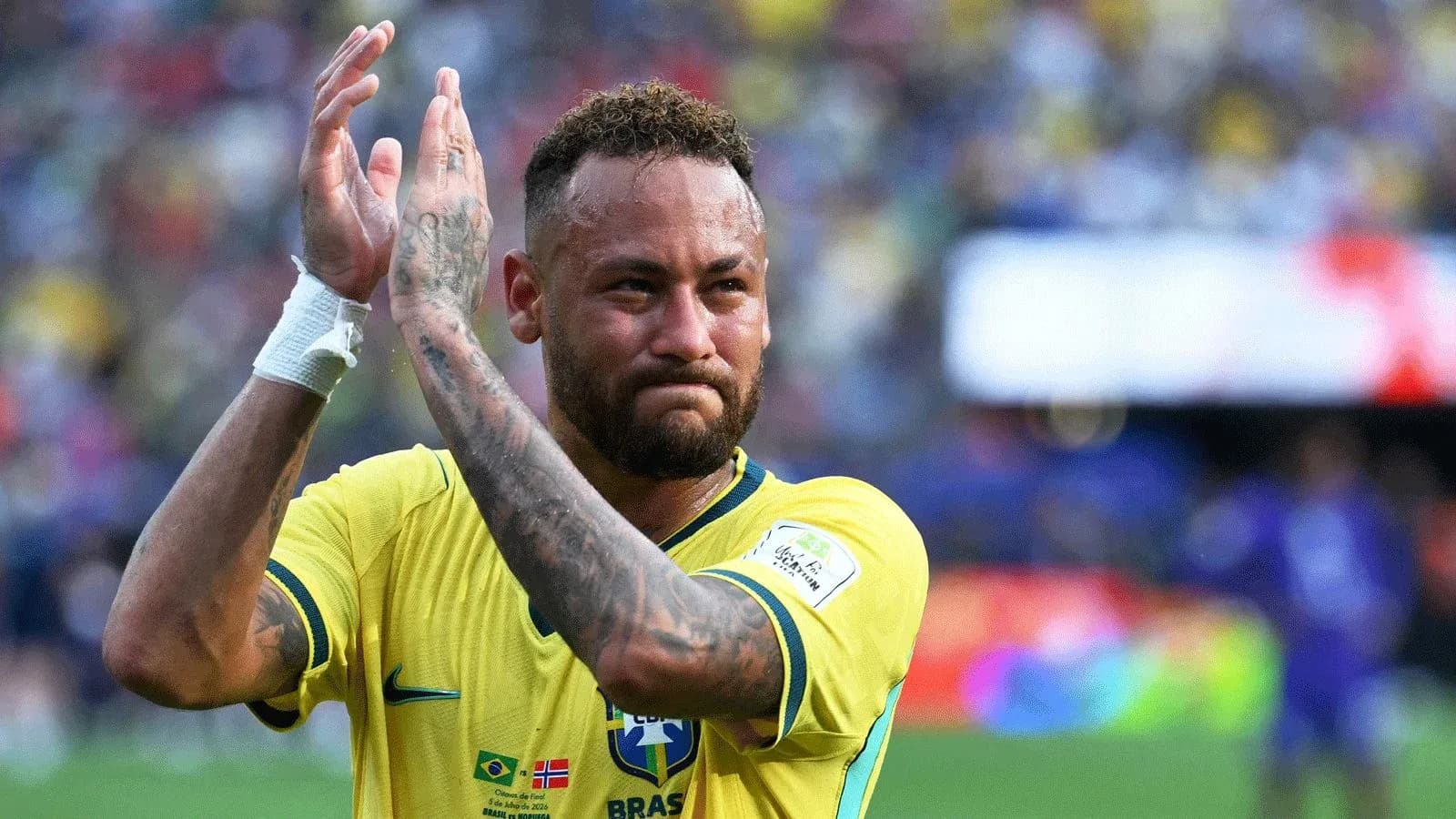
Neymar walked slowly across the MetLife Stadium turf, eyes glazed, shoulders slumped, the noise around him fading into a dull roar. Brazil had just been knocked out of the World Cup in the round of 16 by Norway, beaten 2-1 by an Erling Haaland brace. A stunning scoreline. A brutal exit. And, as it turned out, the end.
The 34-year-old confirmed it in the mixed zone a short while later, voice low, gaze fixed somewhere beyond the cameras.
“I tried, I tried. Now it's over. I started here; I finished here,” he told reporters.
With that, one of the longest and most emotionally charged chapters in modern Brazilian football closed.
A farewell wrapped in heartbreak
The night had offered Neymar one last moment of defiance. Deep into stoppage time, with Brazil already staring at elimination, Casemiro won a penalty. Neymar stepped up. One more run-up, one more breath, one more swing of that right foot.
He buried it.
The goal made him the first Brazilian to reach 80 international goals, extending his record as the country’s all-time leading scorer after surpassing Pelé. It was a finish that felt familiar: calm, clinical, almost routine. Everything around it was anything but.
When the whistle went, he crumpled. Team-mates tried to console him; cameras lingered; the stadium lights seemed harsher. This was not just another defeat. It was Brazil’s earliest World Cup exit since 1990 and their seventh straight knockout loss to European opposition. A pattern, now a scar.
For Neymar, it was the final confirmation that the one trophy he was supposed to bring home would never be his.
Sixteen years, one missing crown
Neymar leaves the seleção with numbers that belong to football royalty.
- 130 caps.
- 80 goals.
- 59 assists.
He won the 2013 Confederations Cup, dazzling in a tournament that felt like a coronation for the new face of Brazilian football. He carried the flag at the 2016 Olympics and delivered gold on home soil, a penalty into the top corner in Rio that looked, at the time, like a prelude to a World Cup triumph.
The prelude never became the story.
Across four World Cup cycles, he lived under a weight few players ever experience. The No 10 shirt. The expectation to restore the old order. To bring back the sixth star. There were flashes of brilliance, iconic goals, unforgettable dribbles. There were also injuries, tears, and the sense that every campaign ended with him either on the turf or in the treatment room.
On this night in the United States, there were no stretchers, no hospital scans. Just a man who decided he had given enough.
A father’s plea
If Neymar’s mind seems made up about Brazil, the same cannot be said about his club future.
As the debate over what comes next for him intensified, his father stepped into the spotlight with a message that cut through the noise. Neymar Senior went public with a plea, not as an agent or strategist, but as a parent who has watched his son’s entire life unfold through football.
“I want to make a request as a father. Ney, keep playing football, please,” he wrote in a heartfelt social media post.
The timing was no accident. Neymar’s recurring fitness problems had already put his place in Carlo Ancelotti’s final 26-man World Cup squad at risk. Questions about whether he can still operate at the very top level have grown louder with every setback, every layoff, every cautious return.
The family’s stance is clear: if the yellow shirt is gone for good, the game itself should not be. They want to see the iconic No 10 continue, somewhere, somehow, adding new chapters to a career that has too often felt interrupted.
Brazil without its No 10
For Brazil, the shock of elimination is only the start of the reckoning.
Ancelotti, who recently extended his contract to stay in charge of the national team until 2030, must now reshape a side that has lost its most influential creative force. Neymar has been more than a playmaker or a finisher; he has been the reference point. Every attack bent towards him. Every game plan, friend and foe, began with his name.
That era is over.
The early exit has accelerated a transition that was always coming but never truly confronted. The CBF cannot hide from the numbers: seven straight knockout defeats to European nations, a generation that has produced stars but not the sixth star. The next Brazil will need a new No 10, whether in shirt or in spirit, and a new way of playing that does not depend on one man’s genius to paper over structural flaws.
Ancelotti has time on his contract. He does not have time to waste.
One last act?
So Neymar walks away from the seleção as a statistical giant and an emotional riddle: the country’s greatest goalscorer, but not its great champion.
His final act in Brazil colours was a penalty struck with all the composure that once made the world believe he would dominate it. His final words as an international were those of a man closing a door he had spent 16 years walking through.
What remains is the unknown.
Does he listen to his father and push his body through another cycle at the top of the club game? Does he chase one last Champions League run, one last season where he is fit often enough to remind everyone why defenders still fear him? Or does he choose a different path, one where the roar of the crowd slowly fades and the burden finally lifts?
On a night when Norway and Haaland rewrote Brazil’s World Cup story, Neymar wrote his own ending with brutal clarity.
The question now is whether his career truly finished in New Jersey—or whether, somewhere ahead, there is still one more twist left in that right foot.

