.svg&w=384&q=75 "GoalGist logo")
The Netherlands: A Talented Dark Horse in the Tournament
The Netherlands arrive as a riddle. Too talented to be written off, not trusted enough to sit alongside the tournament’s true giants. They sit in that uneasy middle ground: the heavyweight dark horse nobody really wants to face in the knockout rounds.
They have not been handed a gentle start. Japan, Sweden and Tunisia form a group with very little margin for error, and yet the Oranje still carry the weight of expectation. On paper, they should rise above it. Virgil van Dijk anchors the defence, Frenkie de Jong knits everything together in midfield, and the attack can call on Memphis Depay and Cody Gakpo, a front line with goals, guile and big‑game experience.
The picture is not perfect, though. Far from it.
Key absentees have already taken a bite out of Ronald Koeman’s plans. Xavi Simons, Jurrien Timber and Matthijs de Ligt have all been ruled out before a ball is kicked, stripping depth and versatility from a squad built to rotate deep into the tournament. Jeremie Frimpong, one of Europe’s most explosive wing-backs, and gifted midfielder Kees Smit did not even make the final cut, omissions that sparked plenty of debate back home.
Then came the warning signs on the pitch. A shock defeat to Algeria in their first warm-up game jolted the mood around the camp. The response, a narrow and unconvincing win over Uzbekistan, hardly silenced the doubts. This is a side that can look imposing on a teamsheet yet strangely fragile when the whistle blows.
Koeman's Contradiction
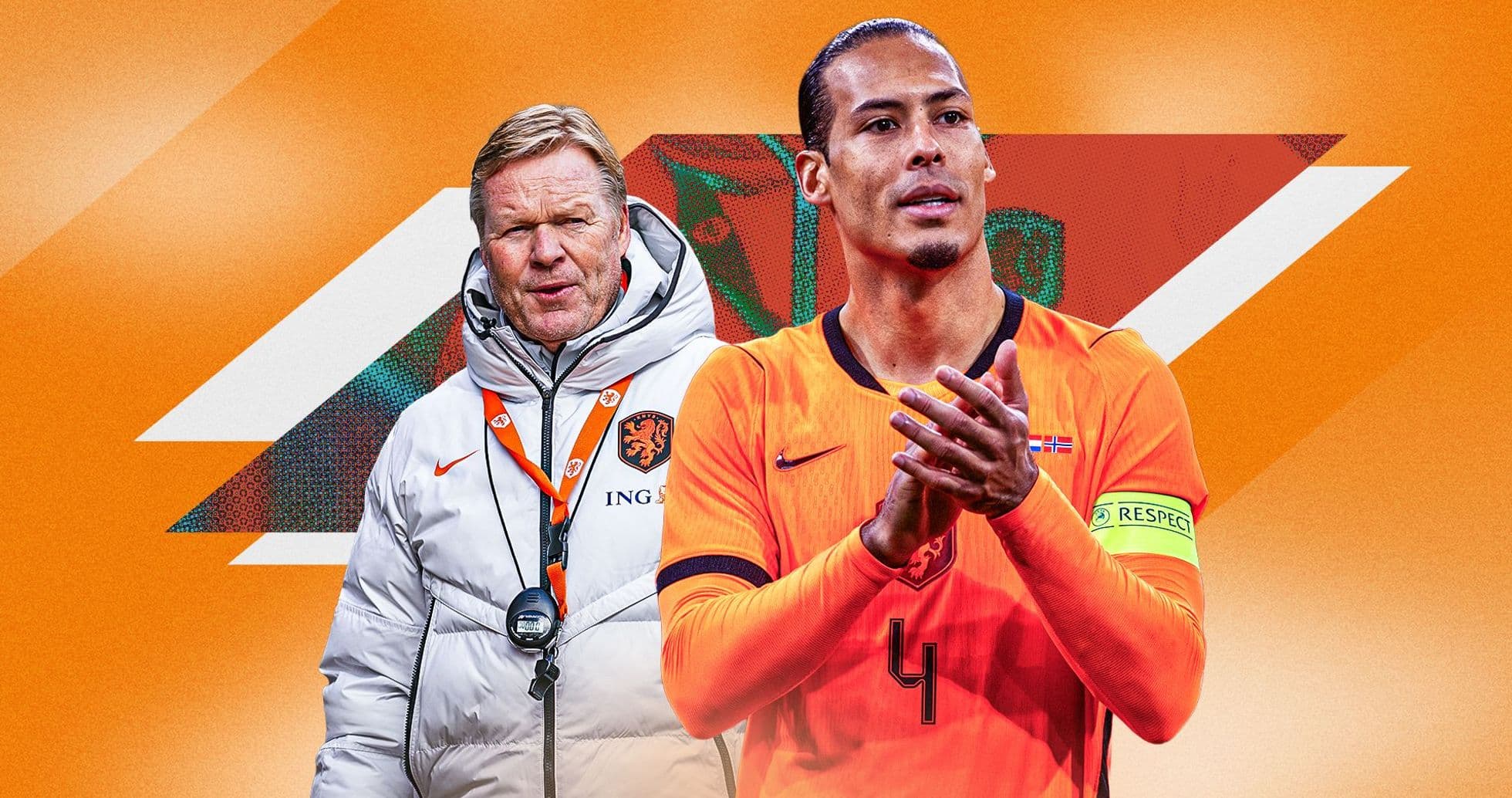
Koeman stands at the centre of that contradiction.
The former Barcelona defender first took the reins in 2018, signing on after Dick Advocaat’s departure. He quickly restored order, guiding the Netherlands to the 2019 UEFA Nations League final and securing qualification for Euro 2020. His reward was a call from Camp Nou. Koeman walked away from the national team and into the chaos of Barcelona, leaving the Oranje to be reshaped by others.
Two and a half years later, he was back. In 2023 he replaced Louis van Gaal and promptly steered the Dutch to two more semi-finals, in the 2023 Nations League and at Euro 2024. On paper, that is a record most federations would cling to. In the Netherlands, the conversation is more complicated.
Koeman has blooded a new generation, giving minutes and responsibility to emerging talents. Yet his football often feels at odds with the country’s cherished ideals. The Dutch school, forged by Rinus Michels and Johan Cruyff, demands boldness, positional play, an almost ideological commitment to attack. Koeman’s version can look more pragmatic, more cautious, more functional than romantic. Results keep him safe. Style keeps him under scrutiny.
Memphis Depay's Role
Amid all of this, one figure still defines the Oranje.
Memphis Depay, now with Corinthians, remains the team’s reference point and emotional barometer. He is the all-time leading scorer in Dutch national team history, outstripping Robin van Persie, Dennis Bergkamp, Arjen Robben and Ruud van Nistelrooy with 55 international goals. That list alone underlines the scale of his achievement.
At a time when the Netherlands lack a classic, world-class No. 9, Koeman once again turns to Depay for answers. During qualification he drove the team forward, averaging almost a goal every two games for his country. The caveat is sharp: only six of those goals have come at major tournaments. This may be his last big stage with the national team. If the Oranje are to go deep, he must turn volume into impact when it matters most.
He will not have to shoulder the attacking burden alone. Brian Brobbey arrives as one of the more intriguing subplots in this squad.
Formed in the Ajax academy, Brobbey’s move to RB Leipzig looked like a fast track to the elite. Instead, it became a cautionary tale. His time in Germany never truly ignited, and the “flop” label came too quickly, too easily. The response has been emphatic. In England, with Sunderland, the 24-year-old has rebuilt his reputation and his confidence.
‘Brobbeast’ is no empty nickname. He is powerful, direct, and relentless, but he is not just a battering ram. Brobbey runs the channels, holds the ball, stretches defences and leads the line on his own when required. Seven goals in 31 Premier League appearances tell only part of the story; his influence was central to Sunderland’s remarkable push into next season’s Europa League.
A few years ago, people reached for a comparison and called him “the new Romelu Lukaku”. That tag has faded. Brobbey now stands as a reference point in his own right, a forward younger players study rather than a copy of someone else’s blueprint.
So the Netherlands head into the tournament with a divided public, a coach under constant stylistic inspection, an ageing talisman chasing one last defining campaign, and a new striker eager to stamp his authority on the biggest stage.
They are not the favourites. They are not the underdogs. They are something more dangerous: a wounded giant with enough quality to trouble anyone, and enough flaws to implode if they lose their nerve. Which version turns up will decide whether this Oranje side quietly slips away—or storms deep into the summer and tears up the script.