.svg&w=384&q=75 "GoalGist logo")
The Week Mourinho Slipped Away from Manchester United
There is a moment, buried in Manchester United’s recent history, that still makes people inside the club wince.
It lasts only a few days. It changes everything.
The week Mourinho slipped away
In 2013, as Sir Alex Ferguson prepared to step away from the dugout he had ruled for a quarter of a century, Manchester United thought they had done the hard part. They had identified the man with the ego, the edge and the experience to follow him.
Jose Mourinho.
By then, talks were not a rumour. They were real. Meetings took place in Madrid and London. Ferguson, who admired Mourinho and enjoyed his company, stunned him by revealing he would retire at the end of the 2012-13 season. From there, the conversation moved quickly from shock to succession.
Terms were discussed. An agreement, sources insist, was reached. For a short window, United believed Mourinho would walk into Old Trafford as Ferguson’s heir.
Then the story snapped in another direction.
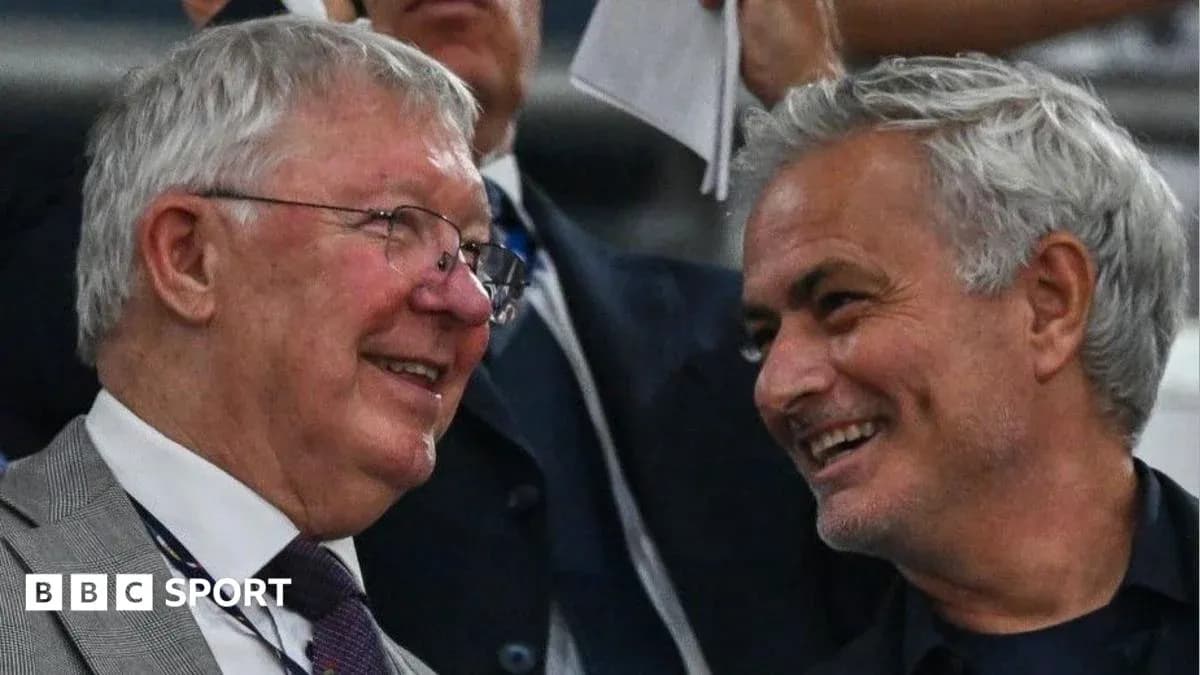
“One night, he phoned me and he was crying and he says: ‘Alex, I can't take it. I've given my word to Chelsea and I'm not going to break my word’,” Ferguson recalls in a new Netflix documentary series on Mourinho’s career, released on 11 August.
The reversal took only “days”, according to one source. The groundwork had taken weeks.
London, family, and a promise kept
Mourinho’s explanation was familiar. Family. London. A promise made years earlier.
He already had a home in the capital. When Chelsea sacked him in 2007, he had told his family they would return. His relationship with Roman Abramovich had been repaired enough to tempt him back to Stamford Bridge. The emotional pull was obvious.
Inside United, not everyone bought the full story. Some remain unconvinced that domestic life alone turned him away. Whatever the mix of reasons, the outcome was brutal for United: the man they believed could shoulder the weight of Ferguson’s legacy chose Chelsea instead.
For a club about to lose not just Ferguson but also chief executive David Gill in the same summer, it felt like a sliding-doors moment. The phrase still gets used by those who were there.
United knew they were not simply replacing a manager. They were replacing a structure built around a one-off figure who controlled almost every footballing detail. They needed a new model, one that could evolve while the team still competed at the highest level.
They thought Mourinho was the personality to ride out the turbulence.
From “The Chosen One” to chaos
When Mourinho turned away and Pep Guardiola committed to Bayern Munich, United’s plan imploded. The club pivoted to David Moyes.
On paper, Moyes carried some of Ferguson’s traits: hard-working, disciplined, respected for his work at Everton. But he had never operated at the very top tier. United announced him as “The Chosen One”. The banner went up. The reality never matched the slogan.
The fall was steep. Ferguson’s final side had overperformed to win the 2012-13 title, but no-one inside the dressing room expected the crash that followed. United slumped to seventh. Even the players have struggled to explain how quickly the aura vanished.
It is here that the question bites hardest: what would Mourinho have done with that same group?
Those close to the process are convinced he would have attacked the job, not tiptoed into it. Where Moyes hesitated in the transfer market, Mourinho’s record suggests he would have driven deals through.
Thiago Alcantara’s agreed move from Barcelona, they stress, would have been completed. The muddled pursuit of Marouane Fellaini – eventually signed from Everton on deadline day for £27.5m after United missed a cheaper release clause – would never have happened. Fellaini, some insist, simply would not have been a Mourinho signing.
Mourinho had even given United his thoughts on potential recruits, including Italy midfielder Daniele de Rossi. The blueprint was there. The club just never got to use it.
The Mourinho United did get
When Mourinho finally arrived at Old Trafford in 2016, the landscape had shifted. Louis van Gaal had just been sacked, two days after lifting the FA Cup. The squad had changed. So had Mourinho.
Only six players who had started 10 or more league games in Ferguson’s 2012-13 title season – David de Gea, Phil Jones, Wayne Rooney, Chris Smalling, Michael Carrick and Antonio Valencia – did so in Mourinho’s first campaign.
The manager who walked in had already completed a second spell at Chelsea, winning the Premier League again but departing in December 2015 with the club 16th in the table, one point above the relegation zone and a storm swirling around him.
His United reign still splits opinion.
On one side: the trophies and the numbers. A Europa League and an EFL Cup in his first season. Two Champions League qualifications. An 81-point league campaign in 2017-18, still the highest United have managed since Ferguson left. Mourinho even called that second-place finish – 19 points behind Manchester City – one of the “best achievements” of his career.
On the other: the fractures. His public fall-out with record signing Paul Pogba. His anger at the hierarchy for not backing his wish to sell Anthony Martial. The sense, as results dipped and arguments multiplied, that the club was drifting back into turmoil.
The great what if
Time has only sharpened the belief inside United that Mourinho, in 2013, would have been a different proposition.
He would have inherited a group of hardened champions, not a team already scarred by post-Ferguson upheaval. His confrontational edge, his certainty, might have squeezed one more cycle of success from them rather than presiding over a rebuild.
No-one seriously argues that anyone could have extracted more from Ferguson’s final squad than Ferguson himself. That title win still feels like an overachievement. But the dramatic drop to seventh, the uncertainty, the missed transfers – those around the club remain convinced Mourinho’s presence would have changed the trajectory, even if it brought its own storms.
In the documentary, Ferguson revisits the phone call. Mourinho in tears. A promise to Chelsea. A line drawn.
For United, it was more than a managerial near-miss. It was a fork in the road.
More than a decade on, with the club still searching for the authority and clarity that defined the Ferguson era, the question lingers: did they ever truly recover from the night Jose Mourinho said no?

