.svg&w=384&q=75 "GoalGist logo")
Morocco’s World Cup Bid: Prime Minister Cautions Lekjaa on Final Claims
The race to host the 2030 World Cup final has burst out of the boardroom and into the political arena in Morocco.
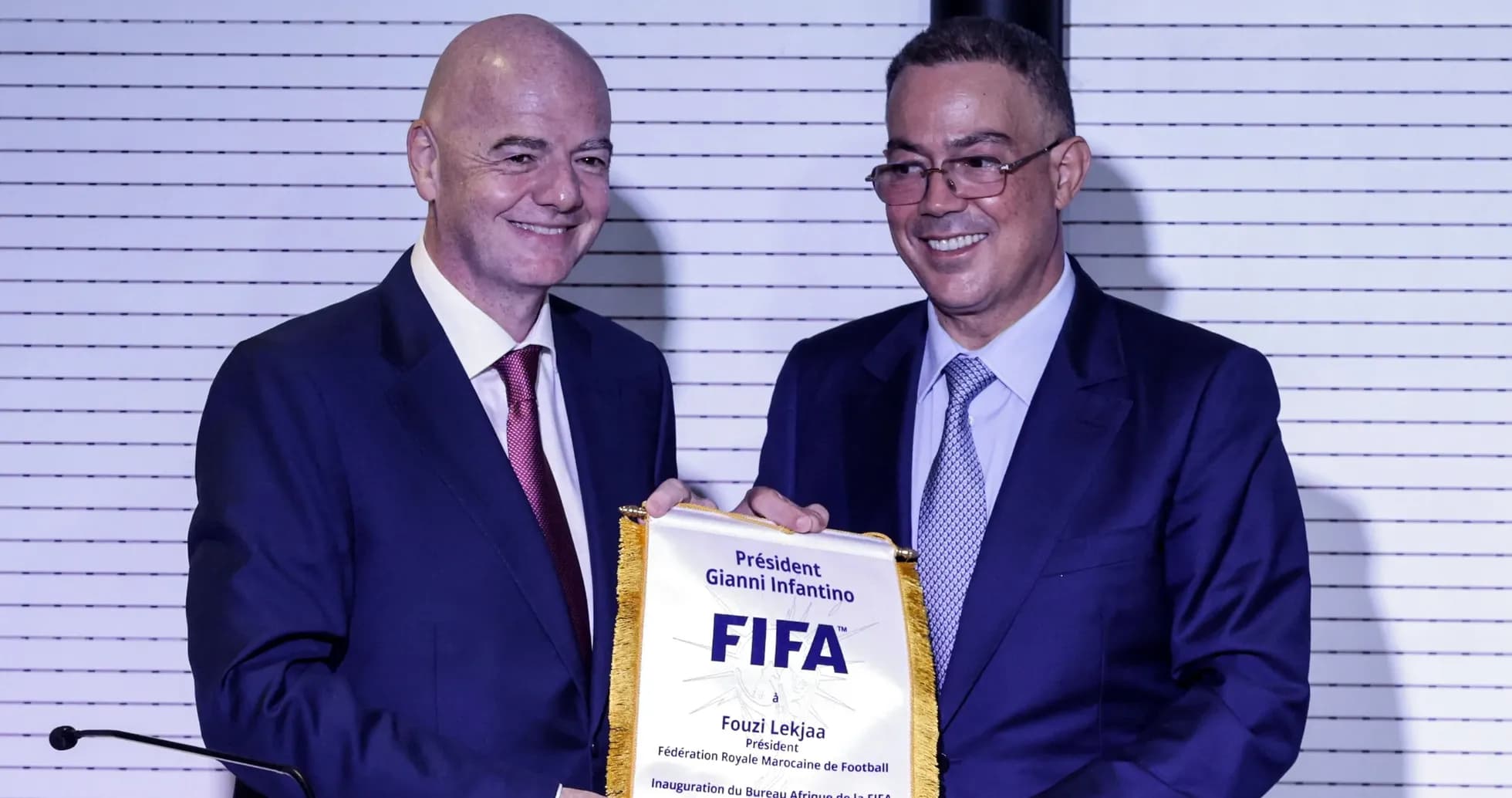
Prime Minister Aziz Akhannouch has publicly warned Fouzi Lekjaa, president of the Royal Moroccan Football Federation (RMFF), to stop making bold promises about Casablanca staging the showpiece match, with FIFA yet to confirm where the final will actually be played.
“There should be some respect, brothers”
The flashpoint came after Lekjaa, speaking at a political party event, declared that Morocco’s planned new mega-stadium in Casablanca would have the “honour” of hosting the final of the centenary World Cup, which Morocco will co-host with Spain and Portugal.
That claim went far beyond what has been agreed. And Akhannouch moved quickly.
Addressing supporters at a rally, the Prime Minister delivered a blunt message aimed squarely at the federation chief: “Do not offer to host the big final game in Morocco while we still have not discussed the matter with our allies, Spain and Portugal. There should be some respect, brothers. Stop using electoral promises to pull the rug out from under us. These are huge matters. Deciding where the final will be held is a major issue.”
The intervention underlined the sensitivity of the three-way bid. With opening matches also planned in South America to mark 100 years of the World Cup, the symbolism of the final has become a diplomatic balancing act as much as a sporting decision.
For Rabat, the dream is clear: bring the World Cup final back to Africa for the first time since Johannesburg in 2010. But that ambition now has to be sold carefully, not shouted from the stage.
FIFA waits, Spain pushes
FIFA has kept its cards close to its chest, saying only that “a decision will be made in due course.” No city, no country, no stadium has been given the green light.
Spain, though, is already behaving like the favourite.
Rafael Louzan, president of the Spanish federation (RFEF), has been unapologetically bullish about his country’s chances of landing the final. Speaking to Cadena SER radio, he said: “Even though no decision has been taken, I believe Spain is the place because it cannot be any other way. As you know, we are currently world champions. I believe Spain’s organisational capacity for major events is beyond question and that is why reality dictates that the grand final cannot and must not be held anywhere other than in Spain.”
It is a clear statement of intent. Spain sees itself as the natural home for the 2030 climax, armed with a fresh world title and heavyweight infrastructure.
The Santiago Bernabeu’s transformation into a year-round events arena and the ongoing expansion of Barcelona’s Spotify Camp Nou give Spain readymade stages that already impress FIFA and broadcasters alike. The RFEF believes that combination of recent success and proven venues gives it a decisive edge over its North African partner.
Casablanca’s giant gamble
Morocco is not backing down. It is betting big.
To strengthen its case, the country is building a vast 115,000-seat stadium near Casablanca, a project designed to dwarf even Europe’s most storied grounds. If completed as planned, it would become the largest football-specific stadium on the planet.
The message is obvious: Morocco is not just a junior partner in this bid. It wants to host the biggest night of all.
But Akhannouch’s intervention shows the government wants that message delivered with strategy, not bravado. With Spain and Portugal watching closely, the Prime Minister is trying to keep the three-way alliance intact while still pushing Morocco’s candidacy behind closed doors.
A long game, with high stakes
The timeline offers some breathing space. The 2026 World Cup final venue in the United States was not confirmed until early 2024, when New Jersey’s MetLife Stadium finally got the nod. The 2030 decision could drift on a similar schedule.
That delay cuts both ways. It gives Morocco more time to advance its stadium project and refine its diplomatic pitch. It also gives Spain more time to flex its status as reigning world champion and showcase its modernised arenas.
For now, Rabat’s priority is clear: cool the public rhetoric, avoid a rift with Madrid and Lisbon, and keep Morocco firmly in the conversation for the most coveted match in football.
When FIFA finally points to a city and a stadium, will the World Cup’s 100th birthday be celebrated under African skies or in the heart of Europe?