.svg&w=384&q=75 "GoalGist logo")
Michael O'Neill on Young Players' Tough Decisions
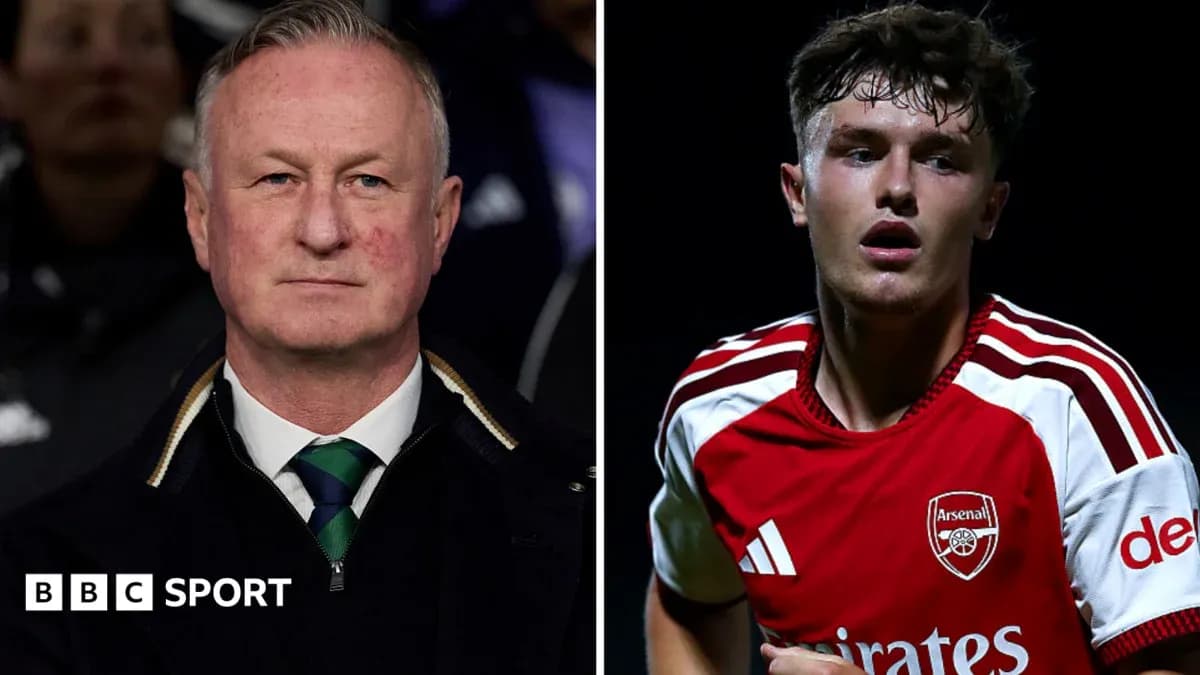
Michael O'Neill is used to talking about tactics, injuries and selection headaches. What really angers the Northern Ireland manager, though, is something far more fundamental: asking teenagers to make a decision that could shape – and limit – their entire international careers.
At the heart of it is Ceadach O'Neill, Arsenal’s highly rated teenager, already capped twice by Northern Ireland and now named in the squad for a Nations League quadruple-header. He has come through the Irish FA pathway, been in their academy since he was “a young boy”, as Michael O’Neill puts it. He is very much one of their own.
But he is also on the radar of the Republic of Ireland.
Under Fifa rules, any player born in Northern Ireland can choose to represent either Northern Ireland or the Republic. Once they formally switch international allegiance, though, they can only do it once. No way back.
For Ceadach O’Neill, that decision has arrived early. Too early, in his manager’s eyes.
The stakes of a single cap
Right now, if the Arsenal youngster wanted to play for the Republic at any level, he would need to submit a Fifa application to transfer his international allegiance away from Northern Ireland. If he features in this upcoming Nations League block, the picture hardens: he would then have to wait until he turns 21 before being able to switch.
If he reaches four senior caps, the door slams shut completely. No transfer. No second chance.
Michael O’Neill does not hide his frustration.
“My focus is on the player, and I have a duty of care to the player as his international manager, as we have as an association as well,” he said. “He’s been in our pathway since he’s been a young boy. He’s been part of our academy. He’s obviously had an approach from another association, which happens.
“The thing that upsets me the most in this is that putting a young player in a position to make an international transfer before he’s been a professional for even two years is, I think, not the right thing. It’s not something that any association should be doing.”
Identity, passports and a unique faultline
The complexity runs far deeper than football.
Under the Good Friday Agreement, the 1998 peace deal that followed decades of conflict, people born in Northern Ireland can hold both British and Irish passports. That dual identity is written into law and everyday life – and, inevitably, into football.
A 2010 ruling by the Court of Arbitration for Sport sharpened the issue. It confirmed that anyone born anywhere on the island of Ireland can represent the Republic, regardless of the usual eligibility measures: birthplace in the territory, a parent or grandparent born there, or five years of continuous residence.
That freedom does not work both ways. Players born in the Republic cannot represent Northern Ireland unless they qualify through those standard routes.
Michael O’Neill knows this is no ordinary eligibility tussle.
“We exploit eligibility, the same as every other country does, down to the grandparent rule, but this is a rule which is obviously unique between ourselves and the FAI [Football Association of Ireland],” he said.
“I think everyone recognises it’s not particularly fair, but as I say, our focus is to make sure our pathway for our young players is as good as possible and that’s a pathway for boys from any part of the community.”
The Republic’s push for talent
On the other side of the border, there is no apology for being proactive.
In May, FAI director of football John Martin made it clear the Republic intends to track every eligible player.
“We know there are kids out there who want to play for Ireland who haven’t been approached in the past,” Martin said. “That’s not right. It’s making sure we have a presence and we understand all the players available to us, and that they are being monitored and tracked.”
The battle for players is open, organised and strategic. For Northern Ireland, that means constant scrutiny of their own youngsters – and a recurring debate about nationality and identity that never quite fades.
Not tired of the debate – just tired of the consequences
Asked if the constant narrative around players in and around his squad wears him down, Michael O’Neill paused, then drew a line between the past and the present.
“It would have been in the past, it’s not tiresome now,” he said. “We have people who comment on this and talk about nationality and talk about identity and talk about all these different things, which are part of being born in Northern Ireland and growing up in Northern Ireland.
“But I think what we’re missing now is that we’re putting young players in a situation where they have to make a decision which is irreversible.”
For him, that is the crux. Not the debate itself, but the age at which players are forced into a corner.
Transfers in – and transfers out
Northern Ireland do not stand apart from the system. They use it too.
During O’Neill’s tenure, Tottenham Hotspur forward Jamie Donley has switched allegiance from England to Northern Ireland and is now a senior international. Ronan Hale moved the other way, transferring to Northern Ireland from the Republic while at Gillingham.
“We’ve done two international transfers in my time. Jamie Donley, who is now a senior international, and Ronan Hale, who was 25 at the time when we asked him to make that decision,” O’Neill said.
That age difference matters to him.
“I think there’s a point in a player’s career where you’ve just got to let him play and develop, enjoy his football without creating a situation like this.
“We haven’t created this situation. Ceadach’s been in our system all along and he’s in our squad now.”
The ones who left – and what might have been
The most high-profile cases of players switching away from Northern Ireland at underage level remain James McClean and Shane Duffy. Both went on to become mainstays for the Republic, each passing the 50-cap mark.
Michael O’Neill accepts their success but believes many others who made the same move did not enjoy similar careers.
“I think if you look at it from our point of view, there’s not many players that have been a success who have gone from Northern Ireland,” he said. “I can think of two, James McClean and Shane Duffy, who had international careers where they got over 50 caps.
“Otherwise, most of the other players who have gone that route have not played consistently or not had, I think, possibly the international career they could have had if they stayed here.”
That is not a threat, nor a plea. It is his reading of the numbers.
“It is a decision for the player to make, ultimately, and we have to respect that,” he added. “But as I’ve said all along, I think there’s two sides to this. There is obviously who you feel you should play for, but there’s also the situation around a football decision where you can have longevity in your international career.”
For Ceadach O’Neill and others like him, that decision now arrives earlier than ever. One choice, one form, one flag – and no way back.