.svg&w=384&q=75 "GoalGist logo")
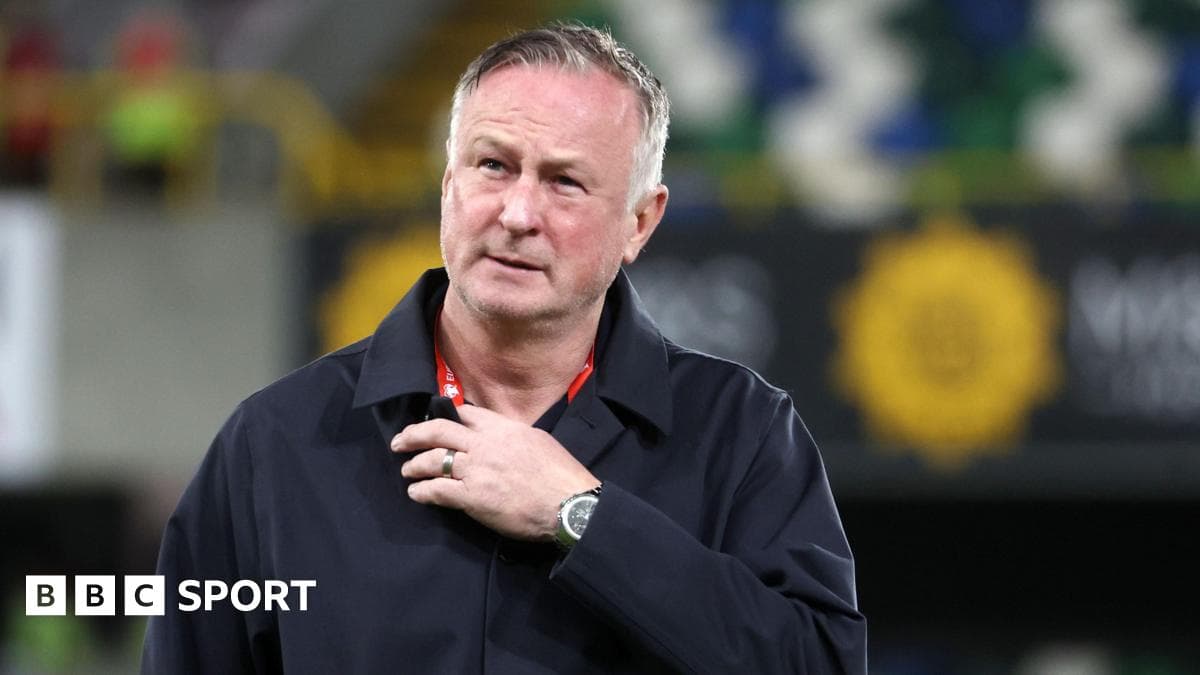
Michael O'Neill Chooses Country Over Club for Northern Ireland
Michael O’Neill has chosen country over club again, and in Belfast that decision will feel every bit as significant as a late winner in front of the Kop at Windsor Park.
Blackburn Rovers wanted him. Desperately. The 56-year-old had walked into a relegation fight at Ewood Park and dragged a listing Championship side back to safety during a short, sharp interim spell. He steadied them, organised them, and made what had looked like a lost cause suddenly feel routine.
He could have stayed. He was wanted, and he knew it.
Instead, after a spell of reflection, O’Neill has turned his back on the day-to-day grind of club football and nailed his colours once more to the international mast. His immediate future, he has decided, belongs to Northern Ireland.
A nation exhales
Inside the Irish Football Association, that choice will have landed like a gift. For supporters, it is something else: reassurance. The architect of Euro 2016 – the man who took Northern Ireland from also-rans to a major finals in France – is staying to oversee the next chapter.
And this time, the horizon is even bigger.
Euro 2028 will unfold across Great Britain and the Republic of Ireland. The finals will be on the doorstep. Qualification is not a romantic notion now; it is the obvious, explicit target. O’Neill, who has already proved he can navigate that path, will have the chance to try again with a squad that looks built for the long road rather than a brief fling.
That squad is young, raw, and increasingly fearless. The likes of Conor Bradley, Trai Hume, Dan Ballard and Shea Charles have injected a new tempo into the national side. There are mistakes, of course. There is also energy, ambition and a sense that something is growing.
Former Northern Ireland defender Stephen Craigan has watched that evolution from close quarters, in the gantry and in the studio. For him, O’Neill’s decision lands at exactly the right time.
“I’m delighted he’s staying. I think the progress of the young group over the past two or three years has been a joy to watch,” he told BBC Sport NI’s Thomas Kane, summing up what many inside the camp will feel but cannot say as plainly.
Rhythm preserved, belief reinforced
Craigan’s central point is simple: change the manager now and you risk breaking the rhythm.
“There’s no doubt there is lots of potential still in them, lots of growth still in them,” he said. At this stage of their development, a new voice, a new system, a new way of working could have cut across the fluency and cohesion that has quietly been building.
O’Neill staying keeps the lines clear. The same messages. The same expectations. The same man who has already taken a Northern Ireland side to a major tournament standing in front of a dressing room full of players who grew up watching him do it.
“Ultimately, short term he has committed himself to this young group of players,” Craigan added, backing that stability to set the tone for a strong summer and the Nations League campaign that follows in September and October.
The players, crucially, buy into it. They talk openly about how much they enjoy working under O’Neill, how he has sharpened them tactically, how his sessions and game plans have accelerated their understanding of international football. That respect is not easily replaced.
“When the players know the manager has belief and trust in them and is excited by what they can give over the next few years, that will give them a huge shot of confidence,” Craigan said.
Club temptation will return
The irony is that the very job he has just turned down may only be the start of the club interest.
Blackburn’s survival under O’Neill did not go unnoticed. He walked into what “almost looked like a lost cause,” as Craigan put it, and left it looking manageable. That sort of impact, in the unforgiving world of the Championship, tends to stay in the minds of owners and sporting directors.
Craigan is convinced others will come calling.
“Unless the IFA extend his contract there clearly is the potential of another club coming in,” he said. There will be a release clause. There always is. For country or club, modern contracts are written with escape hatches.
That is where the next decision lies – not with O’Neill, but with the IFA.
If Northern Ireland want to build something lasting, they cannot afford to drift into a situation where the national manager is constantly one phone call away from walking back into club football on a loan-style arrangement. Craigan is clear: the next deal needs to be firmer, cleaner.
“If they did look to extend his contract, which I would be more than happy for them to do, it probably has to be more stringent as regards club football. There would be no more loans involved as regards helping clubs out. It would either have to be a clean break or it’s not.”
Time to put down roots
For Craigan, both sides now have to show their hand.
“Michael has to think about putting down some roots and saying, ‘I’m going to be an international manager, that’s it’, and the IFA have to say, ‘we want you to stay here for another three years beyond your current two years you have left on your contract, extend it’.”
That, he argues, would protect the association, the project and the players. The contract, in his view, should be weighted towards the IFA, with every scenario considered and locked down. If O’Neill gets the terms he wants, Craigan “doesn’t see any reason” why he would not sign.
Behind those negotiations sits the core football reality: this squad is built for the long haul. Bradley bombing on from right-back. Hume maturing with every cap. Ballard anchoring the defence. Charles gliding through midfield. They are not just names on a teamsheet; they are the spine of a team that expects to peak around 2028.
“The one thing you always hear when the players are interviewed, they speak very highly of Michael, they like the way he works,” Craigan said. “He has clearly improved a lot of them individually, even with regards to just tactical shape. The players have taken things on board and have made great strides.”
The plan has always been clear. Target Euro 2028. Stack up caps. Accumulate experience. Learn the hard lessons in the Nations League and in friendlies. Along the way, promotion to Nations League B arrived – a key step, and with it the bonus of a World Cup play-off route.
That kind of structural progress rarely makes headlines. It matters all the same.
Big tests ahead, bigger prize in sight
The next checkpoints come quickly. Guinea in Cadiz. France in Lille. Two June friendlies that will test this young group in very different ways: one against an emerging African side, the other against one of the giants of the European game.
Then the autumn brings a Nations League group with Georgia, Hungary and Ukraine. Tricky, awkward opponents, each with their own threats. Exactly the sort of games a developing international side needs if it wants to be battle-hardened by the time the serious qualification campaigns roll around.
Yet all of it sits beneath one headline objective: reach the next European Championships.
“The next step is going to be qualifying for a major tournament and I just think having Michael there beside them, having done that before, will give the players plenty of hope,” Craigan said.
Northern Ireland still need to sharpen up in the final third. They must find more creativity, more cutting edge, a reliable goalscorer. That tends to come as players age, as they grow into the tempo and pressure of international football. The base, though, looks solid.
“They look like a really strong unit and I think having Michael leading them will give them great confidence, especially coming into two international games in the summer,” Craigan added.
Had O’Neill walked away now, the whole summer would have felt different. An interim coach. Uncertainty. Players quietly wondering whether to push through fatigue at the end of a long club season for a camp led by a temporary figurehead. It could have been messy.
“It would have been uncomfortable for them coming into these games,” Craigan admitted. “It would have looked a little bit untidy but the fact that he has made this decision gives the players a major boost.”
So O’Neill stays. The project continues. The young core grows together under the same voice, the same ideas, the same man who has already taken Northern Ireland where they want to go again.
The question now is not whether he believes in them. That has been answered. It is whether this generation can turn that faith into another summer on the big stage, with Euro 2028 looming ever larger on their own doorstep.