.svg&w=384&q=75 "GoalGist logo")
Michael O’Neill Chooses Northern Ireland Over Blackburn Rovers
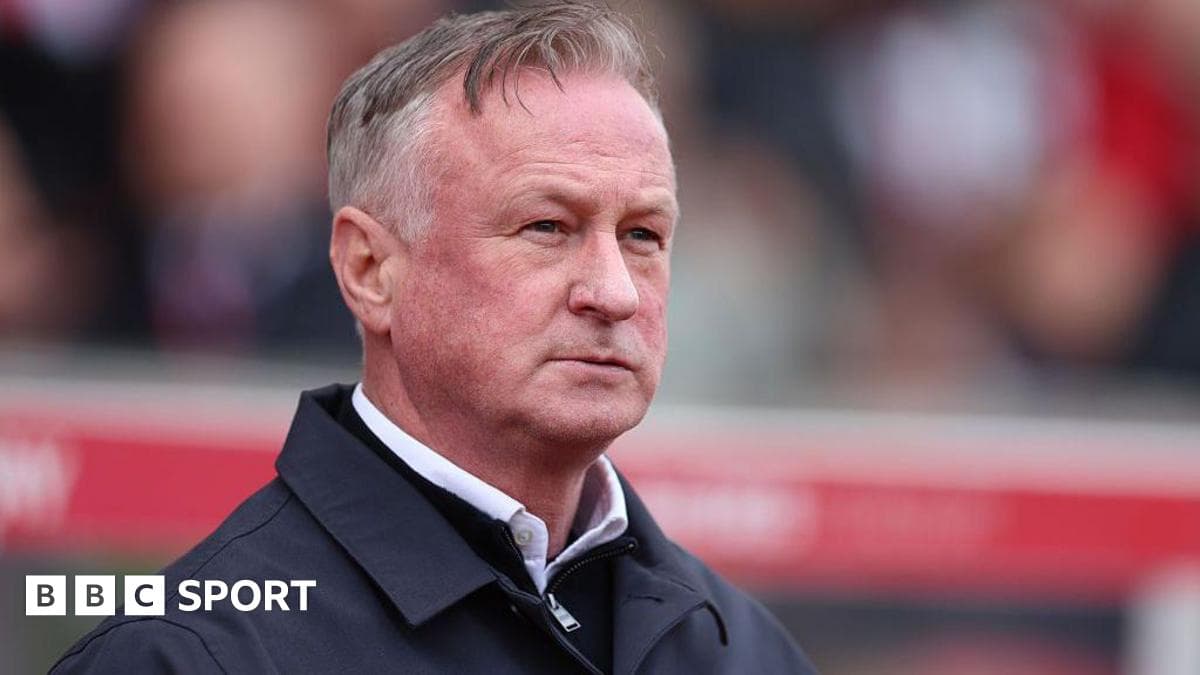
Michael O’Neill has chosen country over club. The Northern Ireland manager will not take the Blackburn Rovers job on a permanent basis, ending any prospect of a long-term dual role and nailing his colours firmly to the international mast.
Appointed as interim head coach at Ewood Park in February, O’Neill juggled the Championship relegation fight with the demands of international football and somehow kept both plates spinning. Blackburn survived, finishing 20th in the second tier, and his record – five wins, five draws, five defeats in 15 games – told the story of a steadying hand more than a revolution.
But the question always lurked in the background: which job would he keep?
Decision made: Northern Ireland first
O’Neill never pretended he could do both forever. Throughout his short spell in Lancashire, he was clear that a permanent job share was unrealistic and that, at some point, he would have to choose.
That moment has arrived.
“Following discussions with the club, Michael has decided to continue his long-term commitment to his role as Northern Ireland head coach, with a focus on leading the national team towards qualification for the Uefa European Championships in 2028,” Blackburn said in a statement.
O’Neill’s own words carried the tone of a man grateful but resolute.
He described Blackburn Rovers as a “historic football club with a proud tradition and passionate supporters” and said he had “thoroughly enjoyed” working with players and staff. Then came the decisive line: his long-term focus “must remain with Northern Ireland and the journey towards the European Championship campaign ahead”.
Blackburn will now start the search for a new permanent head coach, with the club confirming that the recruitment process is under way and updates will follow.
A nation’s coach, again
For Northern Ireland, this is more than continuity. It is a statement that the project O’Neill restarted in 2022 will not be cut short just as it begins to gather pace.
Across his two spells in charge, O’Neill has managed 104 games for his country, winning 38, drawing 23 and losing 43. The numbers alone do not capture his impact, but one milestone does: he led Northern Ireland to Euro 2016, their last appearance at a European Championship finals. The aim now is to repeat that feat for Euro 2028.
The Irish FA made no attempt to hide their relief.
“We are delighted Michael has decided to stay on as Northern Ireland manager. He has built another exciting squad of players and we now look forward to building on this momentum as we plan for both the Uefa Nations League campaign this autumn and the subsequent qualifiers for Euro 2028 with Michael at the helm,” read their statement.
Supporters will share that sentiment. For months, O’Neill’s future had hovered in the background. In March, he spoke about “returning to the status quo” for the June fixtures, hinting at a return to a single focus. By April, he admitted the decision was still outstanding, a delay that would have unsettled fans and players alike.
Now the uncertainty has gone. So have the alarm bells.
A young side, a clear path
Like his first spell, O’Neill inherited a Northern Ireland side in difficulty when he replaced Ian Baraclough. They failed to qualify for Euro 2024 and missed out on this year’s World Cup, but the trajectory has shifted. The team looks more competitive, more ambitious with the ball, and significantly younger.
The defeat to Italy in a World Cup play-off in March underlined that point. The average age of Northern Ireland’s starting XI that night was just 22.5 years – the second youngest in the country’s history since World War Two. Strip in the absences of Conor Bradley, Dan Ballard and Ali McCann, three key players who missed that game, and the age profile barely moves. This is a squad built for the long haul, not a last throw of the dice.
The ceiling is high. O’Neill knows it, the Irish FA know it, and now he has committed to seeing how far this group can climb.
Immediate tests, long-term target
The calendar leaves no time for sentiment. Northern Ireland face friendlies in June against Guinea in Cadiz and France in Lyon, fixtures that will sharpen a young squad against contrasting styles and serious opposition. Then comes the competitive grind.
In September, O’Neill’s side begin their Nations League campaign in Group B2, drawn against Hungary, Georgia and Ukraine. It is a group that offers a realistic chance to build momentum, test themselves against upwardly mobile nations and lay foundations for the Euro 2028 qualifiers.
Crucially, those preparations will not be disrupted by a managerial change. The Irish FA know how valuable that is. When O’Neill first left in 2020, the Northern Ireland job was a harder sell. Now, with a youthful core and a clearer identity, the role would have attracted serious interest. They will be relieved they do not have to start again.
Blackburn, by contrast, must reset. They have time on their side, with the 2026-27 campaign still some way off, but also a big decision to make after flirting with relegation.
O’Neill has made his call. The club game will move on without him. Northern Ireland, with their manager locked in and a generation of emerging talent at his disposal, will now discover whether this loyalty can be turned into another historic summer on the European stage.