.svg&w=384&q=75 "GoalGist logo")
Mauricio Pochettino's Vision for US Soccer: More Than Just Coaching
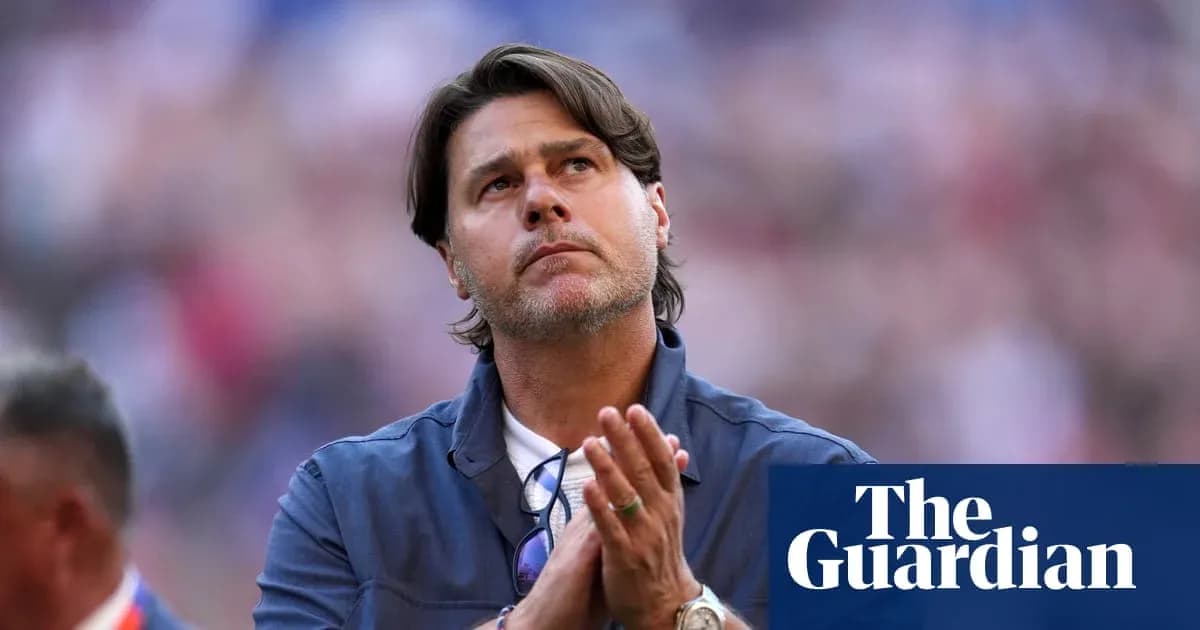
Mauricio Pochettino is back on the grass, but this feels bigger than a simple return to work.
Two months after the US men’s national team’s World Cup collapse, the Argentinian is not packing his bags and moving on, as many expected when he took the job in 2024. Instead, he has doubled down. A new contract signed in August ties him to a second World Cup cycle and, crucially, hands him more power than any USMNT coach has held before.
This is no longer just about lineups and substitutions.
A coach, and an architect
When Pochettino arrived, he was widely seen as a short-term, high-end rental: a proven club coach brought in to squeeze everything out of a home World Cup. The relationship has shifted. US Soccer’s announcement of his extension came with a notable twist – he will now help steer youth development, shape coaching education and advise on collaboration with the professional game.
In other words, Pochettino isn’t just coaching the national team. He’s helping design the ecosystem around it.
That level of influence is not unusual in some footballing powers, but it is new territory for the United States. No previous US coach has been handed such a broad mandate over the direction of the program.
He will not be waiting long to exercise it. US Soccer is in the middle of a major restructuring and is hiring new directors to oversee both the men’s and women’s senior and youth setups. Pochettino has already made clear he wants to be involved in those conversations – with one caveat.
“It can’t [just] be my guy,” he joked, stressing that the appointments must fit a wider vision, not just his personal preferences.
For him, the project stretches far beyond the next qualifying campaign.
“This is the future of the USA,” Pochettino said. “We want to try to perform in the World Cup and to create something special with the fans. And now it’s about being a part of the legacy that the federation wants to create – becoming one of the most powerful countries in soccer. That is a dream, no? It’s amazing. If we can be part of that, we are so excited and so happy.”
The schedule in front of him looks busy, and only part of it is about the senior team. The US will play four friendlies in late September and early October against Peru, Chile, Mexico and Canada. On the horizon, the federation is already planning for the Los Angeles Olympics in 2028, and it has been widely reported the US may also feature in the Copa América that same summer.
All of that sits alongside the obvious, brutal bottom line: qualify for the 2030 World Cup and be ready to do more than simply show up.
Balogun’s bruising deadline day
While the structural work happens in boardrooms, the human side of the job has landed squarely on Pochettino’s desk.
This summer’s transfer window was relatively quiet for the USMNT. Gio Reyna moved to Strasbourg, Sebastian Berhalter joined Middlesbrough, and teenager Zavier Gozo jumped from MLS to Crystal Palace. Many others stayed put.
Folarin Balogun expected not to be one of them.
After a breakout World Cup, the Monaco forward looked set for a big-money move. Everton pushed late. The deal collapsed even later. The Premier League club cited a potential fitness concern. Monaco disagreed. So did Balogun.
It was classic deadline day whiplash, and Pochettino knows the damage those 11th-hour reversals can do.
“Yes, it’s difficult because you cannot influence that decision,” he said. “You need to support what they are doing with the people making the decisions. In some special cases, like Flo’s, I will call in the next few days. I wanted to give him a little bit of space after that situation in Everton. I want to know from him what happened. But we are always offering our support, and that’s it. I think he’s an important player for us, he was an important player in the World Cup and I hope that he can find being in Monaco, or in another place, his best place to perform in the best way.”
For a coach trying to build a core capable of carrying the US into the next decade, Balogun’s stability matters. So does his confidence. Pochettino is clearly intent on protecting both.
The tug-of-war for talent
If Pochettino’s new role gives him a say in the future of American soccer, the battle for dual nationals will help define how that future looks.
The 26-man roster for this month’s camp has not yet been announced, and Pochettino kept his cards close. One name is already off the list: Augsburg center-back Noahkai Banks.
The 19-year-old, eligible for both Germany and the US, has not made up his mind. He has said he wants to decide by “the next international break, or at the latest by the international break after next.” Germany are pushing. Reports there say new national team head coach Jürgen Klopp has even scouted Banks in person.
Pochettino is not walking away from that fight.
“We are in contact with all the potential dual nationals,” he said. “I think it’s important for us, of course, because that is the human connection that is so important. Even if they, like in that case, Noki, didn’t change his mind and is waiting still, no decision, and of course we cannot consider him for the next camp … But the organization is working with all the dual nationals and players with the possibility to make a decision. That human connection is important because if one day they feel that they can defend and they want to fight and to be part of our national team … Of course, if they deserve it, and we consider that they deserve to be involved, of course we are going to call [them up].
It is a simple formula: build relationships now, reap the rewards later. The US cannot match the tradition of Germany or Argentina, but with a coach of Pochettino’s profile fronting the project, it can at least make a compelling case.
The next few weeks will bring friendlies, selections, and the usual debates about tactics and form. Yet the real story around the USMNT has shifted. Pochettino is no longer just managing a team; he is trying to help build a football nation.
The question now is whether the country can grow quickly enough to match the scale of his ambition.