.svg&w=384&q=75 "GoalGist logo")
Mauricio Pochettino Contract Offer to Lead US Men's National Team Through 2030
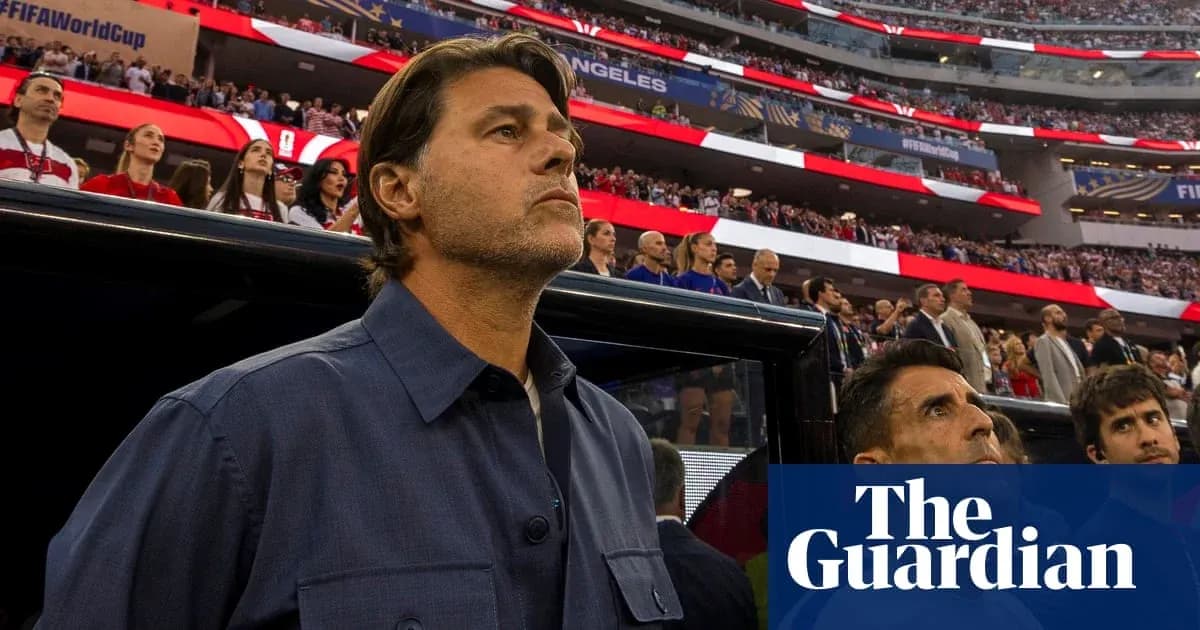
Mauricio Pochettino has been offered a contract that would anchor him to the US men’s national team through the 2030 World Cup, a bold move from a federation intent on turning a promising chapter into a full era.
Multiple sources familiar with the talks confirmed the offer on Friday, speaking on condition of anonymity because they were not authorized to discuss the negotiations. The proposal is the culmination of roughly three months of back-and-forth between Pochettino and the US Soccer Federation, a process that has unfolded in parallel with the coach’s rising stock on the international market.
A Long Courtship, and Outside Temptation
This has not been a quiet negotiation. Pochettino and US Soccer CEO JT Batson have both acknowledged the discussions in recent weeks, even as reports linked the Argentinian with a possible return to club football at Milan.
Pochettino kept his cards close to his chest when asked about the Serie A club. Batson did not. He spoke openly in late May about the level of interest in the 54-year-old, framing it as proof of the coach’s value and of the project the federation believes it is building.
“[Pochettino], and the entire team, has been incredibly transparent [through] the entire process,” Batson said in May. “He had standing offers from other places to come [when we hired him initially], and he wanted to be here. He’s a big believer in what we’re doing at US Soccer. He’s a big believer in soccer in America, and he’s a big believer in this men’s team.”
Those comments now read like the preamble to a major commitment. US Soccer wants stability. It wants a figurehead. It wants Pochettino.
For his part, the former Tottenham Hotspur manager has been clear on one point: no decision until after the World Cup. The current deal already places him among the best-paid national team coaches in the sport, with publicly available figures listing his salary at around $4m per year, boosted significantly by performance bonuses. Extending him through 2030 would be both a financial and philosophical statement.
The Athletic first reported news of the contract offer.
Mixed Tenure, Undeniable World Cup Impact
Pochettino’s 22 months in charge of the US have not been smooth from start to finish. Results and performances in the early stages of his tenure sparked debate about his fit for the international game, a realm he had never entered before taking the job.
The World Cup has changed the temperature of that conversation.
Under Pochettino, the US have delivered their best-ever group-stage performance at a World Cup. They brushed aside Australia and Paraguay to clinch top spot in their group with a game to spare, playing with a control and attacking edge that has often eluded previous generations. A final group match against already-eliminated Turkey ended in a narrow, hard-fought defeat, but the damage had been done in the best possible way: the Americans were through, and they looked like they belonged.
Next comes Bosnia and Herzegovina in the last 32. By reaching the knockout rounds, Pochettino’s team now sit just two wins away from matching the US’s best finish in the modern era. That proximity to history, combined with the manner in which they have navigated the group, has sharpened the federation’s desire to lock in its coach before the rest of the world comes calling again.
A Coach Open to Staying, a Fanbase to Win
For months, the assumption around the US camp and across much of the global game was simple: Pochettino would use the World Cup as a showcase and then walk back into elite club management. He had never hidden his attachment to the day-to-day rhythm of club football, and the US job looked, at first glance, like an intriguing but temporary detour.
That narrative has started to bend.
“We told the federation we are open,” Pochettino said at a media roundtable this week. “But we don’t want to distract when all the energy needs to be with my players ... If the American people start to show passion in our sport too, why not be here being part of something that can create a legacy? For me, the most important legacy is the connection between the national team and the fans.”
It is a revealing answer. He is not just talking about tactics or facilities or salaries. He is talking about emotion, about the bond between a team and its public. For a country still defining what its football identity should be, that language matters.
A Federation Thinking Big
US Soccer’s pursuit of Pochettino fits into a broader push to elevate the men’s program. The federation recently opened a $250m training facility in Atlanta, Georgia, a sprawling complex designed to serve as both a high-performance hub and a physical symbol of its ambitions.
Hiring a coach of Pochettino’s profile was the first major statement. Offering him a deal that runs through a home World Cup in 2026 and all the way to 2030 is the next.
The timing is delicate. The World Cup campaign is still alive, with Bosnia and Herzegovina looming and the possibility of a deep run still very much on the table. Pochettino has made it clear he does not want contract talk to overshadow his players’ moment.
But the offer is there. The groundwork has been laid. A federation with money invested and a coach with momentum behind him now face the same question: is this a brief, exhilarating chapter, or the start of something that could genuinely reshape the place of the US in world football?