.svg&w=384&q=75 "GoalGist logo")
Matheus Cunha and Harry Kane: The Obsession with Being 'Nice'
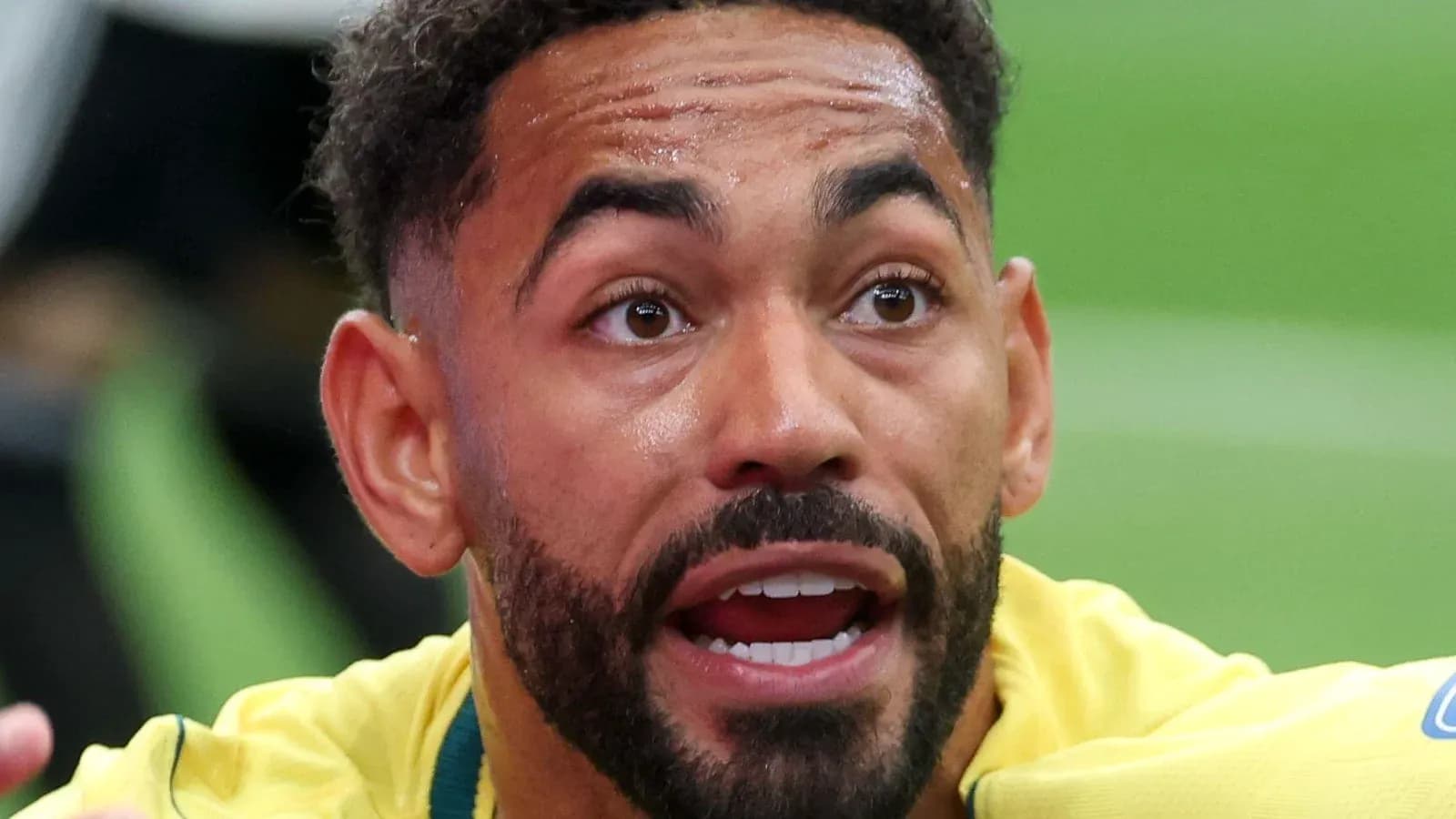
Matheus Cunha, we are told, will never be Vinicius Junior for Brazil. He will probably fail at Manchester United as well. The charge sheet? He’s too nice.
That is the leap made around Brazil’s win over Japan, where Cunha’s crime was to console Ao Tanaka before joining in with his own team’s celebrations. A small, human moment on a World Cup stage has somehow been dragged into a grand theory about his ceiling as a footballer.
Kane, ego and the language of favourites
The Daily Mail’s Craig Hope describes Harry Kane as a man without ego “in a traditional sense” – “the humblest of superstars” – before adding that he could not score as many goals as he does without “a stubborn streak of high self-regard.”
So he doesn’t have an ego, except for the bit where he very obviously does.
The wording matters. Kane’s self-belief becomes a “stubborn streak of high self-regard,” framed as a necessary ingredient for greatness. Jude Bellingham, by contrast, has previously been painted in far harsher strokes: a “divisive soloist,” a “poster boy for moodiness,” “brand ambassador for petulance,” “an angry young man.”
Two elite competitors. Two strong personalities. One cast as quietly noble, the other as problematic. The football is similar; the language is not.
The contrast only sharpens when Hope moves on to explain why Barcelona might tempt Kane more than Bayern Munich. We are reminded that “Bayern is not Barca and the Bundesliga is not LaLiga. Der Klassiker is not El Clasico. Der Klassiker is Bayern versus Dortmund, by the way.”
As if no one knew.
Bayern, in this framing, become merely “stable,” “familiar,” “logical.” Barcelona are “irresistible.” This, despite Bayern going further in the Champions League last season and winning more trophies. One club’s achievements are treated as solid but dull, the other’s as endlessly romantic, even as the facts point in another direction.
The story isn’t just what is written. It’s how it is written, and for whom.
Brazil, Japan and a “major boost” that wasn’t
On to Brazil’s win over Japan, and a curious line from the Daily Mirror’s Matty Hewitt. He suggests it “looked as though the Three Lions were going to be given a major boost” when Japan took the lead, with Brazil at risk of going out.
A reminder: England lost to Japan three months ago. Calling Japan a “major boost” for anyone, let alone England, ignores the recent evidence. England have actually beaten Brazil more recently than they have beaten Japan.
The idea that Japan’s success automatically helps England still leans on an outdated hierarchy, one where certain nations are permanently cast as obstacles and others as stepping stones, regardless of what happens on the pitch.
Cunha, character and a convenient narrative
From that same game comes Jeremy Cross’s angle: “Matheus Cunha’s classy World Cup act can’t hide uncomfortable Brazil truth for Man Utd star.”
The “classy act” is Cunha comforting Tanaka. The “uncomfortable truth” is the supposed perception that Cunha “lacks the grit to go with the guile needed to become a great footballer, instead of a good one.”
This “general feeling” and “awkward narrative” appears fully formed in the piece, as if it has always been there. Yet Cunha’s career hardly screams softness. He was once banned for removing an Ipswich security guard’s glasses in what can only be described as a fracas. That is not the behaviour of someone universally considered too gentle for elite football.
More to the point, the idea that a brief, empathetic gesture towards a distraught opponent is evidence of a lack of edge is a stretch. Players have consoled rivals for decades without anyone questioning their desire to win.
Then comes the closing blow: when Neymar finally walks away from the national team, “the chances are he will hand it to Vinicius Jr – not Cunha.”
Of course he will. Vinicius is already the face of Real Madrid and Brazil’s attack. That succession plan has nothing to do with Cunha’s decision to show a bit of humanity in a high-pressure moment.
Nice does not mean weak. Compassion does not cancel ambition. The game’s history is full of ruthless winners who still found time to pick someone up off the turf.
Nagelsmann, “snapping” and the framing of conflict
Germany’s penalty shootout exit to Paraguay brought another headline, this time from MailOnline: “Germany manager Julian Nagelsmann snaps at female reporter’s questioning after being knocked out of the World Cup by Paraguay – as Jurgen Klopp eyes up his job.”
Two choices jump out immediately.
First, the decision to describe Lili Engels as a “female reporter” in the headline. Inside the piece, she is simply a reporter. The gender tag seems to exist largely to sit alongside a prominent photo. It also changes the tone: “snaps at a reporter” is one thing; “snaps at a female reporter” carries an extra, loaded implication.
Second, the word “snaps.” Watch the exchange and you see a slightly tense interview between two professionals. One of them has just overseen a very public failure. He is under pressure, his answers are clipped, his patience thin. It is not pleasant, but it is a long way from a meltdown.
Label that as “snapping” and “infuriated” and you turn a normal post-match flashpoint into a character indictment. The pressure of the job becomes a personality flaw.
The quiet power of how stories are told
Across these pieces, a pattern emerges.
Kane’s ego is rebranded as admirable resolve. Bellingham’s similar intensity becomes a character defect. Bayern’s success is downplayed to preserve Barcelona’s aura. Japan’s progress is framed as an English opportunity, despite recent results saying otherwise. Cunha’s empathy becomes a stick to beat him with. Nagelsmann’s testy interview turns into a gendered flashpoint.
None of this changes the scores, the tables, the trophies. But it does shape how players and managers are viewed, how careers are talked about, and how fans understand what they see.
Football is not short of hard edges. It does not need kindness to be reinterpreted as weakness, or pressure to be exaggerated into crisis. Sometimes a player is just consoling an opponent. Sometimes a manager is just having a bad five minutes on live television.
The game will keep churning out new stars, new villains, new storylines. The question is whether we are describing them, or quietly deciding who they are allowed to be.