.svg&w=384&q=75 "GoalGist logo")
Manchester United Secure Key Midfield Signings
For a few days at the start of the week, the old doubts crept back in around Old Trafford. Tottenham had gazumped them, the big midfield target was gone, and the familiar narrative of United floundering in the market was ready to roll again.
Then the club did something it has too rarely managed in the last decade. It stayed calm.
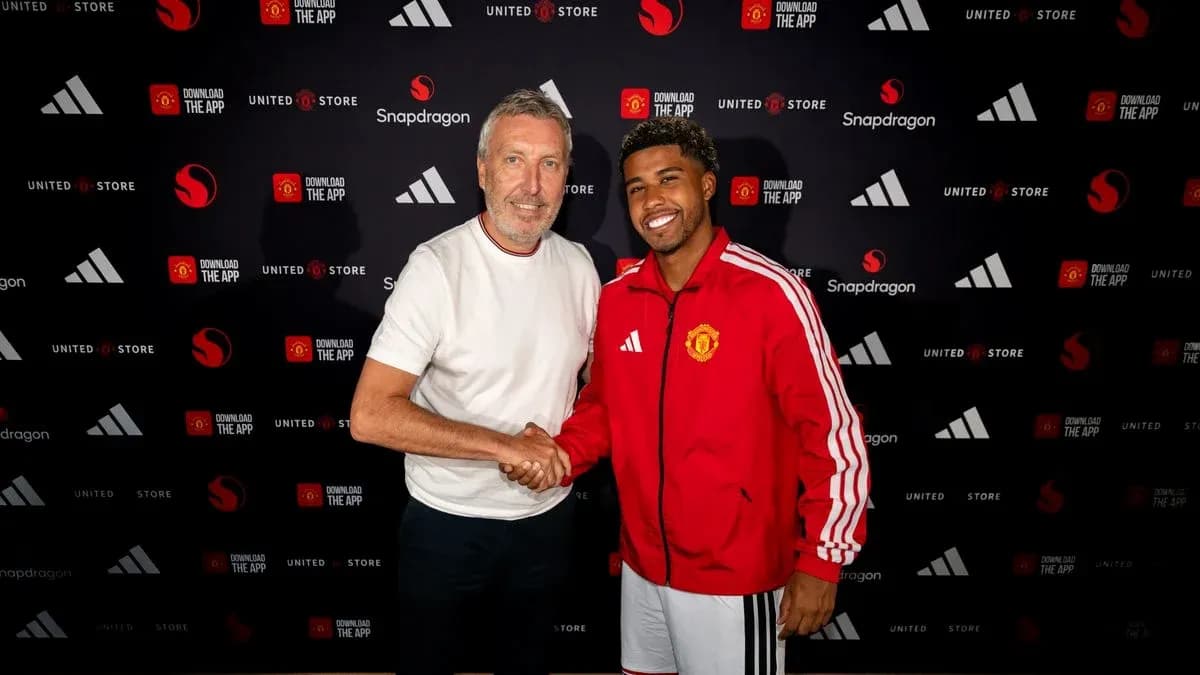
Within 48 hours, Manchester United had completed two midfield signings. Andrey Santos arrived for £50 million on Monday, Youri Tielemans followed on Tuesday for £35m. Two players, two profiles, one clear message: this is a very different recruitment operation to the one that once panicked its way into the Casemiro deal.
Spurs pay the premium, United take the value
The flashpoint was Mateus Fernandes. United liked him. A lot. He had tracked closely behind Elliot Anderson on key midfield metrics last season, and his ceiling is high enough for Manchester City to have already moved for Anderson himself.
But West Ham wanted £85m up front. Tottenham paid it, and then threw a £250,000-per-week contract on the table. United walked away.
That single decision may define their summer.
United’s response was not to chase the mistake, not to allow the Anderson miss to trigger a second bout of desperation. Under the previous regime, it is easy to imagine the club folding, as they did when Frenkie de Jong slipped away and Casemiro suddenly became a necessity at any price.
This time, the new decision-makers held their line. For the same combined fee that Spurs paid for Fernandes alone, United secured Santos and Tielemans. Whatever Fernandes becomes, nobody can argue with the arithmetic.
Santos and Tielemans: different stages, same logic
Santos is a project, not a finished product. United know that. But so is Fernandes, whose CV already carries back-to-back relegations from the top flight. The gap in their development is nowhere near £85m, and certainly not a quarter-of-a-million a week in wages.
Tielemans, by contrast, is the known quantity. Seven-and-a-half years of Premier League football, one of the division’s most consistent midfielders in that period, and a player Aston Villa were desperate to keep this summer. He brings something United’s midfield has lacked for too long: reliability.
The numbers behind his game explain the attraction. Over the last few seasons, the 29-year-old has sat near the very top of the league for passes completed to a team-mate within three metres. It is a small, telling detail. Tielemans knits moves together, keeps the ball moving, connects the structure. His range of passing is not just expansive, it is dynamic – switches of play, disguised passes through the lines, tempo changes. Michael Carrick will have a genuine conductor to work with next season.
Jason Wilcox did not bother with understatement when Tielemans was unveiled.
“Youri has consistently been one of the most outstanding midfielders in the Premier League,” he said. “He has all of the technical qualities, as well as the ambition and mentality, to thrive at United.”
He also highlighted the Belgian’s leadership. That matters. Tielemans was handed the armband for Belgium last year and wore it in his final season at Leicester. With Casemiro gone, United lost a loud voice and a big personality in the dressing room. Tielemans does not shout in the same way, but he leads, and he leads often.
A club learning from its mistakes
None of this happens in a vacuum. United’s board has taken heavy punishment over the last 12 months, much of it deserved. The Ruben Amorim experiment was a disaster almost from day one.
Amorim did some of the dirty work the club needed. He cleared out big egos, confronted a fractured dressing-room culture and tried to reset standards. The problem was that the football collapsed around it. In the Premier League, he posted the worst win ratio, the worst goals-conceded-per-game figure and the lowest clean-sheet ratio of any United manager in history. For a club that once measured itself by titles, those numbers are damning.
Insiders believe Amorim talked himself out of the job, that he was actively working towards an exit by the end. Whatever the truth of that, the board’s decision to hire him was rightly savaged.
But the same board, reshaped and re-energised, is now starting to get the big calls right. Last summer felt like a turning point in recruitment. This window has been more awkward, more complex, but the Santos and Tielemans deals suggest the underlying strategy remains intact: identify value, resist panic, refuse to be dragged into wage structures that blow up the dressing room.
The Fernandes saga is a perfect stress test. Matching Tottenham’s £250,000-per-week offer would not just have been expensive; it would have been destabilising. United are trying to shrink an inflated wage bill, not inflate it again to soothe bruised egos after missing out on Anderson. Handing that kind of money to an unproven midfielder with two relegations behind him would have sent exactly the wrong message to a squad already under review.
Instead, United chose restraint – and were rewarded with depth.
A different kind of summer
Nobody at Old Trafford is pretending the job is done. United still want a third high-quality midfield addition. Other areas of the squad need attention. The margin for error remains thin after years of drift.
But this week has offered something the club has not always been able to sell: evidence. Evidence that lessons are being learned. Evidence that the recruitment department can pivot under pressure without losing its head. Evidence that value still exists in a market that punishes weakness.
Santos brings upside. Tielemans brings certainty. Together, at the price of one overpaid gamble in north London, they hint at a club finally starting to think like an elite operator again.
The question now is simple: can this new-found discipline survive the next moment of temptation in a window that still has weeks left to run?