.svg&w=384&q=75 "GoalGist logo")
Manchester City Faces Uncertainty as Guardiola Era Ends
Manchester City stand on the brink of something they have not known for more than a decade: uncertainty.
Pep Guardiola has gone, taking with him an era, a style and a certainty of success that became almost routine. Bernardo Silva and John Stones, two totems of that period, are following him out of the door. The faces that defined a dynasty are slipping away, and into that void steps Enzo Maresca, charged with keeping City at the summit while reshaping the squad in his own image.
Guardiola’s parting message lingered in the air after his final press conference. Celebrate the good moments, the wins, the journey. Don’t just wait for trophies. It sounded less like a farewell and more like a warning: this group can still compete on all fronts, but nothing is guaranteed from here.
The domestic cup double proves there is still steel in this squad. The winning habits are ingrained. Yet beneath the surface, the cracks and questions are obvious. The players outside the established core have not convinced. Depth pieces have not become mainstays. Maresca inherits a team that can win now, but also one that needs hard decisions and sharper edges.
And for at least nine players, the next few months could define their careers.
James Trafford – too good to wait?
James Trafford has done almost everything asked of him. This season underlined what many inside the club already believed: he is good enough to be a Premier League No.1.
City would happily keep him at the Etihad. The problem is the role. Trafford will not want another year watching from the bench. There is a slim, tantalising possibility that Maresca could elevate him above Gianluigi Donnarumma, but it feels distant. Trafford cannot gamble a crucial year of his development on a maybe.
He will have offers. Plenty of them. The question is whether his future is as City’s long-term goalkeeper, or as someone they let go and later regret.
Rico Lewis – from prodigy to peripheral
Rico Lewis started the final game of the season, but the gesture felt symbolic rather than significant. Across the campaign, he became one of Guardiola’s fall-guys: often out of the matchday squad entirely, rarely trusted with meaningful minutes.
For a player of his age and intelligence, standing still is not an option. His time at the Etihad may already be over in all but name, and Lewis himself will be craving a club willing to build around him rather than stash him on the fringes.
Nottingham Forest have shown interest before. Others will follow. Whether Maresca sees a role for him in a new system could be decisive, but right now, the road out of Manchester looks more open than the path back into the XI.
Nathan Ake – one last move
Nathan Ake has been the grown-up in the room more than once for City. Calm, composed, reliable. When called upon, he has rarely let anyone down.
He is now entering the final year of his contract at 32. The reality is brutal: players at that age, on those terms, rarely get new long deals at a club like City. His performance in the Carabao Cup final win over Arsenal showed he can still operate at the top level, but sentiment does not drive recruitment here.
This summer offers City their last real chance to bring in a fee. For Ake, it might be the final big decision of his career.
Rayan Ait-Nouri – from solution to question mark
Rayan Ait-Nouri arrived just a year ago, hailed as the long-awaited answer to City’s revolving-door left-back problem. The fanfare was loud. The timing felt perfect.
Then football intervened. Nico O’Reilly seized the position with authority. Ait-Nouri’s rhythm disappeared under a mix of injuries and his Africa Cup of Nations commitments. Momentum never came. Minutes dried up.
Now he faces a pivotal summer. He is not finished at City, but he is no longer the clear solution either. Maresca must decide whether to rebuild his confidence and role, or quietly move in a different direction.
Mateo Kovacic – experience on the clock
Mateo Kovacic barely featured for long stretches of the season because of injury, yet when the pressure games arrived late on, Guardiola often trusted him over Nico Gonzalez.
That tells you plenty about his experience and game intelligence. It also underlines the dilemma. Kovacic is into the final 12 months of his deal and, at 32, cannot be the long-term answer in a midfield that has already lost Bernardo Silva.
If City want a fee, this is the moment. Keep him, and you gain a steady hand for another year. Cash in, and you accelerate the rebuild. Maresca will have to weigh continuity against evolution.
Nico Gonzalez – from heartbeat to bystander
There was a spell in mid-season when Nico Gonzalez looked indispensable. He was consistent, influential, arguably City’s most important player during a tricky run. Then, almost overnight, he vanished.
Not just from the starting XI. From the squad.
The reasons remain unclear, but the effect is stark: his future is now a major question mark. A new manager can reset reputations, and Gonzalez will hope that fresh eyes see the player who dominated those months, not the one who drifted out of view.
The potential arrival of Elliot Anderson, though, complicates everything. Another body in that area of the pitch would push Gonzalez further down the order. If Maresca does not see him as a central figure, the club may decide his peak value has already passed.
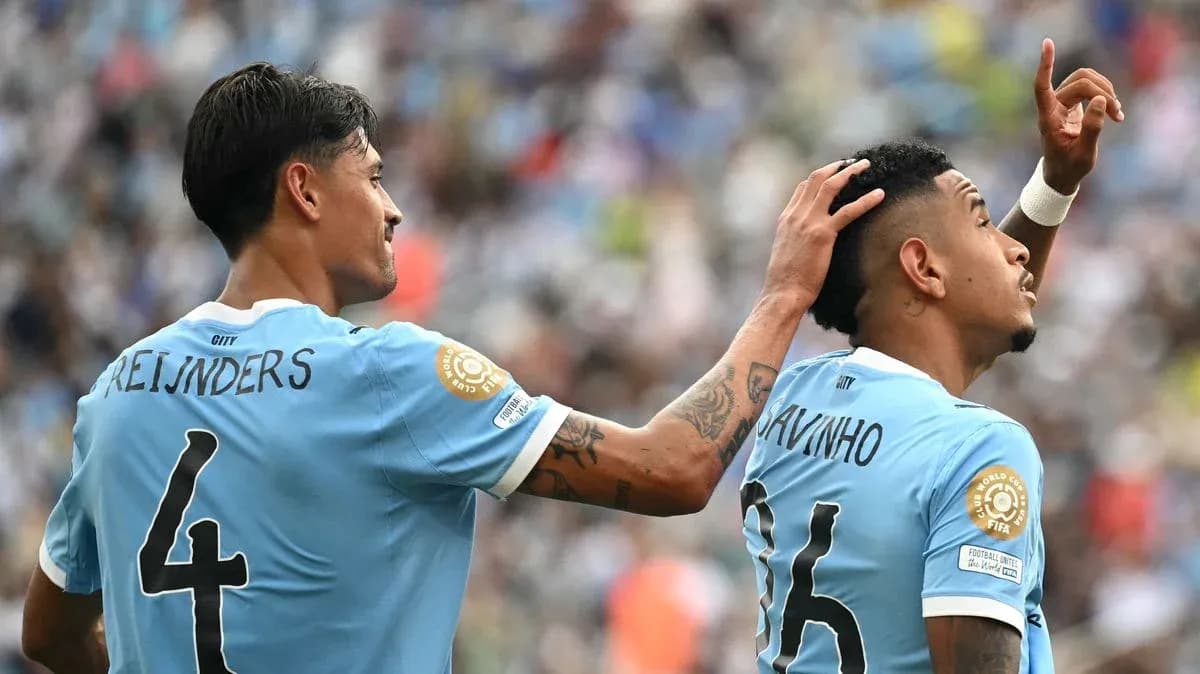
Tijjani Reijnders – versatility without a home
Tijjani Reijnders burst into the season with a statement performance at Wolves, a midfielder who could glide between roles and zones, linking play and breaking lines.
Then came the inconsistency. The flashes remained, but the control faded. He never quite nailed down a starting spot, always useful, never untouchable.
His versatility is both his selling point and his problem. He can play multiple midfield roles, yet has not made one his own. City could easily sanction a sale this summer, using the funds to target a specialist rather than a Swiss army knife. Reijnders, like several others, will view Maresca’s arrival as a fresh audition.
Savinho – promise vs patience
Savinho’s talent is obvious. Pace, flair, the ability to unpick a defence on his day. The issue is that those days have been too rare in a City shirt.
Tottenham have rekindled their interest, and the Brazilian has previously made no secret of his admiration for Spurs. For City, the equation is simple: they could likely recoup what they paid and recycle that money into a more proven wide option.
Keep him, and you back potential over production. Sell him, and you risk watching a late bloomer thrive somewhere else.
Omar Marmoush – life in Haaland’s shadow
Being Erling Haaland’s understudy is a thankless job. You play sporadically, you are judged instantly, and you live in permanent comparison with a goalscoring phenomenon.
Omar Marmoush initially handled that burden impressively. When he arrived 18 months ago, he hit the ground running, offering energy, movement and a different kind of threat. That spark has faded. His impact since those early months has been modest.
If City decide to move him on, they face a familiar problem: finding someone good enough to contribute, but willing to accept life behind Haaland. That profile is rare. Marmoush’s future might depend less on his own qualities and more on whether the club believe they can realistically upgrade that role.
Maresca walks into a dressing room still built to win, but no longer insulated by the aura of inevitability Guardiola carried. Contracts are running down. Icons have gone. Fringe players have stalled.
This summer will not just shape the squad list. It will reveal whether City can reinvent themselves at the very moment everyone else smells vulnerability.