.svg&w=384&q=75 "GoalGist logo")
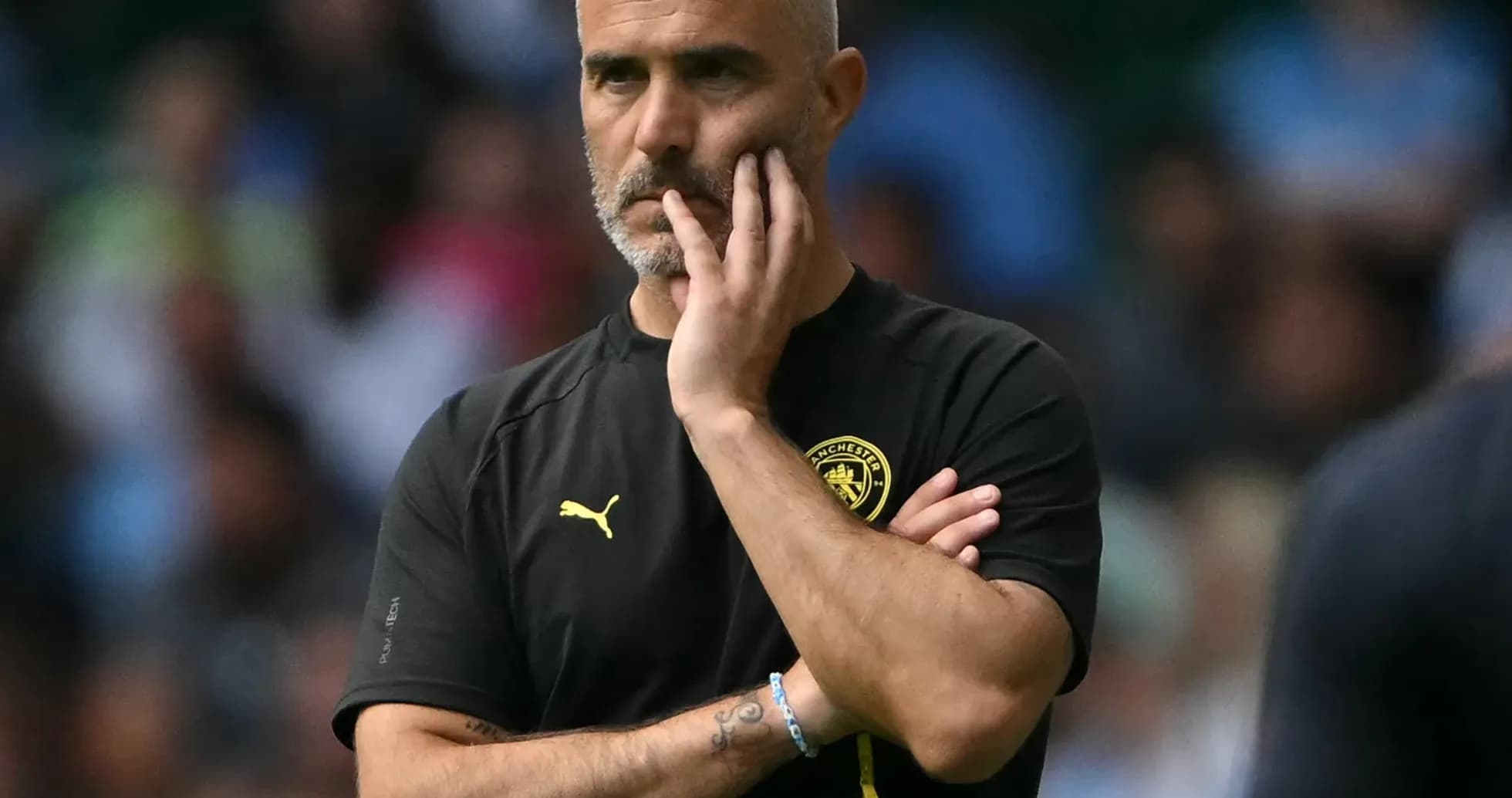
Manchester City Faces New Era Under Enzo Maresca
For the first time in a decade, Manchester City step into a new season without Pep Guardiola prowling the touchline.
His exit slams shut the most gilded era the club has ever known: six Premier League titles, one Champions League, and a style of football that bent the league to his will. The benchmark is brutal. The shadow is long.
Into it walks Enzo Maresca.
Maresca after Pep: continuity under pressure
Maresca does not arrive as a stranger. He was at Guardiola’s side during the treble season, then sharpened his own ideas at Leicester and Chelsea. City’s hierarchy have not ripped up the blueprint; they have doubled down on it.
This is the sell: continuity. The same broad principles in possession, the same obsession with control, the same positional structure that has defined City for 10 years.
But this is also the reality: Maresca must be more than a tribute act.
He inherits a club built entirely around one man’s philosophy. The comparison with Manchester United’s collapse post-Sir Alex Ferguson has already been made, and it will not go away if results wobble. Maresca’s reputation for a hard edge in the dressing room – he has clashed with players and staff before – only adds intrigue to a job already loaded with expectation after last season’s runners-up finish.
The first glimpse was ugly. Arsenal tore City apart 3-0 in the Community Shield last Sunday, a jarring introduction to competitive life in the job. On Sunday, Bournemouth at home will give the Etihad its first real look at what Maresca wants this team to be.
Life after Rodri: filling an impossible void
The biggest tactical problem is obvious. Rodri has gone.
For years he has been City’s heartbeat: the metronome in possession, the shield without the ball, the player who always seemed to be in the right place. He just drove Spain to the World Cup title and walked away with the Golden Ball. Now he is at Barcelona, and City are left trying to replace the irreplaceable.
They have thrown huge money at the midfield. Elliot Anderson arrives from Nottingham Forest for a reported £116m, bringing energy, aggression and a willingness to drive forward from deep. He offers legs, pressing, and a box-to-box threat.
What he does not offer is a like-for-like Rodri clone.
City are expected to push for 18-year-old Ayyoub Bouaddi from Lille, but he is a long-term project, not an instant solution. The brutal truth is that there is probably no one in world football who does Rodri’s job at his level.
So Maresca may have to spread the responsibility: tweak the structure, lean on younger legs, and trust that a committee can do what one man used to handle alone.
Game management: can Maresca close the cracks?
Last season’s title bid did not collapse because City forgot how to play. It fell apart in the details.
Seventeen points were thrown away from winning positions. Leads slipped. Games drifted. Control, once City’s defining trait, looked fragile when it mattered most.
Maresca’s reputation is of a coach more willing to be pragmatic when the situation demands it, less dogmatic than Guardiola in certain moments. That might help.
But the personnel has changed. John Stones, Bernardo Silva and Nathan Ake have all gone, stripping away experience and composure in key areas. Whether the new faces can deliver the calm, controlled football Maresca wants in tight games is one of the season’s most concrete tactical questions.
Haaland, goals and the burden of a single superstar
Up front, the equation feels simple. Erling Haaland is still here.
When City function, he destroys teams. His presence alone terrifies defences, and his numbers remain the most obvious reason to believe City can mount a serious title challenge again.
Yet last season also showed the danger of leaning too heavily on one man. When the supply line stuttered, the whole attack looked one-dimensional.
Omar Marmoush offers support but not parity. He is a useful option, not a second superstar. Maresca has to find ways to diversify the threat: different patterns, different scorers, different routes to goal when Haaland is smothered or off the pace.
If City’s attack is just Haaland or nothing, the title dream will always feel fragile.
World Cup fatigue and a restless summer
As if all that was not complicated enough, the calendar has not been kind.
City sent a large chunk of their squad deep into the World Cup, including Haaland and Doku, with six first-team players still involved in the final week. Maresca has had fewer bodies than he would like for the early stages of pre-season, just as the squad has been shaken by major departures and big-money arrivals.
The Community Shield told its own story. City looked flat, blunt and second best against a sharper Arsenal side.
“I don’t know if it was physical condition, we had many players at the World Cup,” Maresca admitted afterwards. “After the first goal the reaction was very good, but after the second goal it was more complicated.”
The excuses will not last long. Not at this club, not after this decade.
On Sunday, as Bournemouth walk out at the Etihad and the Guardiola era finally feels like the past rather than the present, the real question begins: can Maresca keep Manchester City at the summit, or is English football’s balance of power about to tilt again?