.svg&w=384&q=75 "GoalGist logo")
Liverpool's Centre-Back Dilemma: Future Talent vs Present Challenges
Liverpool’s future at centre-back is already in the building. The problem is the present.
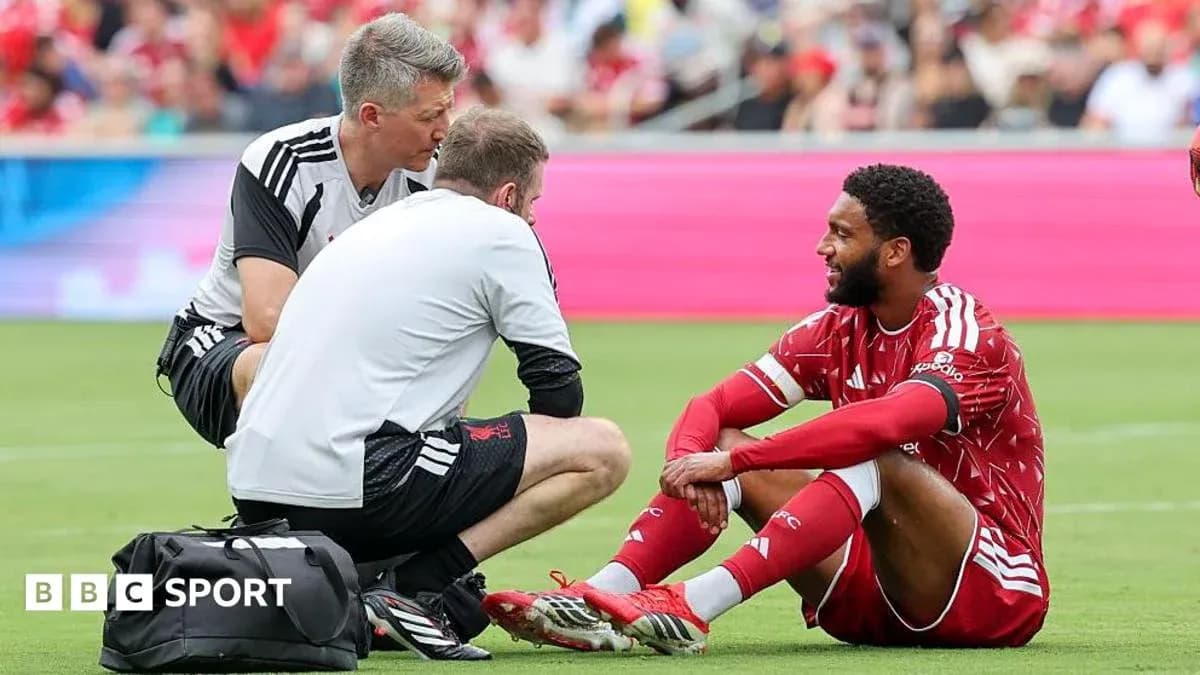
On a warm pre-season afternoon against Sunderland, the plan Liverpool drew up at the Under-17 World Cup in Qatar suddenly became a live stress test. Joe Gomez limped off after eight minutes. Virgil van Dijk looked across and saw, not another seasoned defender, but two teenagers thrown into the heart of the back line.
Mor Talla Ndiaye and Ifeanyi Ndukwe, signed for a combined £3.5m after catching the eye of Liverpool’s scouts last November, were supposed to be projects. Evidence of Matt Newberry’s global talent operation working as designed. Instead, they became the most vivid symbol yet of how thin Liverpool are at centre-back.
A squad built with one eye on 2028 is scrambling for solutions in 2024.
A defence built on hope – and one fit senior
Gomez’s injury, with the club awaiting a fuller update after he missed training in Chicago on Sunday, cuts deep. He is Liverpool’s longest-serving current player, but his career has been punctured by absences. Since arriving from Charlton in 2015, he has missed 225 games through injury. Each new setback feels heavier than the last.
That leaves Van Dijk as the only fit senior centre-back. A captain, an organiser, and still a towering presence, but now 35 and coming off a Premier League season in which he played every minute. He is no longer the all-conquering force of old, and the miles on the clock are starting to show.
Both Van Dijk and Gomez are also in the final year of their contracts. There is a very real possibility that next summer Liverpool lose not just their only fit senior centre-back, but the two figures expected to guide the next generation through the transition.
No wonder new head coach Andoni Iraola did not dress it up. Even before Gomez’s latest problem, he called his defensive options “very thin”. Now that feels generous.
Big bets on youth, little room for error
Liverpool did not stumble into this position by accident. They made a conscious decision to refresh the back line with youth.
Ibrahima Konate was allowed to leave on a free transfer to join Real Madrid. The club believed Jeremy Jacquet, 21, and Giovanni Leoni, 19, were the standout young centre-backs in France and Italy respectively. They paid like it too: £60m for Jacquet, £26m for Leoni.
Those fees only make sense if both players become mainstays. Perhaps they will. Jacquet is in line to make his debut against Leeds on Sunday, and Liverpool will give him every chance to grow into the role. Leoni carries similar expectations.
But for now, they are prospects, not pillars. Just like Ndiaye and Ndukwe, they are learning the game at elite level, not yet dictating it.
Robbie Fowler, watching on in New York as Liverpool prepare to face Wrexham, did not try to sugarcoat the situation.
“We need players. It’s fairly obvious,” he told BBC Sport. “I’m very sad for Joe Gomez, who has been so unfortunate with injuries. This could have been a real chance to cement his place and for him to show that we don’t need another centre-half.”
Instead, Gomez’s absence only sharpens the need.
“We’ve spent money on Jacquet and Leoni and the guidance that Joe and Virgil can give from their experience to the young lads is telling,” Fowler added. “We won’t see the best version of the young lads yet, but you do need that experience in the squad. And yes, the manager’s been on record saying that we need players and I would not be surprised if another centre-half is in that conversation.”
The one that got away – and the one that can’t come back
From the outside, Liverpool’s decision not to push through a move for Marc Guehi last summer now looks even more stark. A ready-made Premier League defender, entering his prime, slipped through their fingers. At the time, it felt like a choice. Now it looks like a missed safeguard.
There is at least a theoretical safety net in Jarell Quansah. Liverpool inserted a buyback clause when they sold him to Bayer Leverkusen for £35m last July. On paper, it offers a route back to a player who knows the club and the league.
In reality, there are no current plans to trigger it. Quansah is part of Leverkusen’s future, not Liverpool’s present.
That leaves Iraola working within tight parameters. Liverpool’s recruitment team remain keen on Bradley Barcola, with Paris St-Germain valuing him at more than £100m. If that deal happens, sources insist it will significantly limit what else the club can do in this window.
The numbers stack up quickly. Jacquet and Victor Munoz alone have cost £94.5m. Without major outgoings, there is no appetite – or ability – to repeat last summer’s £450m splurge. This window will be about targeted moves, not a sweeping rebuild.
Which makes every decision at centre-back even more critical.
Depth on paper, experience in short supply
On one level, Liverpool have flooded the position with potential. In the six months from last summer through to January 2026, they agreed deals for five centre-backs aged 20 or under: Leoni, Ndiaye, Ndukwe, Noah Adekoya and Jacquet.
The long-term pipeline is clear. The club is not short of height, pace or raw ability in that area. The problem is minutes, scars, and the kind of experience that only comes from years of managing big moments in big games.
Even the brightest talent has to grow into that. Ndukwe, impressive against Sunderland, cannot even stay in the building this season. He does not yet meet the criteria for a UK work permit and must go out on loan. Another reminder that development, no matter how well planned, rarely runs in a straight line.
Fowler has seen enough Liverpool squads to know where this leads if it is not corrected.
“When you look at Liverpool across the last decade, one of the problems that we’ve had is that the first 11 is more than capable but the argument that people have is the squad depth,” he said. “I’m a big believer in getting the squad right because it gives everyone a lift and keeps people on their toes, knowing that if you’re not performing, someone else could do the job.”
He reached back to a different era to make the same point.
“Go back to the days of Phil Neal and he’ll tell you stories about how players would never want to get injured because they knew that if someone else came, they wouldn’t get their place back. You need that mentality and I think that has a real knock-on effect on standards.”
Right now, Liverpool’s centre-back group does not carry that fear. It carries hope, intrigue, and a fair amount of risk.
The future at Anfield might be locked in at the back. The question, as pre-season already threatens to expose, is whether the present can hold long enough for it to arrive.

