.svg&w=384&q=75 "GoalGist logo")
Liverpool's New Era Under Andoni Iraola: A Promising Start with Warning Signs
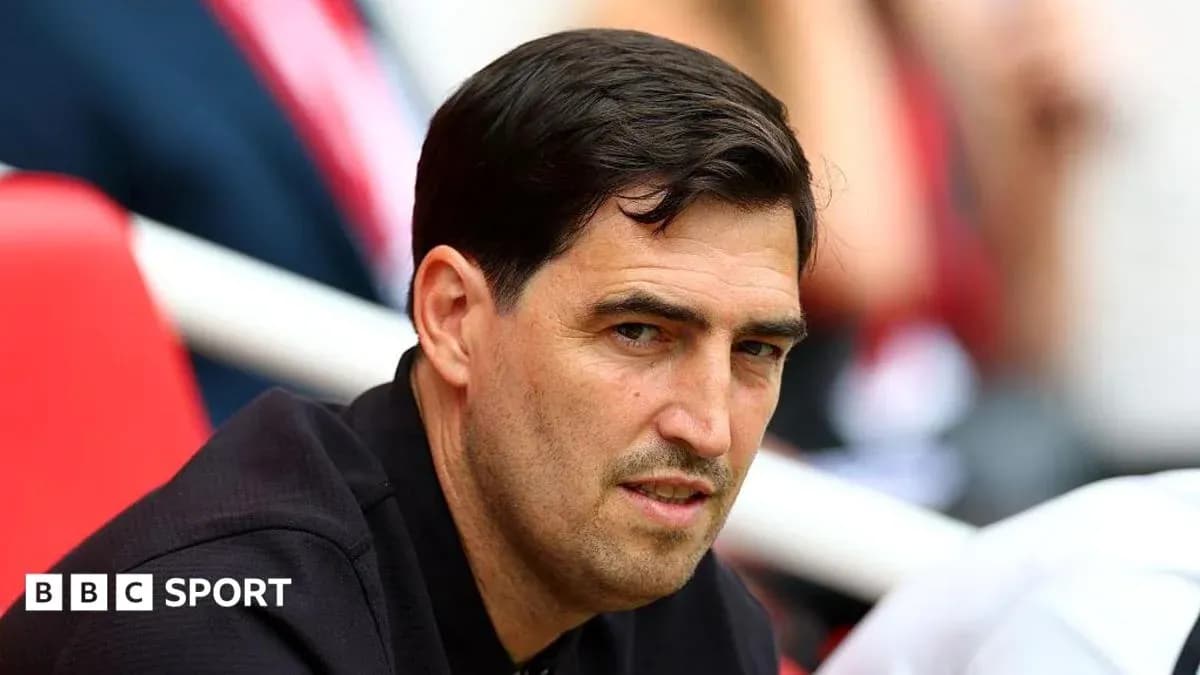
Liverpool’s new era under Andoni Iraola is already crackling with energy. It is also creaking under the strain.
For the second friendly in succession, Liverpool sprinted into a two-goal lead, dazzled for half an hour, then collapsed. Leeds in Chicago, Monaco at Anfield. Two games, two 3-2 defeats from positions of comfort. The pattern is no longer a quirk of pre-season; it is a warning.
A thrilling 30 minutes, then the drop
Against Monaco on Sunday, Anfield saw the best and worst of Iraola’s Liverpool compressed into 90 minutes.
For half an hour, they looked like a team already built in their manager’s image. The ball fizzed through midfield. Attacks went straight for the throat. The press snapped and snarled high up the pitch. Florian Wirtz and Alexander Isak, the headline acts of this new project, looked sharp and dangerous, operating with the kind of directness Iraola demands.
It mirrored what happened in Chicago on 2 August. Leeds were suffocated in the first half, Liverpool’s tempo and verticality overwhelming. The new manager walked away from that 4-2 defeat talking about how he had “learned a lot of things” about his side.
The Monaco game drew a different tone. Less than a month from his appointment, two weeks from the Premier League kick-off, Iraola’s verdict cut closer to the bone: Liverpool, he said, have “work to do” because they cannot yet sustain the level he wants over the course of a game.
They can go hard. They just can’t go long.
“I think we played a good first 30 minutes,” he admitted, “but they don’t have much more, in terms of the levels required to play like this.”
When the changes come, the problems arrive
Pre-season always comes with caveats. Wholesale substitutions, disrupted rhythm, players at wildly different stages of fitness. Yet even within that context, Liverpool’s drop-offs have been stark.
Against Leeds, Iraola made nine changes. Leeds scored four times in 25 minutes without reply.
Against Monaco, he went further, using 11 substitutions. Monaco responded with three unanswered goals in 44 minutes.
Two friendlies, two collapses. Not just in scoreline, but in intensity, cohesion and belief. The contrast between the opening spells and the rest of the match has been brutal.
Some of that is understandable. A chunk of the squad are still playing catch-up after extended breaks following the World Cup. Others are simply unavailable. Conor Bradley, Hugo Ekitike and Giovanni Leoni are all sidelined for lengthy periods, shrinking Iraola’s options just as he tries to drill a demanding style into a new group.
Help is coming. Uruguay defender Ronald Araujo is close to completing a season-long loan move from Barcelona, offering versatility at centre-back and right-back and, crucially, another body capable of living in high-intensity defensive zones.
Virgil van Dijk, now the captain and the public barometer of the dressing room, chose his words carefully on Sunday.
“Let’s see what the next couple of weeks are going to bring,” he said. “Any quality we can add to the team will definitely be welcome so let’s see.”
The message was clear enough. Reinforcements would not go amiss.
Fitness, demands and a manager who won’t bend
If the transfer market will help, Iraola knows the real battle is physical.
With the squad he currently has, he is adamant: the general fitness must improve if Liverpool are to play his way. This is not a tweak from last season. It is a structural change in how Liverpool move, press and suffer without the ball.
Pablo de la Torre, one of Iraola’s closest lieutenants and his former fitness coach at Bournemouth, has followed him to Anfield. His arrival is no minor detail. The sessions have already shifted up a gear.
During an open training session in Chicago, Iraola’s voice cut through the noise. “Quicker, quicker,” he shouted, again and again. One player told BBC Sport he felt sick after the first few sessions. The punishment for losing in training has been simple and brutal: sprint to the other end of the pitch and back.
This is the physical tax of Iraola-ball.
Milos Kerkez spelt it out bluntly in Chicago: the manager wants his players to “play one-on-one all over the pitch, to press high and to always be on the front foot.”
That is not a style you can half-commit to. At Bournemouth last season, Iraola’s side ranked first in the Premier League for direct attacks and third for high turnovers. His football drags games into chaos and then tries to control that chaos through organisation and relentless work.
It took him 10 games to earn his first win at Bournemouth in 2023-24. The board held their nerve, the players bought in, and the performances justified his stubbornness. The stakes at Liverpool, though, are different. A similar run at Anfield would not just be uncomfortable; it would be intolerable.
Iraola knows that. He also knows he cannot dilute his principles to buy time.
Time ticking, identity forming
So where does that leave Liverpool, two weeks from the start line?
Across four pre-season games, the evidence is contradictory but compelling. For 30 or 45 minutes at a time, Liverpool have played in a way that will thrill this stadium: direct, aggressive, constantly on the move. The front-foot football that Iraola promised is visible already, even if only in flashes.
The problem is the fade. The legs go. The distances grow. The press arrives a second late. The structure frays. And when this system starts to fray, it unravels quickly, as Leeds and Monaco both discovered to their delight.
Iraola is not pretending otherwise. In Chicago, when asked how long it would take before his full style emerged, he did not reach for easy assurances.
“I would like to say, no, on the first day, we are going to be perfect, everyone will be in place, but probably it is not going to be like this,” he said. “We will have to do this as quickly as possible.”
That is the tension now. The manager is trying to drag his players to a level of intensity their bodies are not yet ready for, in a league that will punish any hesitation, at a club where patience is in shorter supply than ambition.
The ideas are already on the pitch. The question, as the Premier League looms, is whether Liverpool can find the legs to match them.