.svg&w=384&q=75 "GoalGist logo")
Lionel Messi's Final World Cup: Stars That Emerged and Faltered
Lionel Messi, Argentina
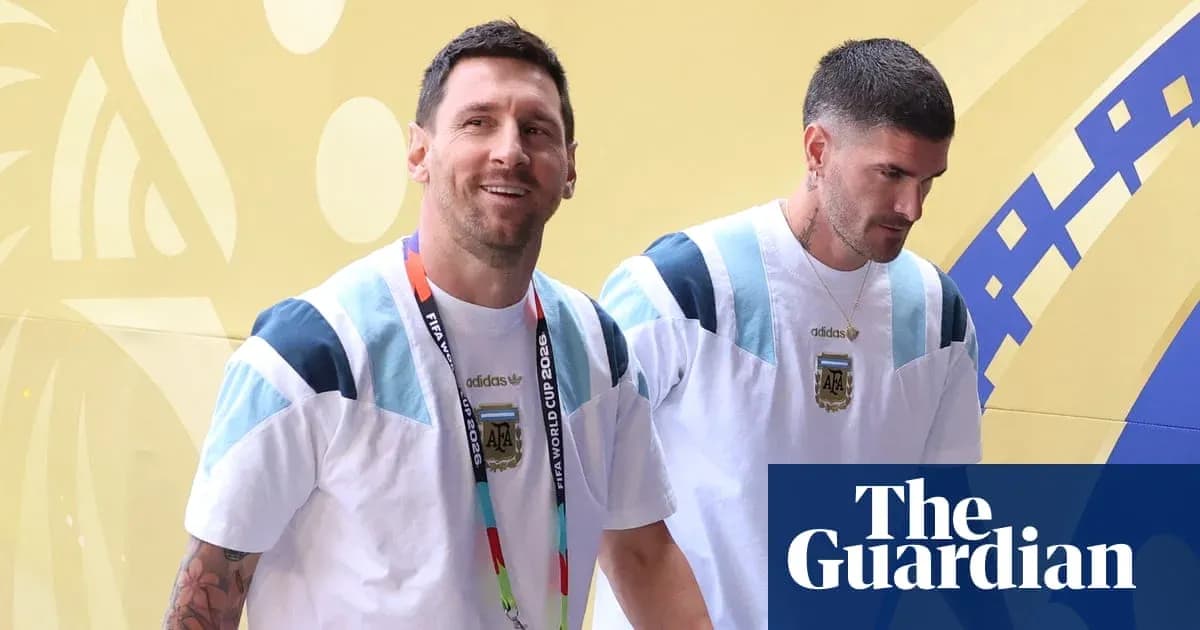
There was never any doubt who would sit at the top of this list. In what was almost certainly his final World Cup, Lionel Messi played as if the tournament existed solely for his farewell tour. Eight goals. Four assists. The most progressive passes of any player, per Futi. No defensive shackles, no tactical chains – just Messi given the freedom of the pitch.
At 39, he drifted between the lines, walked when he wanted, burst when he needed. He dragged Argentina back from the edge again and again: the 3-2 escape against Cape Verde; the assist and equaliser against Egypt; the pair of late creations that broke England. Each time the game tilted towards chaos, Messi imposed order.
Then came the final. And silence. Across 139 minutes including stoppage time, he completed only 28 of 39 passes, took a single shot and barely left a footprint on the contest. No Golden Ball, no winner’s medal. Yet he walked away having stretched a World Cup legacy that already belonged to a different stratosphere, one more chapter written even without a trophy in his hands.
Rodrigo De Paul, Argentina
Rodrigo De Paul did what Rodrigo De Paul does. He started all but two of Argentina’s matches on the road to the final, logging 70 minutes against Spain, knitting play, snapping into duels and keeping the ball moving. The Inter Miami midfielder was never going to outshine Messi, but he didn’t need to. His job was to oil the machine, and he did it well enough to help deliver a second straight World Cup final for his country.
Stephen Eustáquio, Canada
For Canada, Stephen Eustáquio became both metronome and scalpel. Cross after cross, pass after pass – 2.76 chances created and 0.36 expected assists per 90 minutes. His 46 progressive passes ranked sixth across the entire tournament, a number that underlined his importance in possession.
Then came his defining moment. Last-32, South Africa, dying minutes. A loose clearance dropped, Eustáquio stepped in, cushioned it on his chest and lashed a half-volley into the bottom corner. A first-ever World Cup knockout win for Canada, delivered by the man who had spent the previous four months on loan at Los Angeles FC before returning to Porto.
Mbekezeli Mbokazi, South Africa
At 20, Mbekezeli Mbokazi arrived as South Africa’s youngest call-up. He played like one of their oldest heads. The Chicago Fire defender, once of Orlando Pirates, read games with a veteran’s calm, defending with a poise that belied his age. His World Cup form echoed far beyond Bafana Bafana’s camp: his Transfermarkt valuation leapt from $4m before the tournament to more than $9m after it. A breakout, in real time, on the biggest stage.
Matías Galarza, Paraguay
Paraguay rarely saw the ball. Their average possession of 29% was the lowest of any team in the tournament, a tactical choice that left Matías Galarza living off scraps. Even so, he started every match after the opener, scored the only goal against Turkey and set up Julio Enciso in the knockouts against Germany. Limited touches, maximum impact. After his loan spell, the Atlanta United midfielder returned to River Plate with his reputation enhanced.
Andrés Cubas, Paraguay
If Galarza tried to build, Andrés Cubas tried to destroy. The Vancouver Whitecaps midfielder played every possible minute across Paraguay’s five games, anchoring a stubborn unit that took Germany to penalties and held France to a single goal. In the quarter-final, he won seven of 12 duels, threw himself into seven tackles, made three interceptions and even found time to get under Kylian Mbappé’s skin. Paraguay left with pride intact, largely because Cubas refused to yield.
Finn Surman, New Zealand
For New Zealand, Finn Surman’s first two games felt like a coming-of-age story. The 22-year-old Portland Timbers centre-back hurled himself into last-ditch tackles, flung clearances away from danger and looked, at times, like the only barrier between the All Whites and collapse. He even chipped in at the other end, scoring New Zealand’s only goal in a 3-1 defeat to Egypt. A young defender, suddenly on a wider radar.
Sebastian Berhalter, USA
Sebastian Berhalter became one of Mauricio Pochettino’s trusted bench options, appearing in every match the USA played. When he finally started, he did so as a No 6 – a role that exposed the squad’s lack of true defensive midfielders more than it exposed him. The Vancouver Whitecaps man, reportedly on his way to Middlesbrough, still found ways to contribute: a goal, an assist, and a sense that he could belong at this level if used in his natural role.
Steven Moreira, Cape Verde
Sidny Lopes Cabral grabbed the headlines at full-back for Cape Verde, but Steven Moreira quietly held the back line together. The Columbus defender provided the stability that allowed his side to go toe-to-toe with Spain, Uruguay and Argentina, pushing his country to the brink of something remarkable. It wasn’t glamorous work, but it was vital.
Aiden O’Neill, Australia
Aiden O’Neill played the way New York City FC see him every week: tidy, understated, relentlessly available for the ball. The Australian midfielder controlled tempo, recycled possession and rarely wasted a touch. He was named Superior Player of the Match against Paraguay and backed it up with another strong outing versus Egypt, a reminder that not every influential performance needs a headline stat.
Matt Freese, USA
For Matt Freese, one mistake overshadowed a solid body of work. The 27-year-old New York City FC goalkeeper was composed with the ball at his feet and made nine saves across four games. Yet his World Cup story will be framed around that single poor display, that single poor moment. The margins at this level are brutal; Freese lived them.
James Rodríguez, Colombia
Twelve years after his explosion in Brazil, James Rodríguez walked into this World Cup looking like a man trying to summon ghosts. On loan at Minnesota United, he arrived in the United States with memories of Copa América still fresh – one goal, six assists, a run to the final just two years ago.
This time, the magic flickered but never truly caught. There were touches of class, glimpses of the old orchestration, but no end product, no decisive contribution. Colombia’s last-16 exit to Switzerland felt like a slow fade, and with it, James’s World Cup journey – like his club career – closed not with a bang, but with a long, empty sigh.
Juan Manuel Sanabria, Uruguay
Juan Manuel Sanabria’s task could hardly have been more daunting: start against Spain and help contain Lamine Yamal. The Real Salt Lake man did exactly that. Yamal finished with just 0.03 xG, 0.10 xA and only five successful dribbles from 12 attempts. Uruguay didn’t go deep, but Sanabria walked away having passed one of the tournament’s toughest individual assignments.
Richie Laryea, Canada
Richie Laryea’s World Cup became a study in contrast. On the ball, he drove Canada forward down the left, posting 0.26 xA per 90 and consistently advancing play. Without it, the problems mounted. He lost his man on the opener against Bosnia and Herzegovina from an in-swinging corner. Against Switzerland, he drifted out of position and failed to track runners. A long-time pillar for Canada, Laryea left this tournament with more questions than answers about his defensive edge.
Tim Ream, USA
For a fleeting spell, it felt as if Tim Ream had defied time again. Then Belgium happened. In the 4-1 dismantling, the 38-year-old Charlotte centre-back suffered more than most. On the opener, he lost sight of a rampant Charles De Ketelaere, who pounced with Ream nowhere near. Moments after the USA equalised, De Ketelaere climbed above him at the back post to restore Belgium’s lead. The veteran’s aura from Qatar evaporated in two brutal blows.
Lucas Herrington, Australia
Lucas Herrington arrived as the youngest player in Australia’s squad at just 18. He left with two World Cup starts at centre-back for the Colorado Rapids on his CV. Earning a place in the XI for the final two matches, he handled the stage with composure. It was a quiet emergence, but an emergence all the same.
Maxime Crépeau, Canada
Maxime Crépeau’s numbers told a harsh story: six goals conceded, six saves across five games. The Orlando City goalkeeper never quite imposed himself on the tournament. For a side trying to establish itself among the game’s elite, that lack of a defining performance between the posts hurt.
Son Heung-min, South Korea
This World Cup will sit heavily with Son Heung-min. At 34, the LAFC forward started twice and failed to score, then watched from the bench as South Korea played their must-win final group match without him in the XI. For a player who has carried his nation for so long, the absence of a decisive moment cut deep.
Petar Musa, Croatia
Petar Musa’s tournament boiled down to one chance. Across two starts and 110 minutes, the FC Dallas striker managed a single shot – and scored it. Efficient, yes. But for a Croatian side that needed more threat in the box, it also underlined how little service he received.
Danley Jean Jacques, Haiti
Danley Jean Jacques, of Philadelphia, operated alongside Jean-Ricner Bellegarde in Haiti’s double pivot and spent most of the tournament firefighting. As the lowest-ranked team in the field, Haiti walked into every match outgunned. Jean Jacques battled, but the tide rarely turned.
Carlos Harvey, Panama
Carlos Harvey started all three of Panama’s group games and offered the odd aerial threat from set pieces – a couple of dangerous headers from corners and long throws. Beyond that, the 6ft 1in Minnesota midfielder had a largely subdued tournament, unable to stamp his authority on matches that often bypassed him.
Marco Pasalic, Croatia
Marco Pasalic seized his chance to start Croatia’s third group-stage game and brought energy and direct running from the wing for Orlando City. Then came his big moment, and he squandered it, making a mess of his one clear opportunity to score. A useful display, but one that will be remembered for what he didn’t finish.
Miguel Almirón, Paraguay
Miguel Almirón’s World Cup will be remembered less for what he did on the ball and more for what he did with his hand. Four shots, 0.11 xG across four starts for Atlanta’s attacking spark told of a subdued tournament. Then came the red card against Turkey after he covered his mouth during an “altercation” – the first enforcement of the International Football Association Board’s new mouth-covering ban. A footnote in history, but not the one he would have wanted.
Michael Boxall, New Zealand
Michael Boxall entered as one of the oldest players at the World Cup and left looking every bit of it. The veteran Minnesota defender seemed half a step off on almost every goal New Zealand conceded. Experience counts, but on this stage, pace – or the lack of it – gets exposed.
Jacob Shaffelburg, Canada
Jacob Shaffelburg appeared in all five of Canada’s matches, always from the bench, always chasing the game. The LAFC winger never quite found the spark to change a contest, his cameos slipping by without a defining contribution.
Ahmed Qasem, Iraq
Ahmed Qasem featured in every match for Iraq and went the full 90 against France, a demanding shift for the Nashville forward. He started again in the final group game, only to be sacrificed early after Rebin Sulaka’s 13th-minute red card forced a tactical overhaul. His tournament became a lesson in how quickly plans can be ripped up at this level.
Louicius Deedson, Haiti
Louicius Deedson’s World Cup amounted to 112 minutes and 13 completed passes across three group-stage defeats. The FC Dallas winger worked, ran and tried to stretch the play, but Haiti’s struggles meant he rarely saw the ball in areas that mattered.
Mathieu Choinière, Canada
Mathieu Choinière’s entire tournament was condensed into one start – Canada’s 2-1 loss to Switzerland. The LAFC midfielder had no second chance to rewrite that script.
Matt Turner, USA
Matt Turner, once the USA’s undisputed No 1 and now back with the New England Revolution, received a single World Cup start against Turkey. It could hardly have gone worse. Three shots on target faced, three goals conceded, no saves. For a goalkeeper, there is nowhere to hide when the numbers read like that.
Miles Robinson, USA
Miles Robinson’s World Cup confirmed what Pochettino’s selections had already hinted at: the coach did not trust his defensive reserves. The FC Cincinnati centre-back’s only minutes came in a dead-rubber final group game. He never had a chance to influence the tournament’s real storylines.
Kai Trewin, Australia
Kai Trewin’s impact came in a single, high-pressure moment. The NYC FC defender replaced the injured Jordan Bos at half-time of Australia’s knockout tie against Egypt and helped steer the match all the way to penalties. A brief, steady hand on a very tense tiller.
Braian Ojeda, Paraguay
Braian Ojeda’s World Cup was a 21-minute cameo against Germany in the last 32. The Orlando City midfielder touched the ball just nine times, barely enough to leave a trace on the tournament.
Derrick Etienne Jr, Haiti
Derrick Etienne Jr’s role for Haiti was even smaller. Nine minutes against Brazil, four completed passes, and a swift return to the bench for the Toronto winger. On this stage, some careers are launched; others are reduced to footnotes.
Jayden Nelson, Canada
Jayden Nelson entered Canada’s knockout clash with Morocco in the 87th minute, with his team already trailing in what became a 3-0 defeat. The Austin FC winger had too little time and too little platform to shift anything.
Aníbal Godoy, Panama
Aníbal Godoy came on at the death against Ghana, completed eight of eight passes in just over a minute, and still walked off watching the scoreboard flip. Panama conceded a last-gasp winner in stoppage time, the San Diego midfielder powerless to stop it.
Jonathan Osorio, Canada
Jonathan Osorio’s World Cup consisted of two cameos, both in the 87th minute or later, both for Toronto’s captain, neither leaving a mark. For a player so central to his club, the international stage offered no similar stage time.
Max Arfsten, USA
Max Arfsten’s entire tournament can be summed up in one line: came on in the 90th minute of the USA’s 4-1 round-of-16 loss to Belgium, never touched the ball. The Columbus winger has the World Cup on his CV – but not yet in his memories.
Some careers soared, some stalled, some simply flickered. For Messi, this may have been the last World Cup dance. For Mbokazi, Surman, Eustáquio and others, it felt like the first step towards something bigger. The question now is who turns this brief burst of global exposure into a lasting place in the game’s elite.