.svg&w=384&q=75 "GoalGist logo")
Leeds United's Premier League Revival: Built for Success
Look at the Premier League table and blink. Leeds United, third. It reads like a relic from the early 2000s, when Elland Road routinely stared down Europe and five straight top-five finishes felt almost normal.
Yet this is not nostalgia. It is the product of a manager who ripped up his own plan nine months ago and rebuilt a team in his image – taller, tougher, and suddenly very hard to beat.
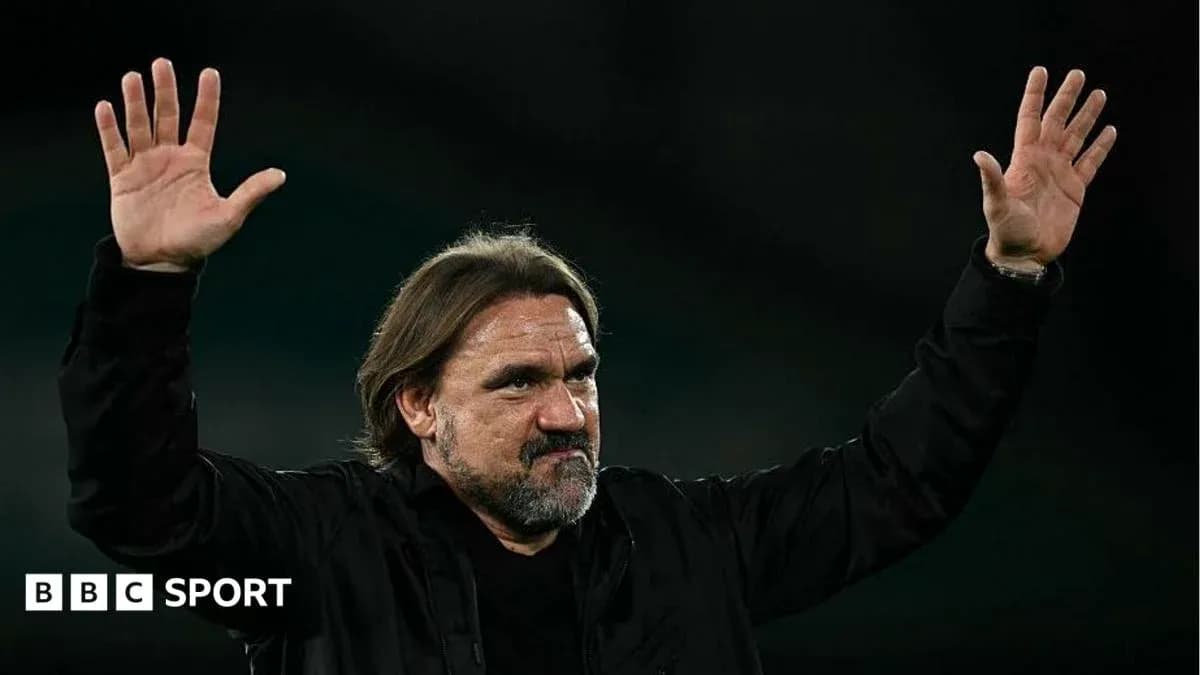
Monday night’s 4-1 dismantling of Newcastle United at Elland Road kept Daniel Farke’s side unbeaten and delivered Leeds’ best start to a top-flight campaign since the 2001-02 season under David O’Leary. Four games, eight points, third place. The numbers look sharp, but the story starts long before August.
The night everything changed
Wind back to 29 November at Etihad Stadium. Leeds trailed Manchester City 2-0 at half-time, staring at another long, painful evening. Farke made a decision that has come to define his tenure: out went the back four, in came a back three.
The effect was immediate. Leeds fought back to 2-2, dragged themselves level against the champions, and only succumbed to a stoppage-time winner. The points slipped away, but the blueprint stayed.
From the following match – a home win over Chelsea on 3 December – the numbers tell their own tale. Leeds have lost only five of their past 29 league games. Stretch that form across the division and they sit fifth in a hypothetical table over that span.
This was no cosmetic tweak. The switch tightened the defence, changed the way Leeds attacked and, crucially, transformed the career of their centre-forward.
Built for the Premier League
Farke and new sporting director Adam Underwood took one look at the Premier League and decided Leeds needed to grow up – literally.
In the 2025 summer window, they targeted height and power. Of the 10 permanent arrivals, eight stand over 6ft: Jaka Bijol, Sebastiaan Bornauw, Dominic Calvert-Lewin, James Justin, Lukas Nmecha, Noah Okafor, Lucas Perri and Anton Stach. The brief was clear – “add a special physicality” for a league that punishes the slight and the soft.
Farke did not hide the logic when he spoke in July 2025. Leeds had come up with one of the smallest squads in the division. Corners, crosses, set-pieces – all potential weaknesses. They had to be able to defend the box as well as play through it.
Then came the setback. Centre-back Pascal Struijk left for Brighton. Rather than panic, Leeds doubled down on their plan. Two World Cup defenders arrived: Bosnia-Herzegovina’s Tarik Muharemovic and Switzerland’s Nico Elvedi.
Muharemovic has barely missed a second since. Even with his late error that gifted Bazoumana Toure a consolation for Newcastle, he has looked composed and imposing, anchoring a back line screened by a giant behind him – 6ft 5in England international James Trafford.
Trafford, signed from Manchester City for an initial £40m, became the most expensive British goalkeeper in history for the second time. He has justified the price by giving Leeds a commanding presence in the area they once feared most.
Add Harry Wilson, snapped up on a free from Fulham after standing out as one of the league’s most effective wide players last season, and the recruitment looks less like a gamble and more like a carefully plotted overhaul.
From relegation fear to defensive steel
It is easy to forget how close this all came to falling apart.
Leeds lost eight of their first 13 league games in 2025-26. They sat 18th, staring straight at relegation. Farke, fresh from edging Burnley to the Championship title, suddenly found his job under threat. Reports swirled that his time might be up before he had truly begun.
The tactical shift to a back three steadied everything. Among the clubs ever-present in the division over that period, only Arsenal, Manchester City and Nottingham Forest have conceded fewer goals since Farke’s change of shape.
Leeds stopped leaking chances. They started winning duels. And with a more solid base, the rest of the team could finally breathe.
Calvert-Lewin unleashed
No player has benefited more than Dominic Calvert-Lewin.
Used as a lone striker in a 4-3-3, he had looked isolated, starved of service and forced to wrestle centre-backs on his own while waiting for help from the flanks that rarely arrived. Once Farke paired him with a proper strike partner, everything shifted.
Since December, only Erling Haaland, Ollie Watkins and Joao Pedro have scored more Premier League goals than Calvert-Lewin’s 14. The company he keeps tells you how sharp he has become.
Alongside Lukas Nmecha or Noah Okafor, Calvert-Lewin finally has “bodies around” him – his own words – and it shows. Okafor, in particular, has caught fire with seven goals and an assist in his past 11 league appearances, dragging defenders away and creating space for his partner to attack.
Farke flicks between 3-4-3 and 3-5-2 depending on the opponent, but the principle remains the same: Calvert-Lewin is no longer a target man marooned upfield. He is the spearhead of a partnership.
History in sight, and England watching
Next up is Crystal Palace at Elland Road on Saturday, and with it a slice of history within reach.
Calvert-Lewin is chasing a record that has stood since 1932. One more goal and he becomes the first Leeds player since Arthur Hydes to score in six consecutive league home games. For a club that has produced its share of forwards, that is no small milestone.
He missed out on England’s World Cup squad, a painful omission for a striker who has battled form and fitness in recent years. Now, with three goals in all competitions already this season and his club riding high, the conversation has changed.
On Friday, Thomas Tuchel names his squad for the Nations League quadruple-header. Leeds have put themselves back on the map. Calvert-Lewin has put himself back in the frame.
European football has not visited Elland Road for 24 years. The table is only just forming, the season barely out of the blocks, but the question no longer sounds fanciful.
If this is what Leeds look like in September, what might they be playing for in May?