.svg&w=384&q=75 "GoalGist logo")
Lamine Yamal Leads Spain to World Cup Final
Lamine Yamal didn’t wait for the confetti to settle.
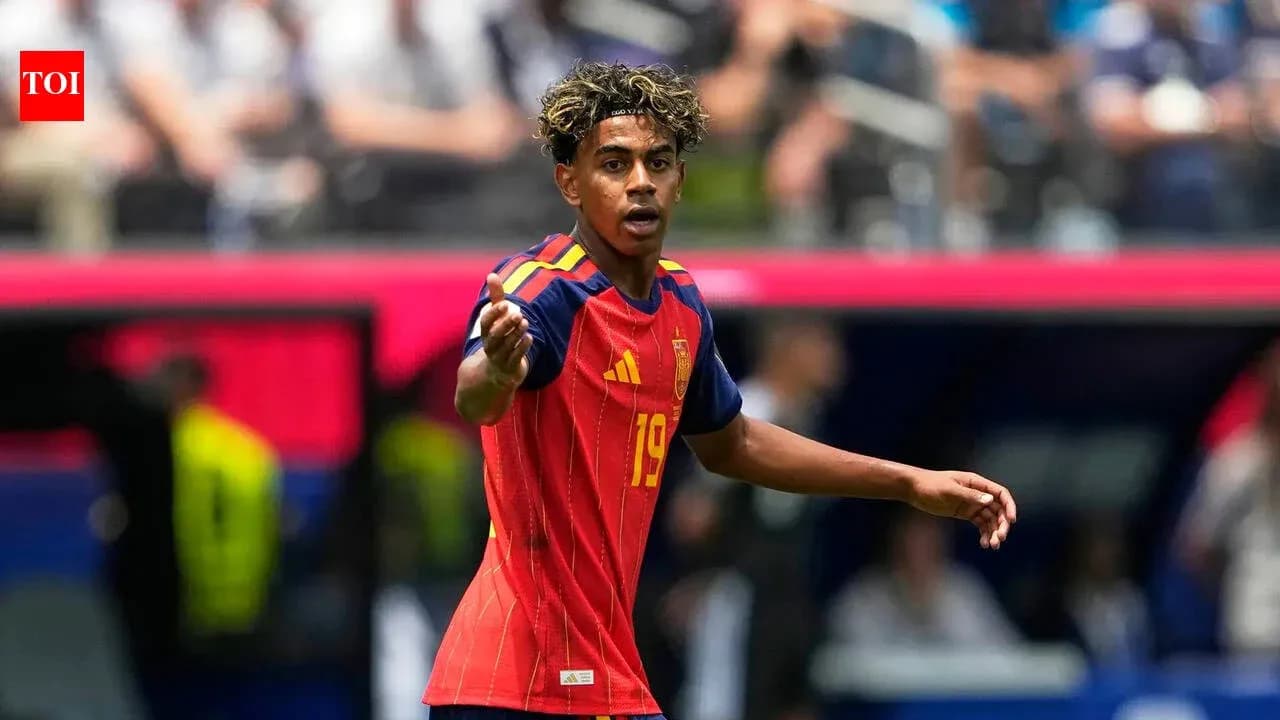
Barely minutes after Spain had dismantled France 2-0 in Arlington to book their place in the 2026 World Cup final, the teenager was already staring across the continent. “nuevayol vamos por ti” he posted on Instagram — “New York, we’re coming for you.” Photos from the win at AT&T Stadium flicked past on his feed. The message was blunt: the semifinal was a step, not a destination.
On Sunday, at the New York-New Jersey Stadium, Spain will chase a second star on their shirt against either defending champions Argentina or England, who meet in Atlanta. The stage is set. Yamal has already marked the map.
A teenager at the heart of history
Spain’s return to a World Cup final for the first time since 2010 carries the fingerprints of a 19-year-old. Yamal, starting alongside fellow teenager Pau Cubarsí, helped write a small piece of history before the ball had even rolled: never before had a team begun a World Cup semifinal with two teenagers in the XI.
He made sure the record came with a result.
On 22 minutes, Yamal pounced. Spotting hesitation from Lucas Digne, he nicked the ball, drove into the box and forced the defender into a desperate challenge. Down he went. Penalty. No need for theatrics, no long debate. Just the cold decisiveness of a player who understands the moment.
Mikel Oyarzabal took responsibility from the spot and passed the ball into the net with the calm of a man who has made scoring for his country a habit. Spain led, and from there, they tightened their grip.
Luis de la Fuente’s side didn’t simply edge France; they controlled them. Spain’s midfield set the rhythm, possession moving in red triangles while Kylian Mbappé and Aurélien Tchouameni chased shadows for long stretches. France tried to raise the tempo, but every surge met a red shirt and a reset.
After the interval, the pressure finally told again. Pedro Porro, pushing high from right-back, combined neatly with Dani Olmo, burst into space and drilled a precise finish into the bottom corner. Composed, low, ruthless. 2-0, and the semifinal felt like it was slipping away from the French.
Yamal thought he had his own goal to crown the night, finishing what looked like the perfect counterattack, only to see it chalked off for a marginal offside. The disappointment flashed across his face, then vanished. There was a final to reach, a job to finish.
France threw what they could at Spain in the closing stages. Mbappé roamed across the front line, Tchouameni drove from deep, blue shirts poured forward. It didn’t crack Spain. De la Fuente’s back line stood tall, preserving a sixth clean sheet in seven matches at this World Cup. That number tells its own story: this is no longer just a team of artists; it is a unit of engineers as well.
Dancing in Arlington, eyes on New York
Inside the dressing room, the mood was very different. The official Spain account pushed out a video from the heart of the celebrations: music blaring, players dancing, voices hoarse from singing. The caption captured the chaos — shouts, dances, “forbidden moves” unleashed in a cramped locker room that suddenly felt like the center of the football world.
Behind the noise, something more serious has been building. Earlier in the tournament, Spain dazzled with attacking waves and youthful swagger, sometimes leaving the back door ajar. Against France, they stitched it all together. Defensive discipline. Clinical finishing. Control when it mattered most.
Oyarzabal, in particular, continues to live in a purple patch. His goal against France was his 18th in his last 20 appearances for Spain, a remarkable return at this level. That strike also carried him into elite company as just the sixth player to reach 30 international goals for La Roja. He doesn’t shout for attention; his numbers do it for him.
All of this feeds into the larger picture. Spain’s only previous World Cup final ended in Johannesburg in 2010, when Andrés Iniesta’s extra-time volley against the Netherlands sealed a first title and defined a generation. That team was built on possession and patience, a metronomic dominance that suffocated opponents.
This version feels different. Younger. Sharper in transition. Less obsessed with sterile control, more willing to hurt teams quickly. Yet the old virtues remain: bravery on the ball, intelligence without it, a belief that the game should bend to their will.
At the center of that evolution stands Yamal, barely out of his teens, already shaping the tone of a World Cup run and calling his shot towards New York. One match now separates Spain from a second crown and a new era of legends.
The question is no longer whether they belong on this stage. It’s who, if anyone, can stop them finishing the story they have already started to write.