.svg&w=384&q=75 "GoalGist logo")
La Liga Returns with a Twist After World Cup Triumph
Less than a month after Spain lifted the World Cup, the grind of club football is back. La Liga, always eager to set the pace, becomes the first of Europe’s major leagues to kick off this weekend. The noise, though, is strangely muffled.
The calendar is already frayed. One opener is off, two giants are delayed, and a fungus outbreak has literally eaten into the pitch.
A staggered start
Celta Vigo’s home match against Osasuna, scheduled for Sunday, has been pushed back to August 27 after a fungus damaged the Balaídos surface. The league’s return loses one of its early fixtures before a ball is even kicked.
Barcelona and Real Madrid, the traditional anchors of any Spanish season, are also missing from the first weekend. With a cluster of players only just back from World Cup duty, both clubs have been granted extra time.
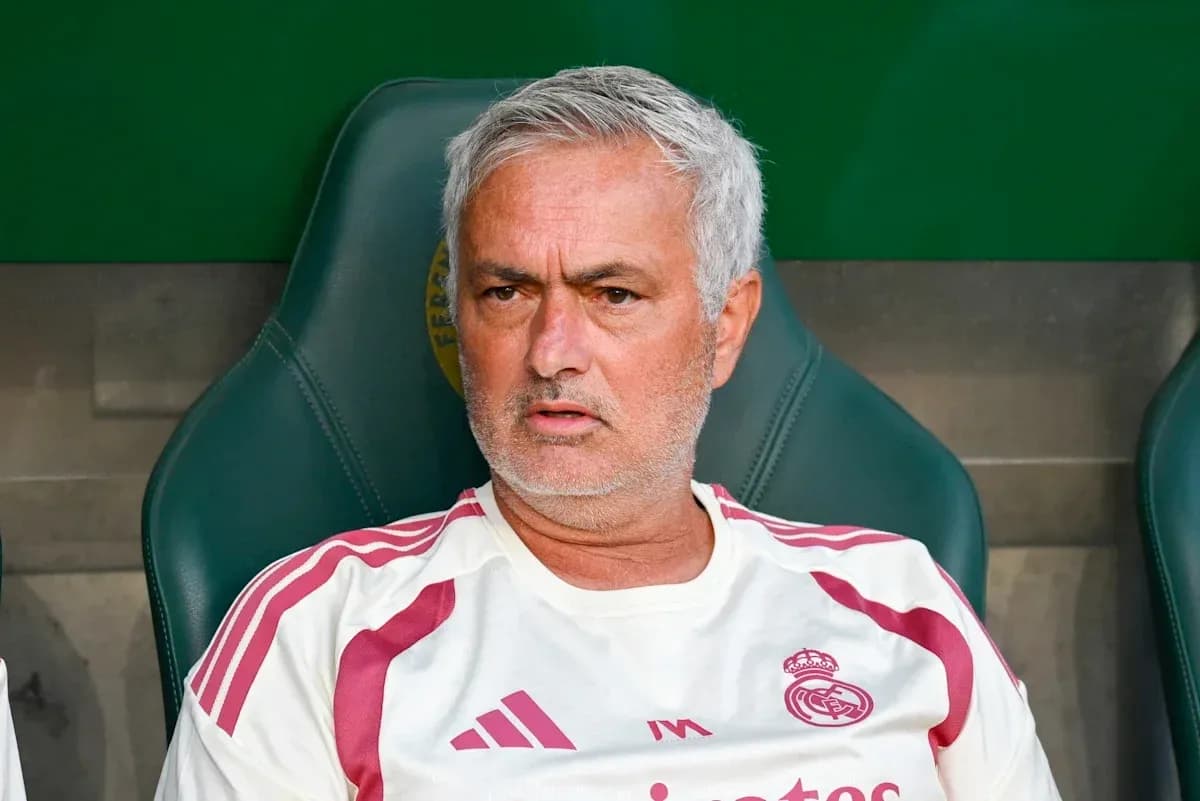
Barcelona, chasing a third straight league title, will not start their defense until August 23, away at Elche. Real Madrid, rebuilt under José Mourinho after a second straight year without a major trophy, open on August 22 at Espanyol.
The curtain actually rises on Saturday with Alaves at home to Getafe, followed by Sevilla against Rayo Vallecano. It is a modest opening on paper, but the real emotion comes 24 hours later.
Sunday marks the long-awaited return of Racing Santander to the top flight after 14 years away. They host last season’s third-place side, Villarreal, in a meeting that instantly tests Racing’s readiness for elite football. Espanyol also welcome Levante to round out the weekend.
The European season itself has already been given its official stamp. On Wednesday, Paris Saint-Germain edged Aston Villa 2-1 in the UEFA Super Cup final, a reminder that the continent’s heavyweights are already up to speed.
Barcelona’s hunt for a three-peat
The champions arrive armed with something no one else can match: the core of a World Cup-winning national team.
Hansi Flick goes into his first full La Liga campaign with a squad loaded with Spain’s new golden generation. Lamine Yamal, Dani Olmo, Gavi, Pedri and Pau Cubarsí all return from delivering Spain a second world title, and now turn their attention to domestic dominance.
One hero of that triumph is unlikely to be around much longer. Ferran Torres, who struck Spain’s extra-time winner in the World Cup final against Argentina, is reportedly in talks over a move to PSG. If the transfer goes through, Barcelona lose a clutch scorer at the peak of his confidence.
The club has already moved to reshape its attack. England forward Anthony Gordon has arrived to help offset the departure of veteran striker Robert Lewandowski. Gordon’s pace and directness offer Flick a different dimension as Barcelona try to stretch their supremacy into a third consecutive league crown.
Mourinho’s second act at Real Madrid
Across the capital, Real Madrid have gone back to the future. After another season without a major trophy, the club has turned again to Mourinho, the coach brought in to jolt a revamped squad back to the top.
The core remains star-studded. Kylian Mbappé, Vinícius Júnior and Jude Bellingham are still in place, giving Madrid one of the most devastating attacking trios in Europe.
Around them, the squad has been aggressively reshaped. World Cup winner Marc Cucurella joins, along with Ibrahima Konaté, Denzel Dumfries, Bernardo Silva and Yan Diomande. It is a blend of defensive steel, midfield control and attacking craft that fits Mourinho’s appetite for power and structure.
Some long-serving figures have gone. Dani Carvajal and David Alaba are among the veterans to depart, underlining the sense that this is not a tweak but a reset. The question is simple: can Mourinho turn these names into a team that stops Barcelona’s run?
Atletico Madrid caught in the middle
Atletico Madrid, as ever, sit between the two giants, trying to cling on to the top tier of the table while the landscape shifts around them.
Diego Simeone sent three players to Spain’s World Cup squad: Marcos Llorente, Marc Pubill and Álex Baena. Their profiles have risen, but his squad has also been stripped in key areas.
Antoine Griezmann has gone. So have Thiago Almada, Nahuel Molina and Clément Lenglet. For a coach who builds around structure and continuity, those are heavy blows.
The incoming list brings some optimism. Alejandro Grimaldo, Morten Hjulmand and Lee Kang-In have all arrived, while Cristian “Cuti” Romero is set to join and bolster the back line.
Yet the biggest storyline hangs over Julián Álvarez. The forward, part of Argentina’s World Cup-winning side and a player in the final itself, asked for a transfer during the tournament. Real Madrid and Barcelona have both shown interest.
Atletico insist they do not intend to sell and Álvarez is back in training. The stance is firm, but the doubt lingers. For Simeone, trying to rebuild while his main forward’s future remains uncertain is a delicate balancing act.
A league wired for the future
Away from the touchlines and transfer talk, La Liga is about to become a testing ground for technology.
The competition will be the first league in the world to deploy “connected ball” technology on a large scale. Each match ball carries a radio-frequency sensor that sends out real-time data on its exact position and the precise instant of every contact.
Around 12 antennas in each stadium capture the information and feed it into the league’s wider technological system. The aim is clear: more accuracy, more detail, more tools for referees, analysts and broadcasters. The ball itself becomes a data source.
New faces, old names
Three clubs climb into La Liga from the second division: Racing Santander, Malaga and Deportivo La Coruña.
Deportivo’s presence stands out. A former Spanish champion, the Galician side spent eight seasons in the lower leagues before clawing its way back. Their return adds another historic badge to a division already heavy with tradition.
Dropping out are Mallorca, Girona and Oviedo, all relegated last season. Their places now belong to teams determined not to give them back.
So the World Cup glow fades and the domestic grind begins. Barcelona chase history, Real Madrid chase redemption, Atletico chase stability. The league rolls out new technology, old rivalries and a fresh cast of challengers.
The only thing missing on opening weekend are its two biggest protagonists. Once they step in, does Spain’s new world order stay intact, or does La Liga write a very different script?