.svg&w=384&q=75 "GoalGist logo")
Kylian Mbappé: The Lightning Rod of Real Madrid's Struggles
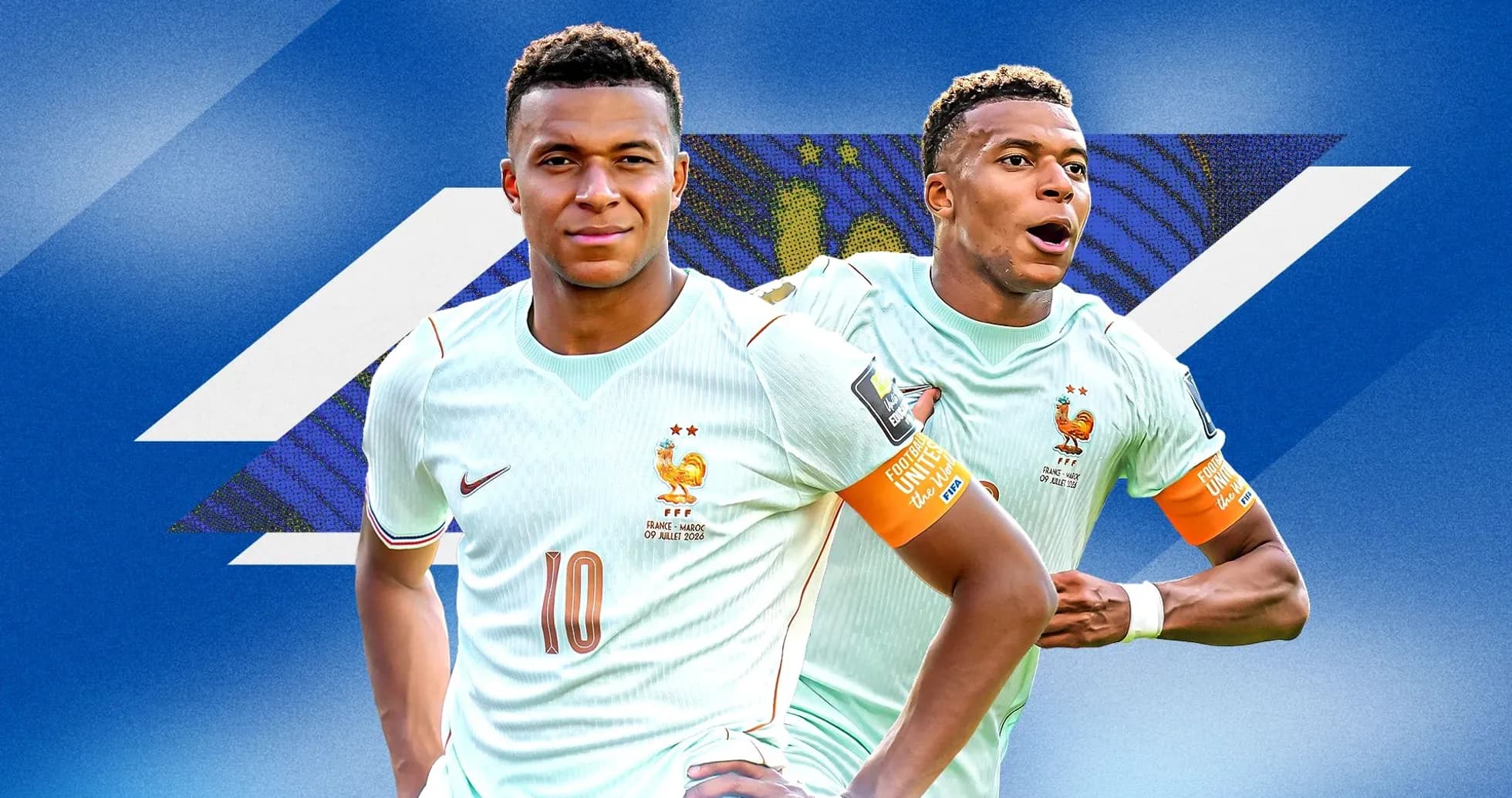
Kylian Mbappé arrived in Madrid as a galáctico for the streaming age. A free transfer in name only, his move from Paris Saint-Germain to Real Madrid in 2024 was supposed to reset an era, not ignite a civil war.
Two years on, the numbers say one thing. The noise says something very different.
Eighty-six goals in 103 games would usually buy a forward a statue outside the Bernabéu. For Mbappé, it has bought a spotlight that never switches off. Real Madrid have not lifted a major trophy since he walked through the door, and in a city that measures greatness in silver, his prolific return has been drowned out by the echo of empty podiums.
At Madrid, somebody always pays for failure. Mbappé has become the lightning rod.
A season unravels
The first months felt like the start of a dynasty. Mbappé tore through La Liga defences, racking up goals at a rate that made his transfer look like a heist. Then the season turned.
From mid-February to the end of the campaign, the goals slowed to a trickle. Just four in that entire stretch, his impact blunted by niggling injuries and a team losing its way. Real slipped well behind Barcelona in the title race and crashed out of the Champions League in the quarter-finals against Bayern Munich. The Frenchman still finished beyond the 40-goal mark, but those numbers landed with a dull thud against the backdrop of a season branded a fiasco.
What had started as a debate about his integration morphed into something more poisonous. Every setback, every cup exit, sharpened the tone. By the run-in, the atmosphere around the club had turned toxic, and Mbappé was standing in the eye of the storm.
According to The Athletic, tensions boiled over before a league match against Real Betis in late April. In training, a backroom coach flagged him offside in a practice game. Mbappé’s response, a volley of abuse, was as much a symptom as a cause – a flashpoint that captured the mood around Valdebebas.
Then came the hamstring injury against Betis. Instead of staying at Madrid’s training base to recover, Mbappé took advantage of some time off and flew to Sardinia with his girlfriend, Spanish actor Ester Expósito. Photos of the couple on a yacht surfaced while Real Madrid were playing Espanyol in La Liga.
The images detonated.
Inside the club, the decision drew criticism. Outside, the reaction was brutal. An “Mbappé out” petition went viral, amassing around 12 million signatures in under 24 hours and eventually surging past 70 million. In a city that once begged him to come, a sizeable chunk of the online world was suddenly asking him to leave.
He missed the Clásico that effectively handed Barcelona the title, still considered unfit and excusing himself from training with the likely substitutes due to “discomfort”. By the time he returned to the bench against Real Oviedo in mid-May, the relationship between star and club felt frayed.
Then Mbappé did something he rarely does in Madrid: he stopped and talked.
“Fourth-choice striker”
After coming on as a substitute against Oviedo, he walked through the mixed zone and, pointedly, did not dodge the microphones. He declared himself “100 percent” fit and claimed he had been told by head coach Álvaro Arbeloa that he was now the “fourth-choice striker”.
For a club already engulfed in drama after Xabi Alonso’s sacking, it was petrol on a fire.
Arbeloa was forced to address the comments almost immediately. In his press conference, peppered with questions about Mbappé, he pushed back.
“He must have misunderstood me, at no point did I say he was the fourth-choice striker,” Arbeloa said. “A player who four days ago wasn’t even fit enough to make the bench for a match shouldn’t have started today.”
Behind the scenes, The Athletic reported “growing disappointment” with Mbappé “from the dressing room to the board”. The sense was that the club expected more – not just in goals, but in attitude, leadership, and the day-to-day grind that Madrid demands from its icons.
Mbappé’s camp hit back with a statement of their own. They argued that part of the criticism stemmed from an “over-interpretation” of elements related to a recovery period “strictly supervised by the club”, insisting it did not reflect the reality of his commitment or his daily work for the team.
The damage, though, was done. By the time the domestic season wheezed to an end, Mbappé’s relationship with large parts of the Spanish media was in open conflict. In Madrid, he had become too big to ignore and too easy to blame.
Escape in blue
Then came the World Cup. A different continent, a different shirt, and, crucially, a different noise.
In North America, Mbappé has looked like himself again – the version that terrifies defenders and bends tournaments to his will. Eight goals so far, dragging France towards another potential coronation.
He has scored braces against Senegal, Iraq and Sweden, then buried a penalty winner against Paraguay. In the quarter-finals against Morocco, he produced a stunning opener, the kind of moment that shifts the temperature of a match in an instant. Even in the one game he failed to score, against Norway in the group stage, he still laid on two assists.
Those eight goals put him level with Lionel Messi in a Golden Boot race that feels like a private duel. His overall World Cup tally now stands at 20, just one shy of Messi’s 21. At 27, he is on the brink of becoming the tournament’s outright record scorer, whether in 2026 or beyond.
In the dark blue of France, Mbappé is not just a superstar. He is the axis.
Didier Deschamps has an embarrassment of attacking riches, but there is no debate about who leads this team. Mbappé wears the armband, takes the responsibility, and, crucially, seems at ease with the burden.
Inside the France camp, there is little patience for the narrative that has followed him from Spain.
“The criticism towards him is very, very unfair,” Ousmane Dembélé said on the eve of the tournament. “Some people go a bit too far with the criticism of Kylian. He’s an incredible player and a very good person off the pitch.
“Some people overdo the criticism because he’s Kylian Mbappé. They shouldn’t keep going after him. Whether he ties his shoelaces or not, whether he pulls up his socks or not… it’s too much. He’s still a human being. With the France team, he’s very good with us, he’s a leader.”
Defender Lucas Hernandez echoed that view. “Kylian is an extraordinary player. When you’re Kylian Mbappé, everyone looks at everything you do, on the pitch and off the pitch. All the criticism there has been this season, he’s going to silence it.”
So far, in this World Cup, he has done exactly that.
Spain’s complicated gaze
Back in Spain, the picture is not as simple as hero or villain.
Prominent journalist Guillem Balagué captured the nuance in an interview with the BBC in May. “In Spain, we are famous for making stories out of the little that we see of players,” he said. “The jury remains out with Mbappé. He seems a little bit too cold and too distant with the Madrid fans – I remember Raúl telling me that one thing they appreciate is players running for the impossible ball. People love it.”
The criticism goes beyond his finishing. Questions linger over his leadership, his ego, his off-pitch decisions. At the same time, few dispute his extraordinary attacking output or his knack for deciding games.
There is another layer, too. As a global Black superstar in a country with a patchy record on the treatment of Black players, Mbappé lives under a harsher glare than most. Every gesture, every grimace, every holiday photo is amplified and dissected.
Balagué pointed to a turning point. When Mbappé first arrived, under Carlo Ancelotti, he went through a phase of “complete humbleness”, doing exactly what was asked of him, aware of the shirt he was wearing. Then came a rough spell, including two missed penalties against Liverpool and Athletic Club.
“He was feeling really down and thought ‘I am going to do it my own way’,” Balagué recalled. The goals flowed again and his numbers stayed elite for Ancelotti. This season, under Alonso and then Arbeloa, that balance has never quite been found.
Which leaves the central question hanging over Madrid: is Mbappé the problem, or the player they still haven’t learned how to use?
A semi-final with subtext
Now comes Spain. The country he calls home, the league that has turned his every move into a referendum, stands between Mbappé and another World Cup final.
He knows the stakes. He knows the script.
“There is only one scenario where you can relax and that is winning the World Cup,” he said before the semi-final. “When you play for France, if you don’t win, you get heavily criticised. We have a tightly-knit squad driving toward a single objective: victory.
“We are in the semi-finals, but the road is still long, and the most challenging matches lie ahead of us.”
This is the stage he craves: a knockout tie against the European champions, a Golden Boot on the line, and the chance to answer an entire country without saying a word.
If Mbappé knocks Spain out and carries this form back to Madrid, the same fans and pundits who have hounded him will have to look again at the player in front of them. They may not offer an apology.
They may have to offer something more uncomfortable: respect.