.svg&w=384&q=75 "GoalGist logo")
Kylian Mbappé's Political Standoff with Marine Le Pen
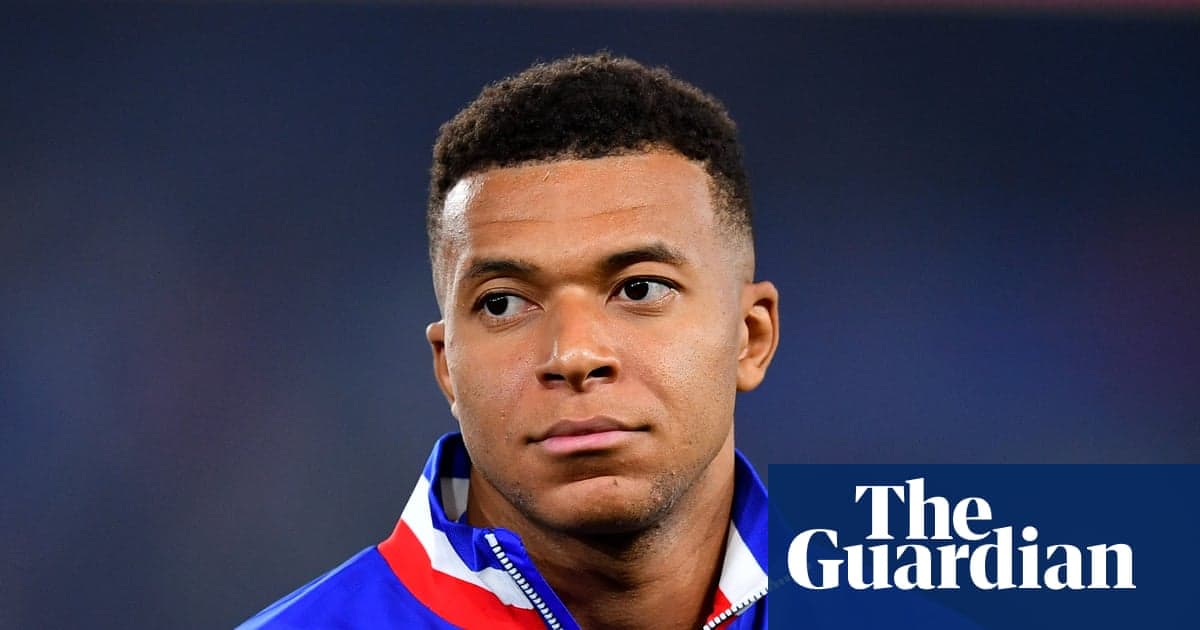
Kylian Mbappé is used to hostile atmospheres. They usually come with a ball at his feet and a stadium against him. This time, the pressure is political – and it is coming from France’s far right.
The France captain has ignited a fresh storm with Marine Le Pen’s National Rally (RN) after warning about the prospect of the party winning next year’s presidential election. Speaking to Vanity Fair, Mbappé did not dance around the subject.
“I know what it means and what consequences it can have for my country when people like them come to power,” he said.
For a player who grew up in the multicultural northern suburbs of Paris, in a family with Algerian and Cameroonian roots, the stakes are not abstract. They are personal. His words landed squarely on the desk of Jordan Bardella – and Bardella swung back.
The 30-year-old RN president, riding high in the polls ahead of the spring vote, chose mockery as his first touch. He went for Mbappé’s club career, not his argument. On social media, Bardella reminded everyone that the forward left Paris Saint‑Germain for Real Madrid in 2024, only for PSG to lift the Champions League the following year.
“I know what happens when Kylian Mbappé leaves PSG: the club wins the Champions League! (And maybe soon a second time),” he wrote.
It was a jab designed to sting: the national hero painted as the man who walked away from glory. Le Pen followed up with her own shot, this time on RTL radio. She claimed Mbappé’s disapproval of her party actually reassured her – because, in her eyes, his own career strategy had misfired.
She argued that football fans did not need a superstar to guide their vote. “Frankly I think football fans are free enough to know who to vote for without being influenced by Mbappé,” she said.
The message from the RN machine was clear: stay in your lane.
Julien Odoul, an RN MP and party spokesperson, pushed that line harder. As captain of France, he said, Mbappé should embody the entire nation – “including the millions of RN voters” – and must not turn himself into a “political activist”.
But Mbappé and Bardella have been circling each other for some time. Their clash did not begin with Vanity Fair.
During France’s snap parliamentary elections in 2024, Mbappé spoke out as the RN surged. From a player who has long tried to break down clichés about the banlieues where he grew up, the verdict was blunt: the party’s gains were “catastrophic”. Bardella hit back then as well, accusing wealthy athletes of lecturing people “who can no longer make ends meet, who no longer feel safe”.
The accusation has followed Mbappé ever since: too rich, too distant, too privileged to talk politics. He rejected that label in his latest interview.
“Even as a footballer, you’re foremost a citizen. We’re not disconnected from the world … or from what’s happening in our country,” he said.
People, he argued, assume that fame and money act as a shield. “People sometimes think that because we have money, because we’re famous, these kinds of problems don’t affect us.” But, he insisted, footballers “have our say, like everyone”.
The RN’s rise in parliament in 2024, he said, had jolted him and others in the dressing room. “We’re citizens and we can’t just sit there saying all will be fine and go and play. We have to fight this idea that a footballer should just be content to play and keep quiet.”
That last line cuts at the heart of the row. Mbappé is not just any player. He is the face of a France team that has been held up for decades as a mirror of the country’s diversity – and, sometimes unfairly, as a cure for its divisions.
He was born in 1998, the year Zinedine Zidane and the “Black-Blanc-Beur” generation lifted the World Cup and were mythologised as proof that France’s identity battles could be solved on a football pitch. That illusion has faded. The expectation that its stars will stay silent has not.
This is where Bardella’s calculation comes in. William Thay, from the thinktank Le Millénaire, told Reuters that the RN leader’s response this week was politically sharp. Mbappé’s aura, he argued, has dimmed at home since leaving PSG, dented by what many see as arrogance and by underwhelming results at Real Madrid. Attacking him now is less risky than it once was.
But there is a danger line. Thay warned that the RN could damage its broader strategy by going after one of France’s biggest sporting icons while doing little to reassure moderate voters who already fear the party will deepen social fractures.
On one side stands a 27‑year‑old captain insisting that a footballer is a citizen first. On the other, a party edging towards power, determined to frame that stance as an elitist provocation.
France has seen its heroes step into politics before. The question now is whether Mbappé’s voice will rally a country, or simply harden the battle lines as the presidential race closes in.