.svg&w=384&q=75 "GoalGist logo")
Juventus vs AC Milan: A Tactical Mirror in Serie A
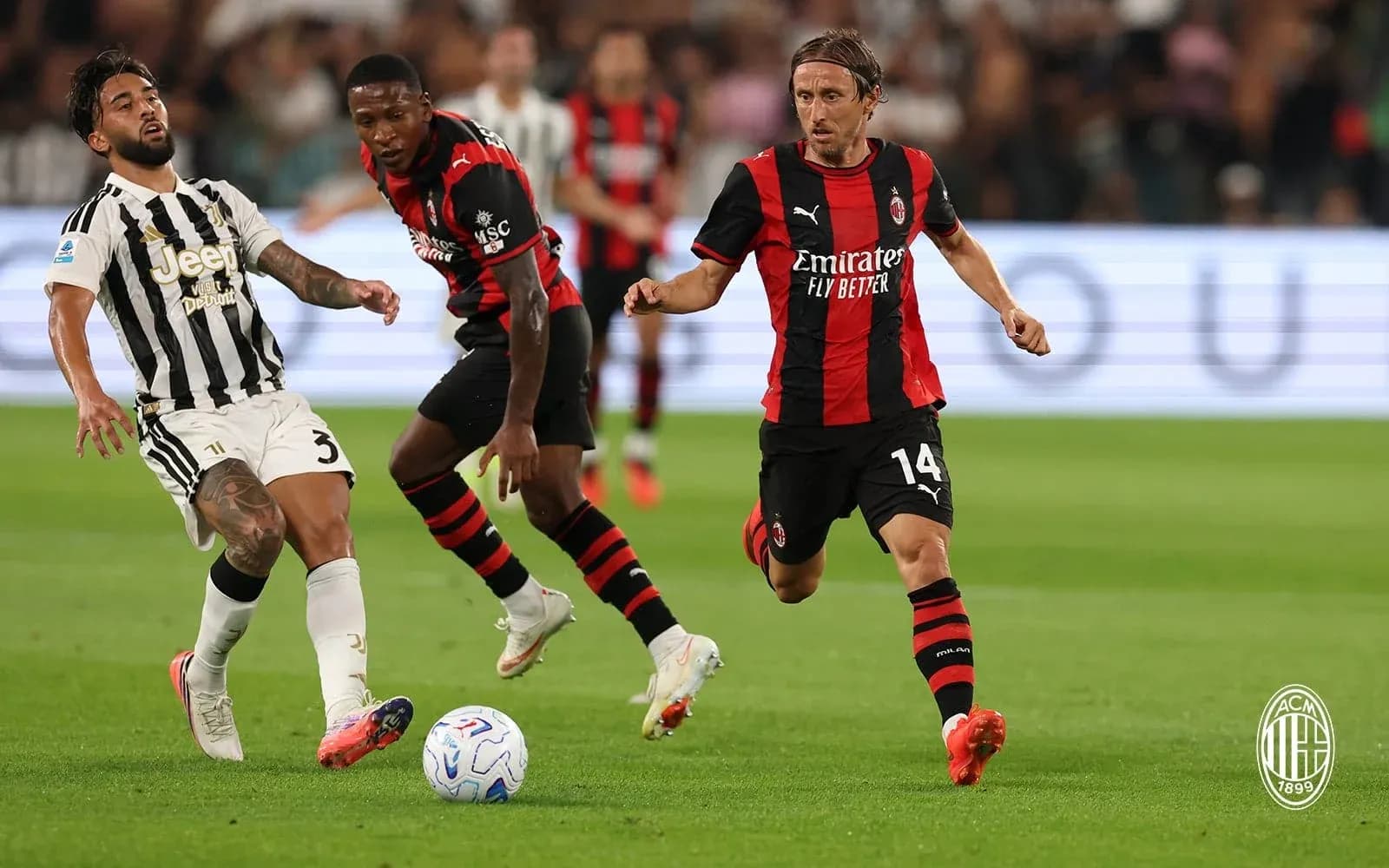
Under the Turin lights at Allianz Stadium, this was a meeting of two sides whose early-season profiles are strikingly similar: unbeaten, compact, and quietly efficient. Juventus and AC Milan arrived in Regular Season - 3 of Serie A each with 7 points from 3 matches, each with a goal difference of 3, and each carrying the same form line: two wins and a draw. The 1–1 full-time score felt less like a stalemate and more like a snapshot of two projects at a similar stage of evolution.
I. The Big Picture – Structures and Seasonal DNA
Following this result, Juventus remain a side defined by defensive control and controlled risk. Overall this campaign they have scored 4 goals and conceded just 1, and that defensive record is no accident. At home they have allowed only 1 goal in 2 matches, with an average of 0.5 goals conceded at Allianz Stadium, and they have yet to lose in any venue. Their attacking output is measured rather than explosive: 3 goals at home, 1 away, with an overall scoring average of 1.3 per match.
AC Milan mirror that balance with a slightly sharper attacking edge. Overall this campaign they have scored 5 and conceded 2, again for a goal difference of 3. On their travels they have 3 goals for and 2 against across 2 away fixtures, averaging 1.5 goals scored and 1.0 conceded away from San Siro. Both teams came in with clean-sheet capability – Juventus with 2 overall, Milan with 1 – but also with the shared trait of always finding a goal: neither side had failed to score in any of their 3 matches heading into this game.
Those numbers frame why the contest unfolded as a chess match rather than a shootout: two sides used to controlling space, rarely overcommitting, and trusting their structure.
II. Tactical Voids – Absences and Discipline
If Juventus felt a touch lighter in certain zones, the injury list explains it. Luciano Spalletti had to do without J. Cabal (thigh), A. Cambiaso (ankle), J. Ekhator (muscle), W. McKennie (muscle), A. Milik (inactive), P. M. Sarr (muscle), K. Thuram (knee) and K. Yildiz (foot). That is a full layer of rotation stripped from the squad, particularly in midfield and attack, and it helps explain why the bench, though still strong, leaned heavily on versatile profiles like T. Koopmeiners, J. Boga and E. Zhegrova rather than like-for-like replacements for every role.
Ruben Amorim’s Milan had a shorter but still meaningful absence list: M. Gabbia was unavailable with an ankle injury, reducing options in a back line already tasked with handling R. Kolo Muani’s mobility and Juventus’ fluid band of three.
Disciplinary trends also shaped the tactical tone. Juventus’ yellow-card distribution this season shows a spread of cautions across the full 90 minutes, with a notable 40% cluster between 46–60 minutes and additional late spikes in the final quarter-hour and stoppage time. Milan’s bookings skew even more dramatically towards the end: 20% between 46–60, 20% from 61–75, another 20% from 76–90, and a heavy 40% between 91–105 minutes. Both sides, in other words, tend to grow more combative as matches wear on, which fed into a second half where duels intensified and transitions became more ragged.
III. Key Matchups – Hunter vs Shield, and the Engine Room
Spalletti’s 4-2-3-1 was built on a solid spine. G. Vicario anchored a back four of Z. Celik, J. Lucumi, Bremer and P. Kalulu. In front of them, M. Locatelli and Douglas Luiz formed a double pivot tasked with screening Milan’s central overloads. Ahead, F. Conceicao, N. Gonzalez and K. Alajbegovic operated behind Kolo Muani, providing width and half-space presence rather than a traditional No.10.
Across from them, Amorim’s 3-4-2-1 had a very clear identity. M. Maignan sat behind a back three of S. Pavlovic, K. De Winter and M. Gila. The wing-backs P. Estupinan and D. Moreira stretched the pitch, while the central duo of L. Modric and Y. Musah were asked to both build and break. Ahead of them, A. Saelemaekers and A. Rabiot floated behind G. Ramos, forming a fluid front triangle.
The “Hunter vs Shield” battle here was less about a single star striker and more about collective threats. For Juventus, the attacking danger was distributed: Kolo Muani’s movement, Conceicao’s dribbling and Gonzalez’s timing between lines. Their test was against a Milan defence that had conceded only 2 goals in 3 matches overall, with a clean sheet at home and a respectable 1.0 goals conceded on their travels.
On the other side, Milan’s most efficient finisher this season has been A. Cissé, with 2 league goals from 5 shots, but he began on the bench. That pushed responsibility onto Ramos and the advanced midfielders. Rabiot, already with 1 goal and 1 assist in Serie A, embodied the dual threat from deep: late runs into the box and the ability to link play. Juventus’ shield – Locatelli and Douglas Luiz, supported by Bremer and Lucumi – had to track those surges while still closing passing lanes to Modric.
The “Engine Room” duel was equally compelling. Modric and Musah versus Locatelli and Douglas Luiz set the tempo. Juventus’ double pivot is built for balance: Locatelli as the metronome, Douglas Luiz as the carrier and presser. Milan’s pair brought contrasting qualities: Modric’s orchestration and Musah’s athletic coverage. Control of this quadrant decided when Milan’s wing-backs could advance and when Juventus could spring Kolo Muani into the channels.
On the flanks, Conceicao against Estupinan and Alajbegovic versus Moreira were battles of aggression versus discipline. Milan’s wide men needed to push high to pin Juventus back, but every advance risked exposing the back three to Kolo Muani’s pace and Gonzalez’s diagonal runs.
IV. Statistical Prognosis – Margins, xG Logic and What Comes Next
Even without explicit xG numbers, the underlying data sketches a likely pattern. Juventus, with an overall scoring average of 1.3 and a defensive average of 0.3 goals conceded, are built for low-event matches where a single moment decides the outcome. Milan, at 1.7 goals scored and 0.7 conceded overall, tilt slightly more towards exchange of chances but still within a controlled frame.
Put together, the expectation for this fixture was always a tight scoreline – something in the 1–1 or 2–1 band – and the final 1–1 fits that statistical logic. Neither side has relied on penalties this season; both have taken none and therefore have no cushion from the spot. Every goal must be constructed from open play or set pieces, which increases the premium on structured attacking and rehearsed patterns.
From a disciplinary and tempo standpoint, the late-game yellow-card surges for both teams suggest that the final 20 minutes are where future meetings could tilt. As legs tire and lines stretch, the side with the deeper bench and more incisive late runners – players like Cissé or S. Chukwueze for Milan, or Koopmeiners and Boga for Juventus – may find the marginal gains that turn a draw into three points.
For now, following this result, Juventus and AC Milan remain tactical mirror images in the table and on the pitch: compact, efficient, and still searching for the extra layer of attacking clarity that will turn statistical balance into sustained superiority.