.svg&w=384&q=75 "GoalGist logo")
Jurgen Klopp’s Bold Start as Germany Head Coach
Jurgen Klopp did not ease himself into international management. He kicked the door open.
In his first act as Germany head coach, Klopp has named two separate squads for the upcoming Nations League fixtures, calling up 44 players for four games against the Netherlands, Serbia and Greece. Sixteen of them have never played for the national team.
This is not a gentle evolution. It is a reset.
Two squads, four games, one experiment
Germany will effectively travel in waves.
The first squad will take on the Netherlands in Amsterdam on Thursday, September 24, then face Greece in Augsburg three days later on September 27. A second group will be used for the match against Serbia in Munich on October 1 and the return meeting with Greece in Thessaloniki on October 4.
Klopp’s message is obvious: nobody owns a shirt yet.
Among the 44 are a string of new faces. Said El Mala of Koln is in. So are Max Rosenfelder, Philipp Treu and Derry Scherhant from Freiburg, plus Celtic midfielder Mika Baur. All are waiting for a first cap. All have just been thrown into the deepest pool in German football.
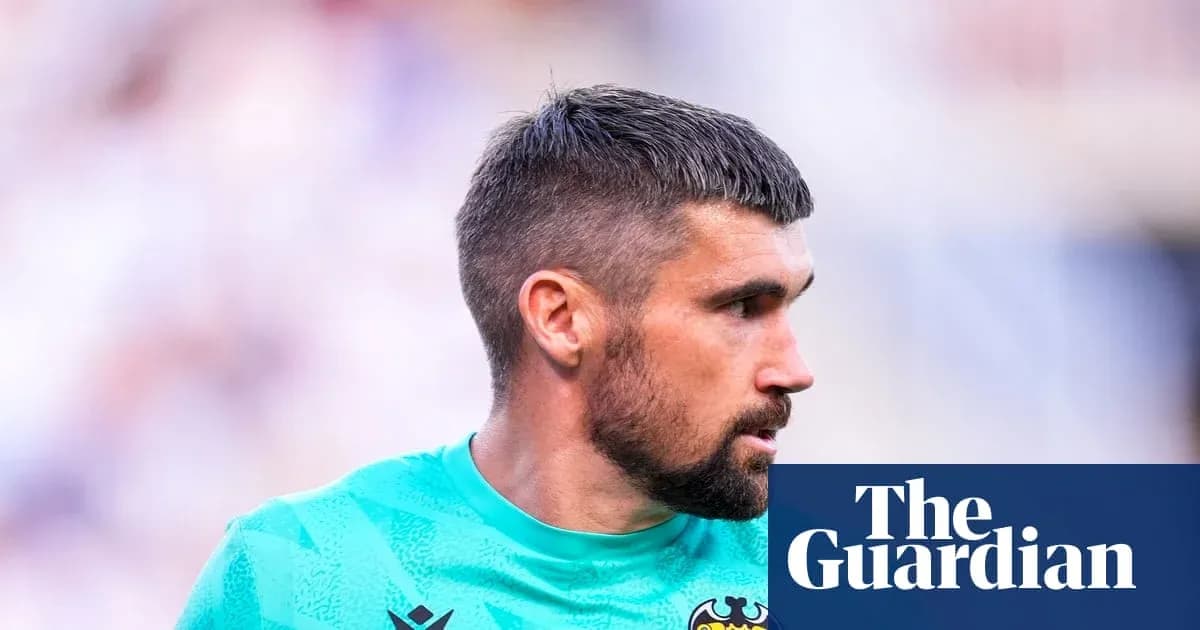
At the other end of the spectrum, Marc-Andre ter Stegen has finally been nailed down as No 1. On loan at Ajax from Barcelona, he has been confirmed as first-choice goalkeeper. Around him, there are recalls for Karim Adeyemi, Leeds United midfielder Anton Stach and Brentford forward Kevin Schade.
Not everyone made the cut. Stuttgart striker Deniz Undav, one of the Bundesliga’s most prolific forwards last season, has been left out. Klopp put that down to fitness, but the absence still jars in a 44-man pool.
Kimmich’s role, Nagelsmann’s shadow
One of Klopp’s most decisive football calls came with just a few words: Joshua Kimmich will be a midfielder.
Under Julian Nagelsmann, Kimmich had often been pushed to right-back, a long-running debate in German football. Klopp shut that down. Kimmich, still captain, will operate where he has always believed he belongs — in the middle of the pitch.
Nagelsmann’s departure still hangs over all of this. He resigned after Germany’s World Cup exit in the last 32 against Paraguay, a dismal end that sharpened the need for change. Klopp has wasted no time delivering it.
The structure of these squads hints at trial by fire. The Netherlands away in Amsterdam is no soft launch. Greece home and away and a clash with Serbia in Munich will test depth, resilience and combinations. With two almost entirely separate groups, Klopp is effectively staging a month-long audition.
A cap, a country, and a fault line
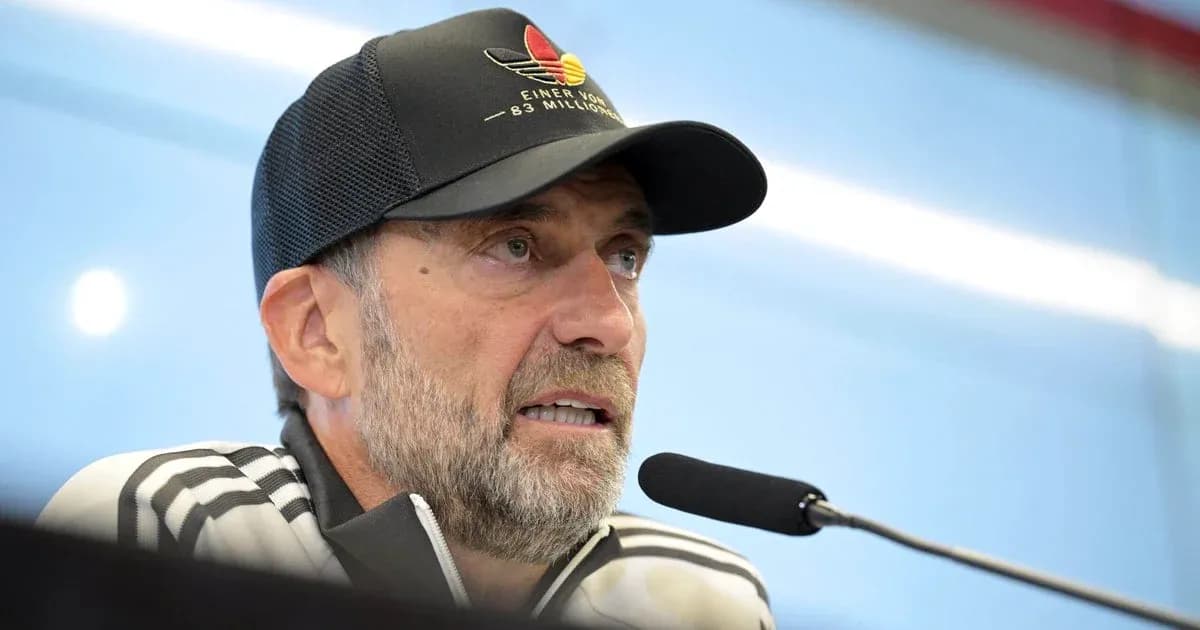
Yet the most striking image of the day was not on a tactics board. It was on Klopp’s head.
He walked into his press conference wearing a baseball cap in the colours of the German flag, embroidered with the words: “one of 83 million”.
In a different era, it might have passed as a quirky fashion choice. Not now.
Germany is in a fractured political moment. The far-right Alternative für Deutschland (AfD) recently recorded a major victory in the Saxony-Anhalt state election, winning more than 43 per cent of the popular vote and a majority. Their rise is no longer confined to the former East; their anti-immigration, nationalist rhetoric has found an audience in other regions, especially in areas hit by industrial decline. Polls at both state and federal level have reflected that trend for several years.
Klopp knew exactly where he was stepping.
Asked about the cap, he leaned into the symbolism. He spoke of wanting to “rediscover the fun” in all of this, to avoid talking politics, but also to “reclaim the flag” so that people feel “happy and fortunate” to live in Germany. He said he did not want to leave national pride “to the wrong people”, and that doing this job filled him with pride. Football, he insisted, should foster community and make people feel better — but that atmosphere needs to be created and embraced.
Behind those lines sits a bigger German question: what does patriotism look like in a country still wrestling with the legacy of national socialism? What does the flag mean now, in a more multicultural, more contested republic? Who gets to define national pride?
Those arguments have been simmering for years. Symbols of nationalism can be celebrated, distrusted, or hijacked. The same flag can mean very different things depending on who is waving it and why. That ambiguity mirrors a divided nation, one built from federal states with strong regional identities and often clashing views on what Germany is — and what it should become.
Klopp has walked straight into that debate and planted his cap in the middle of it.
On the pitch, his Germany will be new, raw and restless over the next few weeks. Off it, the bigger test may be whether a football team can still offer a shared space in a country arguing over what it wants to be.