.svg&w=384&q=75 "GoalGist logo")
Jordy Bos Rewrites Right-Back Role for Socceroos
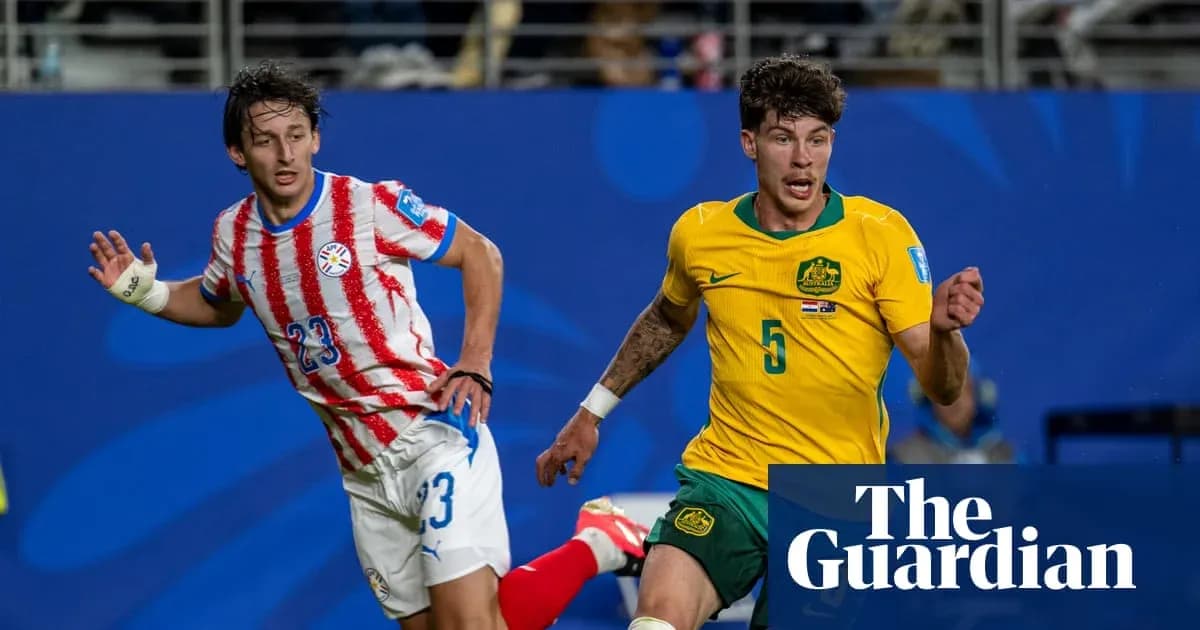
Jordan Bos did not so much play right-back in San Francisco as rip up the job description and start again.
Nominally the Socceroos’ left-back, he kept appearing on the opposite flank, thundering past one challenge, then another, driving into the box as if pulled forward by some invisible tide. Paraguay’s defenders bounced off him or simply watched him go. Every surge seemed to drag Australia, and the 12,000 yellow shirts in the stands, a few vital metres closer to the knockout rounds.
The scoreboard still read 0-0. The stakes were far heavier than the score suggested.
Australia were edging towards the last 32 with each passing minute on this cool night by the Bay, but the path was anything but comfortable. Every time Julio Enciso slipped free between the lines, hearts clenched. Every time Patrick Beach had to fling himself into another save, the margin for error shrank again.
On the touchline, Tony Popovic kept glancing at the clock. His side were almost there, almost safe in second place in Group D, yet always one Paraguayan breakaway from disaster. In the stands, the travelling Australians watched the digits tick down, every clearance greeted like a small act of survival.
They did not strictly need a goal. What they needed, after the flatness of the defeat to the United States, was a jolt of life, a performance to convince them this World Cup campaign still had a heartbeat.
It arrived in the form of a 23-year-old running down the “wrong” wing.
Bos breaks out
Within a few kilometres of Google’s Mountain View headquarters, the Socceroos’ search returned one emphatic answer. Time after time, Bos bounced through tackles, opened his stride and pushed Paraguay back. Every yard he gained was a small act of relief, the ball carried further from Australian danger and deeper into South American anxiety.
Popovic had already shuffled his pack. Cristian Volpato, Bos’s lively partner from the first half, was withdrawn. Nestory Irankunda, the match-winner against Turkey, also went to the bench. The attacking stars were rotated. The full-back stayed on and kept charging.
He drove into contact, rode collisions, and still emerged with the ball, an almost reckless refusal to play within the limits of his position. On the right touchline, substitute winger Ajdin Hrustic had the best view in the stadium of what was unfolding.
“He’s a great player, he’s got power, you’ve seen it,” Hrustic said afterwards, sounding more like a paying spectator than a teammate. Aiden O’Neill, officially handed the player of the match trophy, looked faintly embarrassed. He admitted it should probably have gone to Bos.
Captain Harry Souttar did not hold back either. Bos, he said, is “a special player, a special guy, and just takes everything in his stride”. Then came the line that made his teammates laugh and underlined the awe in which they hold him. “The guy’s body’s just unbelievable to look at,” Souttar said. “I don’t want to obviously put too much pressure on him, but if he keeps performing like that and there’s no ceiling.”
The hyperbole kept coming. Milos Degenek called Bos already a top-five left-back in the world and the best at his age. “That’s my opinion, I’m very biased, and I love him,” he said. Asked if that ranking applied at right-back as well, Degenek grinned and adjusted the claim: “Top 10.”
Irankunda went even higher. “He’s the best player in the world, Jordy Bos, best winger in the world,” he said. “He might have to switch to a winger, in my opinion. He’s done so well at right-back today, but he got so high up the pitch today and he showed glimpses of what he can do with the ball.”
The praise sounded wild. The performance made it hard to dismiss.
A gamble that paid off
Bos’s name on the right side of Popovic’s teamsheet raised eyebrows before kick-off. The squad already contained natural right-backs in Kai Trewin and Jason Geria. Popovic, though, had seen this film before.
He had watched Bos play on the right in Belgium with Westerlo. He had given him half an hour there against New Zealand nine months earlier. “We’ve seen that he can adapt and play on that side,” Popovic said. “It’s the best game he’s played of the three [World Cup matches] by far.”
Bos arrived at this tournament as one of the Socceroos’ most polished products, his quality underlined by a strong season in the Dutch Eredivisie. At 23, he also embodies the identity of this young Australian side: raw in places, but ambitious and unafraid.
Until this night, his World Cup had been steady, not spectacular. Solid defending, glimpses going forward, nothing yet to match the noise around his name. Then came Paraguay, a change of flank, and a performance that detonated all previous assessments.
He did it with risk hanging over him as well. One more yellow card would have meant a suspension for the last 32. Still he kept stepping into duels, kept driving at his man, kept pushing the line.
Hrustic had already taken to calling him “Dani Alves” in training, a nod to the Brazilian great who redefined the attacking full-back. Bos has also drawn comparisons to Arjen Robben, the classic left-footed right winger. He tried to cool that talk.
“Unfortunately I didn’t score like him, but I tried,” he said, half-smiling.
The numbers, though, told their own story. No Australian took more shots than Bos’s three. He created the joint-most chances. He completed four dribbles and won more duels than anyone else on the pitch, including seven of nine in the air. “I was enjoying it too, honestly, tonight,” he said.
Enjoyment is one thing. Dominance from an out-of-position full-back at a World Cup is another.
From Bale echoes to his own name
For many, the most obvious reference point is Gareth Bale, the former Wales left-back who morphed into a right-sided force for Tottenham and Real Madrid. Bale’s game leaned on explosive athleticism and raw power. Bos, on this evidence, carries a similar threat when he opens his stride.
With names like Alves, Robben and Bale swirling around, Bos was asked which comparison he saw most of himself in. “Yeah, Robben … I don’t mind Bale, to be honest,” he replied.
The truth is it scarcely matters. For Socceroos fans and anyone else watching, this was less about who he resembled and more about what it signalled.
On a night when Australia needed conviction as much as qualification, Jordy Bos did not just hold his nerve. He grabbed the game from an unfamiliar flank and bent it to his will.
Whatever label people choose, this was the evening he stopped being a promising full-back and started being a World Cup reference point in his own right.

