.svg&w=384&q=75 "GoalGist logo")
Jay-Z's Roc Nation Sports Dominates Football's Transfer Market
Jay-Z has spent a career turning culture into capital. This week, he did it again – not in the studio, but in the boardrooms and private jets that now define football’s most ruthless frontier.
Barely a day after Beyoncé dropped the first track in four years to feature him actually rapping, on an extended remix of Morning Dew (Donk), another of his ventures stole the spotlight. Roc Nation Sports, the sporting arm of his entertainment empire, has muscled its way to the centre of the summer transfer window.
From courts and diamonds to the Bernabéu
When Roc Nation Sports launched in 2013 in partnership with Creative Artists Agency, the focus was clear: America’s big three – NBA, NFL, MLB. Kevin Durant headlined a roster built on US power. Football was an afterthought.
That changed in 2015 when Bayern Munich’s Jérôme Boateng became the first major football client. Four years later, Roc Nation Sports International (RNSI) set up in London with a mission to crack Europe’s elite. The shift was subtle at first. It isn’t any more.
Today, RNSI represents more than 100 players, with one name towering over the rest: Vinícius Júnior. The Brazil forward, now tied to Real Madrid on a lucrative new deal believed to be worth around €25m a year, is the most visible symbol of Jay-Z’s push into the global game.
Arsenal circled. Reports linked the Premier League club with a blockbuster move for the 26-year-old, and their interest was serious enough to force Real into action. RNSI, which took over Brazilian agency TFM in July 2023 and rebranded it Roc Nation Sports Brazil, had spent two years driving a hard bargain. They wanted Vinícius pushed up towards Kylian Mbappé territory – €30m a year – and were prepared to let his contract tick into its final 12 months to test the market.
Arsenal, now looking at other attacking options including Everton’s Iliman Ndiaye, were thought to be open to a huge fee but considered a free transfer next summer the more realistic route. The pressure worked in a different way. Real blinked first, raised their offer, and kept their star.
That decision may yet carry a cost. The money and room required to move for Manchester City’s Rodri now looks out of reach, with Barcelona stealing a march on their great rivals. In the high-stakes ecosystem Roc Nation operates in, one win always risks another loss.
Diomande, record fees and private jets
If Vinícius’s renewal underlined RNSI’s leverage, Yan Diomande’s move to Madrid showcased its reach.
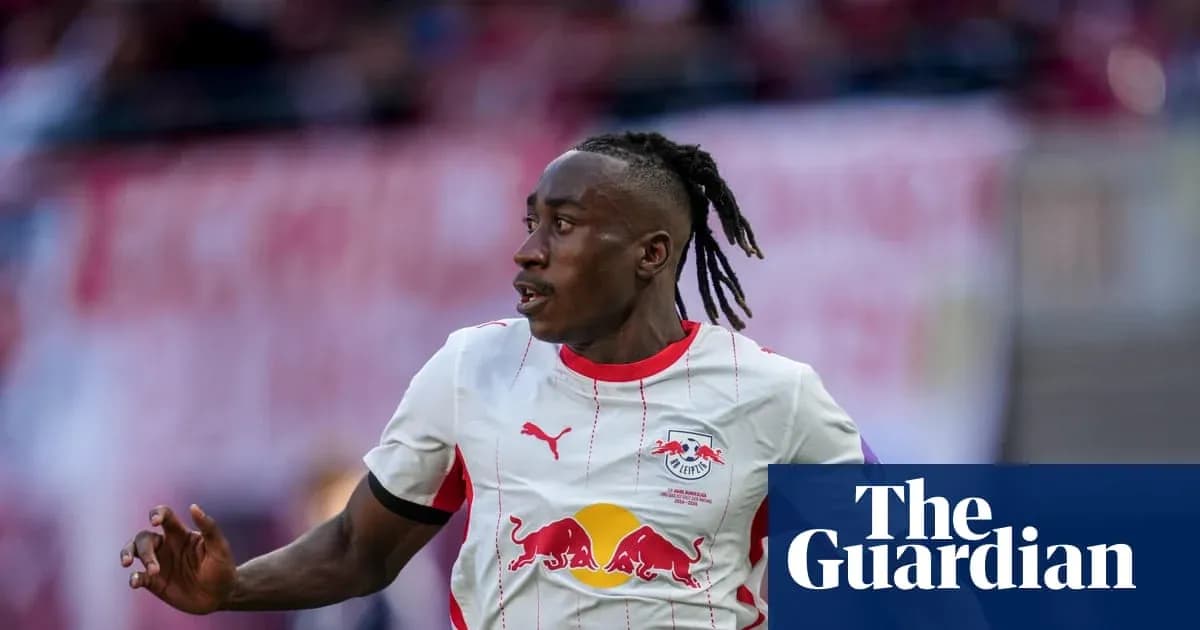
On the same day Real unveiled Vinícius’s new six-year contract, Diomande flew into the Spanish capital to complete a record £115m transfer from RB Leipzig. At 19, with only 46 senior appearances behind him across Leipzig and a loan at Leganés in Spain’s second tier, he has already become the most expensive African player in history.
The images told their own story. Diomande on a private jet, flanked by his agents Nathan Campbell and Kareem Gbaja, heading for the Bernabéu. RNSI, which has been reported to have earned up to £17m in commission and fees from the deal, sat at the heart of one of the most complex moves of the window.
The saga stretched back to June, when Liverpool saw a £70m bid rejected by Leipzig. The German club held their line. Paris Saint‑Germain were told they would need to go beyond £100m to stay in the race. They walked away, issuing a pointed statement at the end of July accusing “certain player agents” of “inflationary and manipulative games” and vowing not to take part.
Real did not walk. They paid. Diomande signed a seven-year contract on Thursday, and the modern transfer machine whirred into life around him.
Legal fights in the shadows
Deals of this size rarely arrive without a fight. Diomande’s rise has been no exception.
RNSI has already had to navigate two legal challenges linked to the winger. Max Gradel, the former Bournemouth and Ivory Coast international, claims his agency Maxidel Management had an existing agreement with Diomande. He has filed a complaint with Fifa. World football’s governing body did not block the move to Madrid, but the dispute lingers in the background.
Dez Bamba, president of Diomande’s first club AFI Sud Comoé in Côte d’Ivoire, has said the player joined RNSI after a phone call from Vinícius. RNSI has not commented on the case.
At the same time, the Rainbow World Group launched proceedings in the high court in London and in the British Virgin Islands in mid‑June. They are seeking to enforce what they describe as binding image rights and intellectual property agreements from Diomande’s early career. Rainbow say they invested heavily in the teenager, taking him on trials at Chelsea, Bournemouth, Crystal Palace and Newcastle before he eventually signed for Leganés. Again, RNSI has stayed silent.
The picture is clear enough. Where there is a player worth £115m, there will be a queue of people claiming a piece.
Africa, the new battleground
Diomande’s journey from Côte d’Ivoire to the Bernabéu is not just a personal story. It is a roadmap for clubs and agencies hunting the next undervalued star.
Jeff Luhnow, the former MLB executive who built World Series-winning teams with the Houston Astros and St Louis Cardinals, now owns Leganés as part of his Blue Crow multi-club network. He saw this coming. Speaking last year, Luhnow said Diomande was expected to be the first of many to emerge from the recruitment and development programmes Blue Crow has established across Africa, including in Ghana and Zambia. “We’ve got more players like that in our pipeline,” he said.
Roc Nation has moved quickly to occupy the same space. In November, RNSI announced it had signed eight young African prospects, among them Ghana Under‑17 midfielder Joseph Narbi and Francis Gomez, a Gambian winger at AC Horsens in Denmark. Campbell called Africa “a hotbed of untapped footballing potential” and framed the expansion as a natural step in the company’s global vision.
Clubs are pouring money into academies and scouting networks across the continent. Agencies are following. Diomande’s fee is not just a headline; it is a signal. The scramble for the next wave of African talent has already begun.
Jay-Z’s new power play
Tidal, streetwear, champagne, cognac – Jay-Z has long understood how to stretch a brand across industries. Football, though, is different. It is tribal, political, and governed by rules that often feel more flexible than fixed.
Roc Nation Sports has chosen to meet that chaos head-on. From Vinícius’s contract brinkmanship to Diomande’s record move and the legal crossfire around it, the company has shown it is willing to push, to test boundaries, to live in the grey areas where modern football now does most of its business.
In a dog‑eat‑dog world of intermediaries and super-agents, the “new kids on the block” no longer look like outsiders. They look like a power. And as the money, influence and talent keep converging on the same few boardrooms, the real question is no longer whether Roc Nation belongs in football – it’s how much of the game it will end up owning.