.svg&w=384&q=75 "GoalGist logo")
Jason Wilcox: From Ewood Park to Manchester United's Director of Football
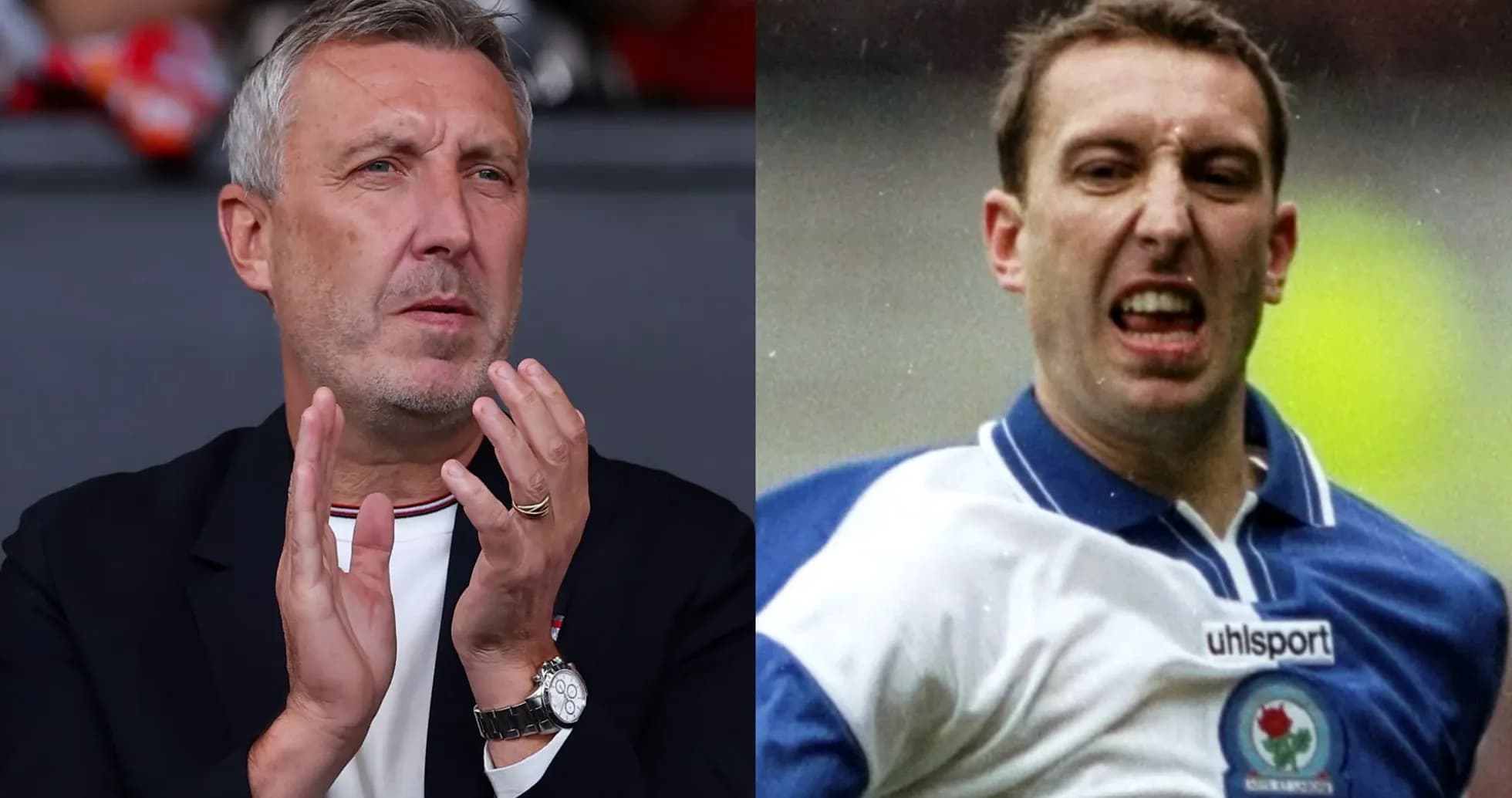
Jason Wilcox spent a decade hugging the touchline at Ewood Park, whipping crosses onto the heads and boots of Alan Shearer and Chris Sutton. Now he works in boardrooms and meeting suites, shaping the future of Manchester United. The setting has changed. The influence hasn’t.
The Bolton-born winger came through Blackburn Rovers’ youth ranks and grew into a mainstay of Kenny Dalglish’s title-winning side, racking up more than 270 appearances and helping deliver the Premier League crown in 1994-95. That form earned him three England caps and a reputation as one of the league’s most reliable wide men.
His playing days wound down with spells at Leeds, Leicester and Blackpool before retirement in 2006. Then he disappeared from the spotlight. No punditry, no managerial quick fix. He stepped away.
The comeback arrived quietly in 2012. Manchester City brought him into their academy coaching staff, back into the daily grind of developing talent. He climbed steadily, eventually becoming a director at the club. Inside the game, his name started to carry weight again – this time not for beating full-backs, but for building structures and pathways.
Southampton moved to prise him away in January 2023, handing him the keys as director of football at St Mary’s. His work on the south coast only strengthened his reputation. By April 2024, Manchester United came calling. He initially walked through the doors at Old Trafford as technical director. He now holds the title that really matters in the modern game: the man overseeing football operations, with a major say in recruitment on the pitch and in the dugout.
That influence has already been felt. Wilcox played a central role in the decision to appoint Michael Carrick as United’s new manager, succeeding Ruben Amorim. It is the kind of call that defines reputations. At 55, he finds himself under one of the brightest spotlights in world football.
Character and Influence
So what kind of character is steering United’s rebuild?
Colin Hendry, Wilcox’s former Blackburn team-mate and a fellow member of that 1995 title side, paints a vivid picture. Speaking to GOAL in association with IvyBet, the ex-defender didn’t lean on clichés.
"He's obviously a very clever character. He was a clever footballer," Hendry said.
On the pitch, Wilcox was part of a perfectly balanced supply line. "Jason was good. Jason was very effective as a winger, with Jason on the left, Stuart Ripley on the right. And when you've got two strikers, Alan Shearer and Chris Sutton, just feeding off what they provided, that's why these lads more or less won Blackburn the Premiership. But it was supply as well."
Hendry admits he never imagined that the quiet, intelligent winger would end up as a powerbroker at the top of the game.
"Jason's position, I would have never thought, to be fair, that may have happened, that he would have ended up in that position. But then he did do well after his career. He did a business and then he was at Man City academy, grew at the Man City Academy to the head of the Academy, got headhunted off to Southampton and from Southampton all the way along, he's been doing really well.
"And that doesn't surprise me because he was a clever footballer. Sometimes good, great footballers don't make great coaches and great managers. But then Jason's gone down a different path."
That path, Hendry suggests, has been built on more than just footballing IQ.
"I'm sure he had a good private business going on in his life and he ended up at City and growing, coming through the ranks there at Man City academy as a coach and then fulfilling all these different things."
Then there’s the side of Wilcox that never makes the job titles or the press releases.
"He's a funny guy though. Jason was very sharp, very quick witted. He did a really good take on Ray Harford and Kenny [Dalglish]. He did a couple of good takes on the Gaffer and Ray, God rest his soul. And even Tony Parkes as well, God rest his soul. Jason was a comedian, if I'm being honest."
That mix – sharp mind, sharp tongue, serious operator with a dressing-room sense of humour – is now embedded at Old Trafford, where Wilcox helps dictate transfer strategy and long-term planning. It is a role that has grown in power and controversy across Europe, with directors of football often accused of encroaching on a manager’s territory.
Hendry understands why the role divides opinion, but he is clear on its importance in the modern game.
"The game's moved on. So the recruitment, that's a job in itself," he said.
To those outside the industry, the process can seem bloated and overcomplicated, yet Hendry has seen the depth of analysis first-hand.
"To a layman, you're thinking of all these different things, criteria that players have got, and they go into everything these days at the top level, they go into everything - they go on about their social aspects, their upbringing, they go so far back into things. And I do understand, but I don't know how much of that really affects that individual as a footballer."
He still believes one principle should never be lost: the manager cannot be reduced to a bystander.
"I do think that the manager, the coach, the man, the guy that's picking the team on the Saturday to play that game should have an input into who they have in the squad. And I know that's not always the case because there's funding and everything else, you've got so many different things to think about.
"And what I mean by funding is what the budget is they've got to spend, the wages, and everything else, all that's going to be taken into consideration because the club's got to be run properly. I understand that as well as, but I do think the main man should have a bit of an influence as to what he's looking to bring into his squad."
That balance – data and detail on one side, the manager’s feel for the dressing room on the other – is exactly where Jason Wilcox now operates. He once supplied Shearer and Sutton from the left flank. At Manchester United, he supplies something far more precious: the players and the coach entrusted with dragging a giant back to the top.