.svg&w=384&q=75 "GoalGist logo")
Jamshedpur FC Withdraws from ISL: A Turning Point for Indian Football
The Furnace will go cold.
Nine years after Tata Steel won the rights to place Jamshedpur on the Indian Super League map, Jamshedpur FC are stepping away from the country’s top tier. A club that packed out the JRD Tata Sports Complex, lifted the ISL League Winners’ Shield in 2021-22 and gave the league one of its most distinctive home atmospheres will not be part of the ISL from the 2026-27 season.
The announcement dropped on Friday, quiet and clinical in wording, seismic in impact.
“Jamshedpur FC would like to confirm that it will not be participating in ISL from 2026-27 season onwards,” the club said in a statement.
The message then pivoted to reassurance: the entity behind the club, JFSPL, “remains committed, in other capacities, to the continued growth and development of football in India” and will keep working on grassroots and youth development, identifying and nurturing talent with a view to national and international football.
What the statement did not do was explain why.
Behind the scenes, the picture is far less polished. Sources indicate that mounting financial losses had become a serious concern, with doubts surfacing in some quarters about the league’s long-term sustainability. The decision has already been communicated to the All India Football Federation, drawing a clear line under the club’s ISL future even as the senior team continues to play in the Durand Cup.
Inside the club, the news hit hard. CEO Mukul Choudhari convened staff and delivered the message that the senior team would no longer continue. Close to 50 people across administration, technical, first-team, youth and grassroots roles were left staring at an uncertain future. For many, Jamshedpur was not just an employer but a project with deep roots in a city built around steel and sport.
On the pitch, the situation is equally tangled. Jamshedpur have at least 12 senior players tied to long-term contracts, and title-winning coach Owen Coyle also remains under contract. There is no clarity yet on how those agreements will be resolved or what comes next for that core group, which only a couple of seasons ago powered the club to the top of the ISL table.
Several others were brought in on short-term deals purely for the Durand Cup campaign: former India midfielder Raynier Fernandes, Abhishek Ambekar, Aman CK, Devendra Murgaokar, Leewan Castanha and Provat Lakra among them. They arrived expecting a cup run, not to find themselves in the middle of an existential moment for the club.
All this comes at a delicate time for the ISL itself. The league has just moved to a club-led model, with teams collectively operating the competition through a dedicated entity while the federation retains a 10% stake in the structure. In theory, that shift hands more control to the clubs and aligns incentives. In practice, losing a team backed by one of India’s most storied corporate football patrons is a jolt the league could have done without.
Because Tata’s relationship with the sport runs far deeper than the ISL era.
Long before Jamshedpur FC, the group’s Mumbai-based side lifted some of Indian football’s oldest and most prestigious trophies: the Durand Cup, the IFA Shield, the Rovers Cup. Tata’s residential football academy in Jamshedpur has, over nearly three decades, supplied close to 150 players to various Indian national teams, quietly shaping generations of talent. Tata Steel have also used their clout to bring global clubs to Indian shores, hosting the likes of PSV Eindhoven and Sao Paulo for friendlies against India.
That heritage is why this withdrawal feels like more than a line in a press release. It removes a champion club from the ISL, drains one of its best matchday atmospheres, and raises uncomfortable questions about the economics of top-tier football in the country.
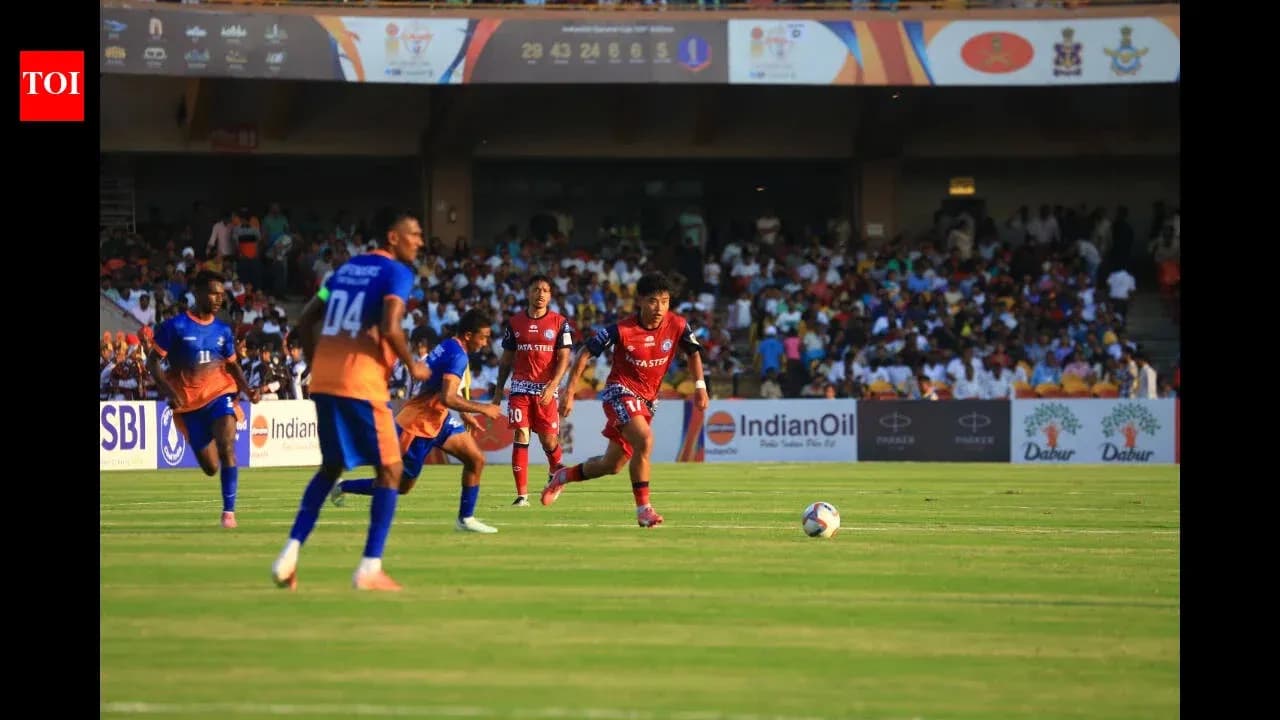
For now, Jamshedpur’s senior team continues to fight in the Durand Cup, wearing the badge and colours as if nothing has changed. But everyone around knows it has. When the next ISL season kicks off without the roar of The Furnace, Indian football will have to confront what it means when even a giant like Tata decides the heat at the top is no longer worth it.