.svg&w=384&q=75 "GoalGist logo")
Jamal Musiala's Health Scare: Neurological Diagnosis Explained
Jamal Musiala’s latest scare did not come from a crunching tackle or a wayward lunge. It came in a quiet, chilling moment on the pitch.
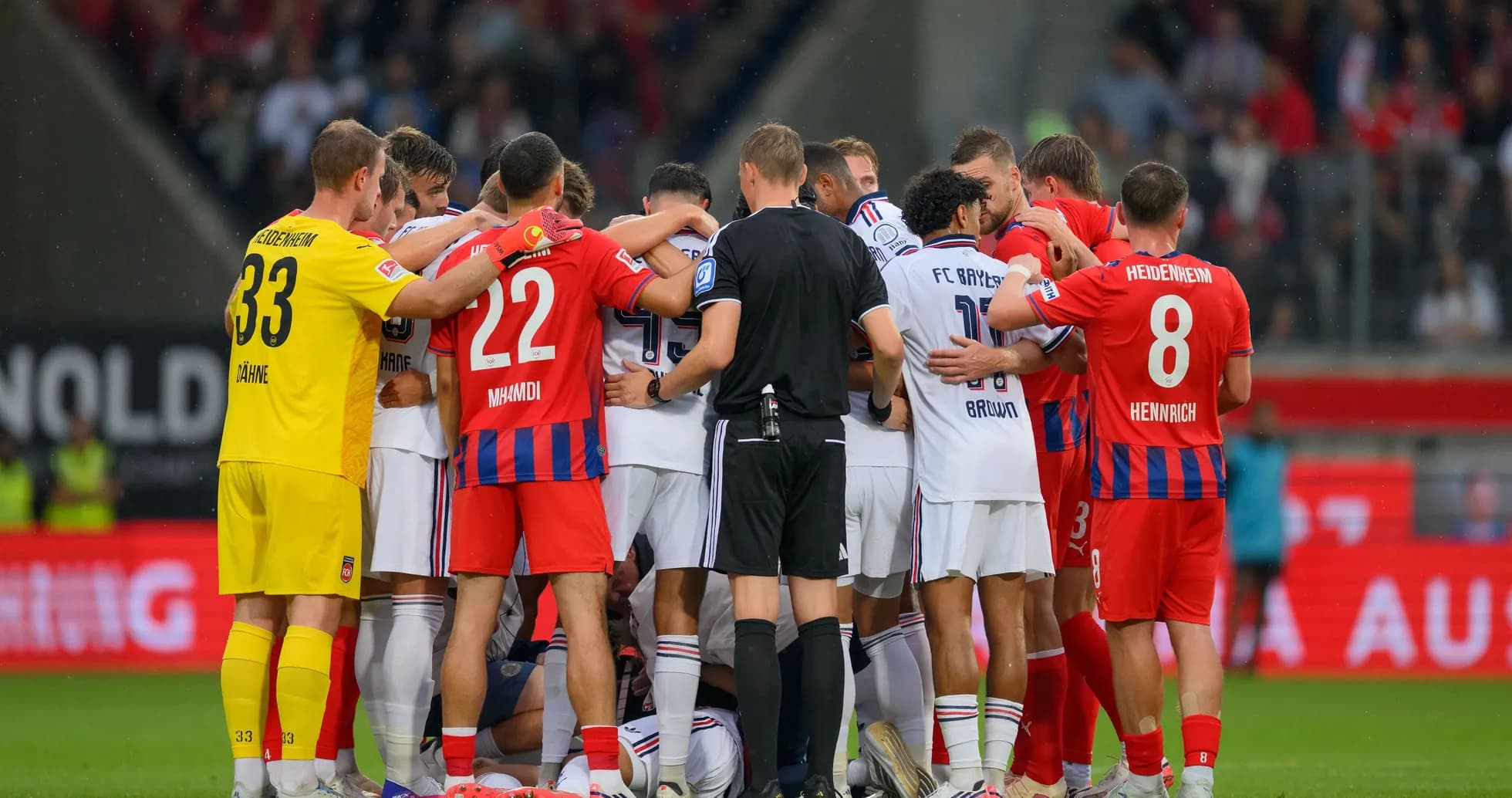
The Bayern Munich playmaker collapsed for the second time in four days during a friendly win over Heidenheim, sparking immediate alarm. The 23-year-old looked dazed, required on-field medical treatment and was helped from the grass, echoing a similarly disturbing episode against RB Leipzig earlier in the week.
This was no routine pre-season knock. It stopped everyone.
Inside the club, though, there is clarity. Sporting director Max Eberl has stressed that Bayern are fully across the situation and standing firmly behind their No. 10. Musiala himself then broke the silence, revealing he has been diagnosed with temporary, brief absence seizures linked to a neurological dysfunction.
To understand what that actually means for an elite footballer, German outlet BILD turned to Prof. Christoph Kleinschnitz, head of neurology at the University Hospital Essen. His assessment underlined both the seriousness and the manageability of the condition.
“From a neurological perspective, this could potentially be an epileptic seizure. It could be a form of absence epilepsy, as symptoms such as brief periods of unresponsiveness are consistent with it,” he explained. The episodes seen on the pitch fit that picture.
The professor was careful, though, not to leap beyond the data. “We would need to know all the findings from the neurological examinations to make that assessment. It is highly treatable, but would require long-term therapy. Musiala can continue playing football.”
That final line will be the one Bayern fans cling to. He can continue.
For Musiala, it is another obstacle at a time when he had been trying to gather rhythm again. His last campaign was already shredded by trauma: a fractured fibula combined with a dislocated and broken ankle suffered at the Club World Cup against Paris Saint-Germain. Those orthopaedic injuries cost him a significant portion of the 2025-26 season and demanded a long, lonely road back to full fitness.
Just as the body began to heal, a new battle emerged in the brain.
The challenge now is twofold. Bayern and Musiala must carefully manage the legacy of those serious leg injuries while building a long-term plan around his neurological diagnosis. Training loads, match minutes, medical monitoring – all of it needs to be calibrated with precision.
The mood around the case, though, is not one of resignation. Experts are confident that, with proper therapy and ongoing care, this condition should not derail his professional career. Musiala has spoken with optimism about his daily routine and treatment, and the club’s medical department is regarded as one of the most advanced in Europe.
So the next big question is simple: when will he be back?
Bayern want their creative fulcrum fully integrated as they hunt trophies on every front next season. A fit, stable Musiala changes the entire feel of their attack, the tempo of their play, the ceiling of their ambitions. Yet no one inside the club is prepared to gamble with his health for an early return in August or September.
Around him, the circle is tight. Bayern, his family, his friends – all are locked in behind the player as he navigates this treatment plan and waits for the final all-clear from the specialists. The supporters, too, will wait for that moment when he steps out again, not just to play, but to prove that this frightening chapter is under control.
When that green light comes, the question will not be whether Jamal Musiala can still shape Bayern’s future.
It will be how quickly he reminds Europe why he was never supposed to be on the sidelines in the first place.