.svg&w=384&q=75 "GoalGist logo")
Jamal Musiala Addresses Health Concerns After Collapses
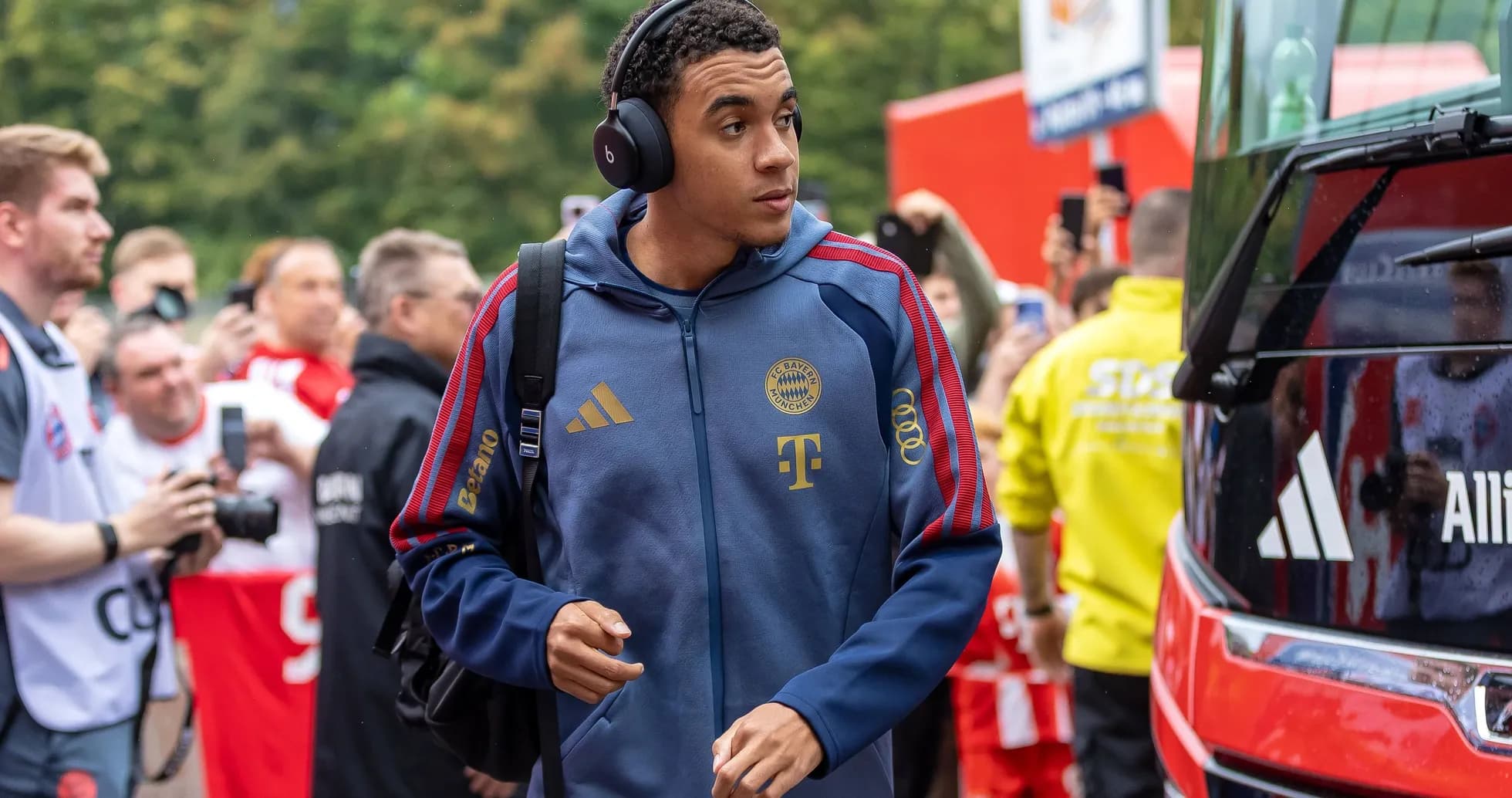
Jamal Musiala has moved to calm fears over his health after collapsing twice in four days, revealing he has been diagnosed with brief, treatable neurological episodes.
The Bayern Munich and Germany midfielder went down again earlier this week during Bayern’s 4-2 friendly win over Heidenheim, just six minutes after coming on as a substitute. It was a chilling repeat of the incident against RB Leipzig in the Telekom Cup, when he also suddenly slumped to the turf and had to be taken off.
This time, as in Leipzig, medical staff rushed to his aid. Musiala looked dazed as he was helped from the pitch and sent for immediate examinations, raising serious concern among teammates, coaches and supporters.
On Instagram, the 23-year-old addressed the situation head on. He explained he has been “diagnosed with brief, temporary but easily treatable episodes of absence, which are caused by a neurological dysfunction.” He acknowledged the shock around the scenes but underlined that he remains “optimistic” about both his treatment and his ability to continue competing at the top level.
That message has been backed up inside the club. According to German press agency DPA, Bayern sources stressed there is currently no indication that Musiala’s career is in danger. Those close to the medical process insisted his participation in the last two matches had been “completely unproblematic” and thoroughly cleared with specialists beforehand. What Bayern have not done, at least publicly, is put a date on when he will be ready for competitive action again.
Medical Condition
Behind the medical term lies a specific condition. Absence seizures, historically referred to as “petit mal”, are a form of epilepsy that doctors split into typical and atypical types. In typical episodes, a person can suddenly stop what they are doing, almost as if someone has hit a pause button. They can stare blankly, sometimes with a brief upward flutter of the eyes, before snapping back to normal within 10 to 20 seconds.
The Epilepsy Foundation describes the cause as “brief abnormal electrical activity in a person’s brain”. These episodes can go unnoticed for years and may only be picked up in adulthood. Some people, the foundation notes, can suffer “hundreds of brief absence seizures a day”, yet still manage the condition with targeted treatment that does not limit physical activity.
Upcoming Matches
That nuance matters for Bayern as they map out the coming weeks. The champions are about to step into the sharp end of their calendar. They open their season against Borussia Dortmund at Signal Iduna Park in the German Super Cup, rebranded this year as the Franz Beckenbauer Supercup, a fixture that always sets an early tone.
Then comes the serious business of defending the Bundesliga title. VfB Stuttgart visit Munich on Friday, August 28, the start of another campaign in which Bayern will be expected to dominate at home and push deep into Europe.
Inside Säbener Straße, the plan around Musiala is clear: no rush, no risks. Club officials and doctors will track his response to treatment and only then decide when he is ready to step back into competitive football. For now, Bayern must prepare for the season’s first trophies while one of their brightest talents focuses on something far more important than a pre-season result: getting his health exactly right.