.svg&w=384&q=75 "GoalGist logo")
Harry Kane: The Future of England's Captaincy and His Career
Harry Kane stands at the peak of his powers, yet the questions circling him are all about the end.
Fresh from another major tournament where he carried England’s hopes and wore the armband through a campaign that flattered to deceive, Kane leaves with six goals, a semi-final exit to Argentina and a third-place finish. The numbers are strong. The outcome, again, is empty-handed.
This is the paradox of his international career. He is England’s all-time leading scorer with 85 goals, the same story at Tottenham, and now a ruthless finisher in Bavaria. For Bayern, he has plundered 146 goals in 147 games – a video-game return in the real world.
At 33, there is no sign of him easing off. A new contract at the Allianz Arena is expected, with only a year left on his current deal and Bayern desperate to keep their No.9 at the heart of their project. He is already being talked up as the favourite for the 2026 Ballon d’Or. The numbers, the form, the influence – all of it points in one direction.
Yet the conversation around Kane is no longer just about what he is. It’s about how long he can stay there.
England have no obvious heir waiting to step into that central striking role. The assumption inside and outside the camp is that Kane will remain captain through the home European Championship in 2028, the figurehead of a side expected to peak on their own turf. Beyond that, the picture blurs.
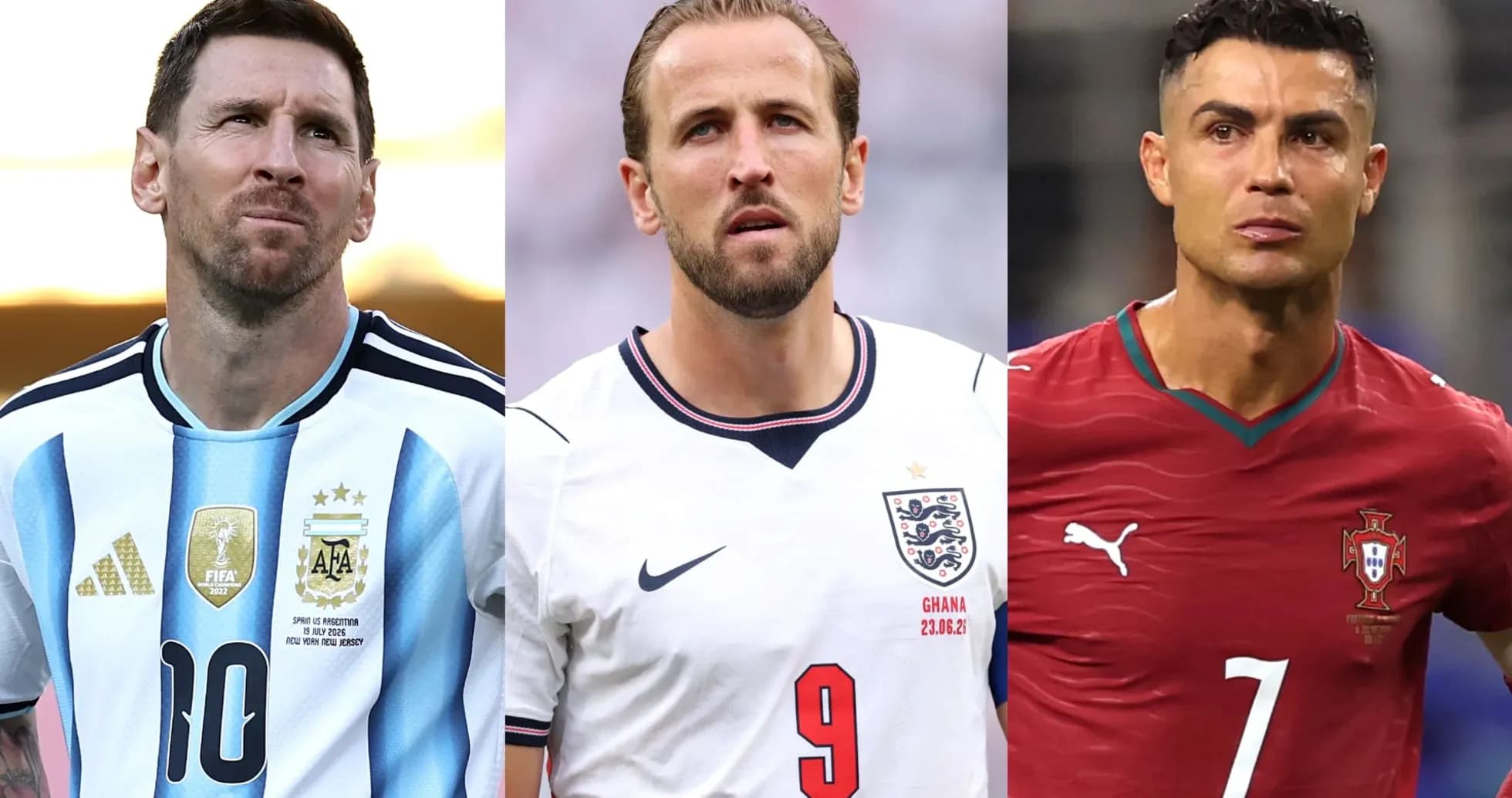
Can he stretch his career at the very top into his late thirties, like Cristiano Ronaldo and Lionel Messi? When that question was put to Dietmar Hamann, the former Bayern midfielder did not hesitate to inject realism into the debate.
“He’s turned 33 now so he'll be 36 going on 37 in four years' time. It's a big ask,” Hamann told GOAL, speaking courtesy of MrQ.
He didn’t dress it up. He pointed straight to the examples everyone reaches for.
“Obviously, we saw two of the all-time greats playing in the World Cup, one 39, one 41. One did well, the other one didn't. You know, I wouldn't put him in the same bracket as those two.”
The age comparison does Kane no favours in Hamann’s eyes, even if the England captain would be younger than those veterans were on that stage.
“Even though he would be a few years younger than these two guys playing in the World Cup, I think it's a big ask. It's a big ask because he started playing pretty early. He went out on loan in the lower leagues, played an awful lot of games in the Premier League, didn't really have many injuries. The odd ankle injury, I think he's had.
“He hardly missed a game in the last couple of years here in Munich. To see him in the World Cup in four years' time, if you put me down to an answer now, I'd probably say no.”
That’s the tension around Kane: durability versus mileage. He looks fit, sharp, relentless. But the odometer is spinning.
Chris Waddle, another former England international who knows what it means to carry expectation in a major tournament, has his own doubts about Kane stretching to another World Cup.
“Fitness is a great thing to have. Some players develop, get better as they get older. Some find it easier. Not easier, but easy,” he told GOAL when asked the same question.
The next checkpoint is not a distant World Cup, but the Euros in two years’ time. That, Waddle suggests, is where the first real judgement will be made.
“We’ll see how his legs are in two years' time, at the Euros even. People will be questioning that. The thing with Harry's advantage is he's a fit lad, we know that. He doesn't rely on pace. He's got a great football brain.”
That intelligence has already begun to reshape his game. Kane drops deeper, links play, dictates attacks. He no longer needs to sprint away from defenders to hurt them. Yet the warning signs for all great forwards are the same.
“Sometimes you see players in tournaments and you think, ‘His legs are going there’,” Waddle said. “I'm looking at Ronaldo as an example. I watched Portugal play in the World Cup and his legs were gone in my eyes for that level of football. Lionel Messi still had bits of brilliance until the rest of his team-mates decided to try and kick everybody out of the country.”
The contrast is stark. Ronaldo, fighting the clock. Messi, adapting, drifting, choosing his moments. Both still icons, both no longer at the absolute summit of the European game.
“So I think there's a time and a place where you've actually got to think, ‘Yeah, he can still play, and he can still play like Messi does in Miami, a good level for him’. You know, Ronaldo in Saudi can still handle it. And Harry, eventually he'll come to a time where you think the Bundesliga is too quick. Where do you go from there?”
That question cuts right to the heart of Kane’s future. The Bundesliga currently suits him perfectly: high tempo, chances flowing, a dominant side built around his finishing. But what happens when that intensity becomes too much? When the legs do what they do to every striker, no matter how meticulous the preparation?
“The next World Cup, it's a big ask for him, I think, to play in that tournament,” Waddle added. “I think some of these players can think, ‘Yeah, I'm still playing football, but that level's out of me now, and I've enjoyed it’. I think some of these players try and play too long and it doesn't look great on them. But I'm sure Harry will know when the time's right to say, ‘No, I can't play for England anymore’.”
For now, Kane is still the man his country and club lean on. He is still the guaranteed goals, the captain, the reference point. The records keep tumbling, the net keeps bulging, the awards keep looming.
The real drama lies not in what he does next season, but in how – and when – he chooses to walk away from the very top.