.svg&w=384&q=75 "GoalGist logo")
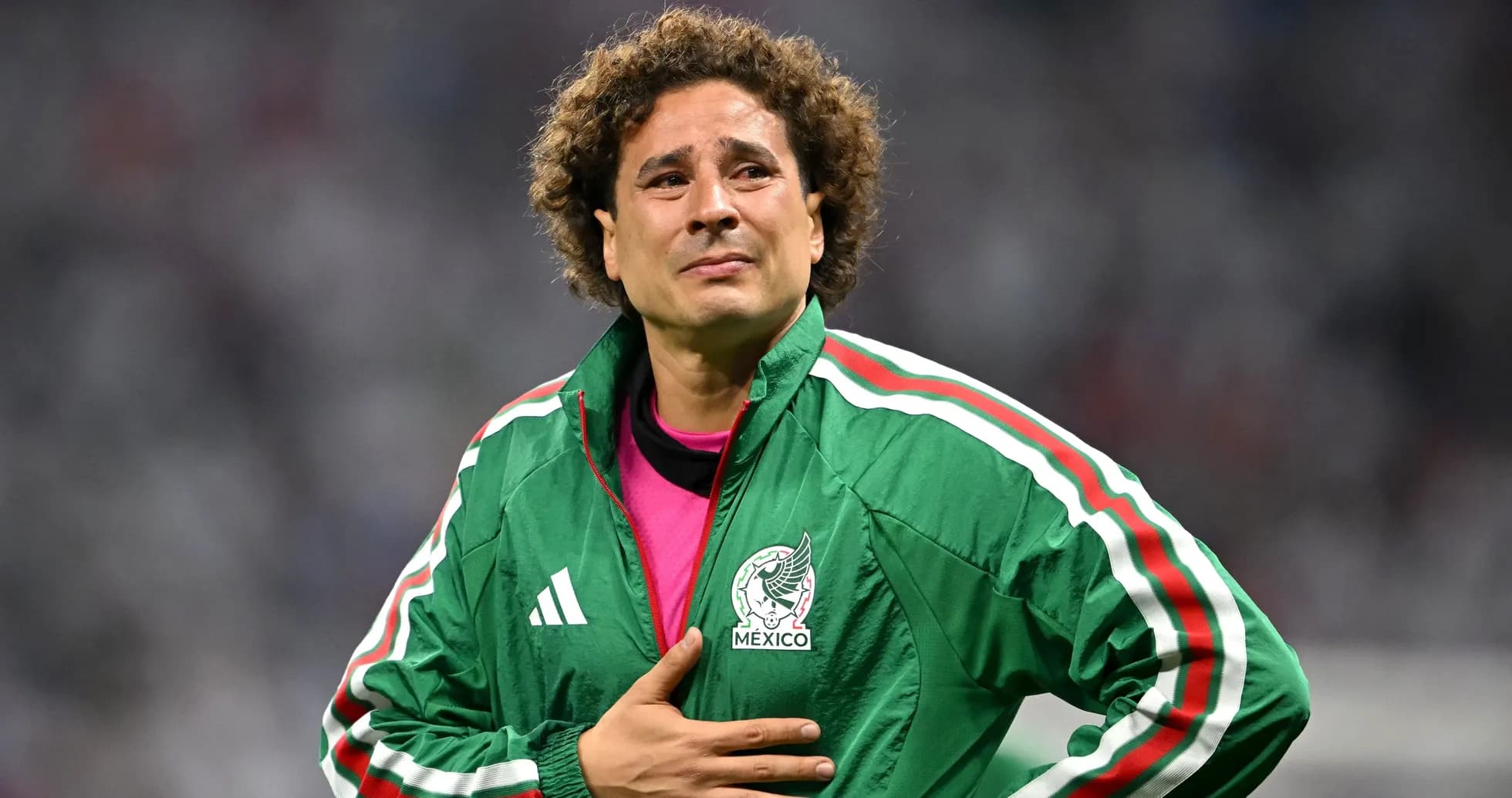
Guillermo Ochoa Retires: A Legacy in Mexican Goalkeeping
Guillermo Ochoa, the face of Mexican goalkeeping for a generation, has closed the book on an extraordinary career. On Tuesday, the 39-year-old announced his retirement from elite football, ending the long-running hope that he might squeeze in one last short-term deal after the 2026 World Cup.
He had warned this moment was coming. For years, Ochoa pointed to the 2026 tournament as his final dance. Supporters clung to the idea that he would change his mind. He didn’t.
Instead, he chose his own stage and his own words.
“I gave it my all; I left everything on the field for my clubs and the national team, and today I hang up my gloves,” he wrote on social media. “Being a goalkeeper means knowing you might wait 90 minutes for a single moment when everything depends on you. And when that moment arrives, you cannot hesitate.”
Those moments defined him. So did his longevity.
A World Cup constant
Ochoa’s name now sits in the rarest company. He represented Mexico at six World Cups, a number matched only by Ronaldo and Lionel Messi. Early on, he was the kid watching from the bench, learning, waiting. In time, he became the man everyone else looked to.
He took the starting role and kept it for three straight tournaments: Brazil 2014, Russia 2018, Qatar 2022. In each, he turned at least one night into a personal epic, the kind that lodges itself into a nation’s memory.
His post did not linger on individual saves or specific matches. Instead, it circled back to the journey.
“I never imagined how far a dream could take me. Today, I can only look back with pride and say: Thank you,” he wrote. “I take with me the affection of millions and the peace of mind that comes with knowing I gave everything for Mexico.”
A farewell written for the Azteca
By 2026, Ochoa’s role had changed. Raul Rangel had the gloves. Ochoa had the aura.
Mexico manager Javier Aguirre understood what the moment demanded. In the final group game against Czechia, with qualification already out of reach, he turned to the veteran. Thirteen minutes remained. It was time.
The substitution felt like a curtain call.
As Ochoa jogged onto the pitch at Estadio Azteca, the noise swelled. This was the stadium where his story had begun, the arena that had watched him grow from teenage prospect to national symbol. Now it watched him for the last time in green.
When the final whistle went, the emotion hit. Ochoa walked to his goal, kissed both posts, then sank to his knees. Teammates crowded around him, wrapping him in a long embrace that said everything words could not. The fans roared again. They knew they were saying goodbye not just to a player, but to an era.
Even when the stands emptied and the stadium lights dimmed, Ochoa stayed. He wandered alone to the centre circle, taking in the silence, the outlines of the ground that had framed so much of his life. One last look. One last breath of that air. Then he turned away.
From Mexico City prodigy to European pioneer
Ochoa’s career had started with the same club that would later welcome him home as a legend: Club América. He made his top-flight debut in February 2004 and wasted no time in announcing himself. Quick off his line, spring-loaded in his reactions, he played with a fearlessness that made him impossible to ignore.
Within a year, he had his first major trophy, lifting the league title in the 2005 Clausura with América. It would not be his last piece of silverware, but it was the one that proved he belonged at the top.
Seven seasons in yellow and blue established him as one of Liga MX’s standout figures. Then came the leap that changed the map for Mexican goalkeepers. In 2011, Ochoa joined French side Ajaccio, becoming the first Mexico-born goalkeeper to play in Europe.
It was not the easy route. Ajaccio battled to stay afloat in Ligue 1, but Ochoa’s performances drew attention far beyond Corsica. He became a specialist in the improbable stop, the keeper who could turn a routine league game into a highlight reel.
His European path zigzagged across the continent. After Ajaccio came spells at Malaga and Granada in Spain, then Standard Liege in Belgium, where he added the Belgian Cup to his collection. Later, he moved to Salernitana in Italy, then to AVS Futebol and AEL Limassol, always chasing minutes, always competing.
Between those trips, he came home.
From 2019 to 2022, Ochoa returned to Club América for a second stint that felt less like a transfer and more like a reunion. He walked back into the Azteca not as a promising youngster, but as the national team’s most recognisable face. The years abroad had sharpened him. The connection with the fans had never faded. Those three seasons only deepened his legend.
A legacy that outlived the gloves
When Ochoa finally chose to step away, his trophy cabinet told part of the story: a league title with Club América, a Belgian Cup with Standard Liege, a string of domestic and international honours. The rest lives in the collective memory of a country.
He became the calm in chaos, the man behind the gloves when everything depended on one decision, one dive, one outstretched hand. For more than two decades, Mexico walked into major tournaments knowing exactly who would stand in goal when the anthem ended.
Now that spot is open.
The posts he kissed at the Azteca will belong to someone else. The question, for Mexico and for Club América, is simple and daunting: who dares to follow Guillermo Ochoa?

