.svg&w=384&q=75 "GoalGist logo")
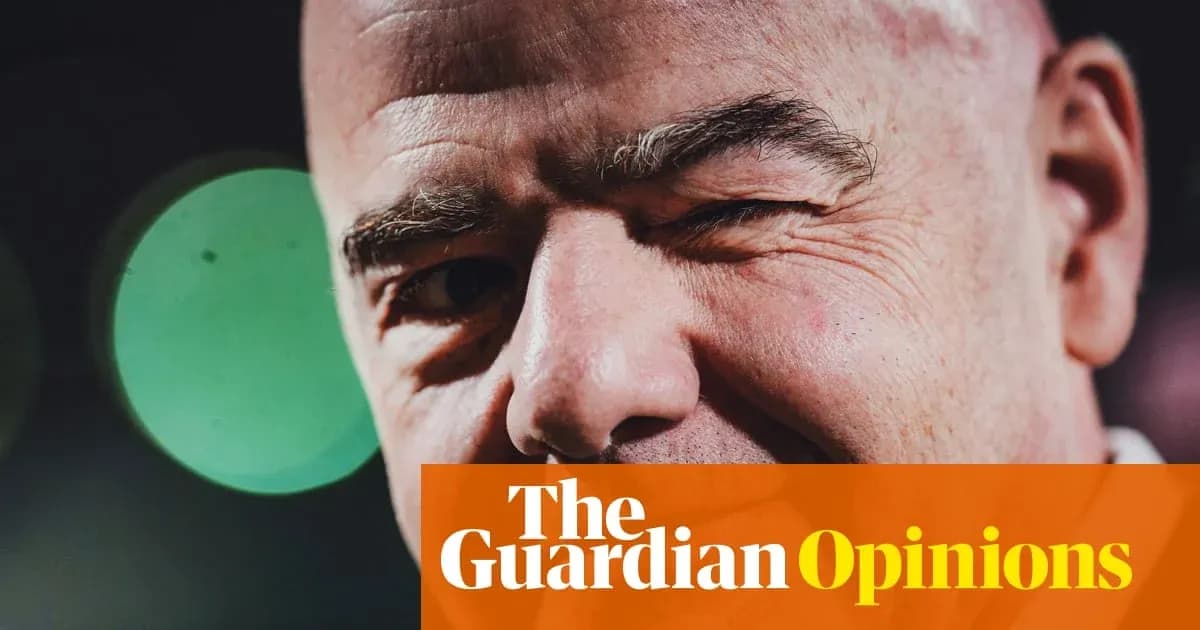
Gianni Infantino Must Go: The Crisis at Fifa
There is no room left for euphemism. Gianni Infantino has to go – either by resignation or by force of law. The Fifa president has burned through football’s remaining credit, stripping the governing body of the last shreds of integrity it claimed to protect.
His climbdown on Saturday morning exposed the scale of the crisis. Cornered by a furious backlash, Infantino abandoned his plan to carve up the World Cup and sell pieces of it to private investors under the Fifa Forward Enterprise (FFE) scheme. He spoke of resuming dialogue on football’s growth “in the spirit of shared interest in our game”. It read less like a vision for the sport and more like a plea for survival.
The gesture cannot repair the damage. Every extra day he clings to power deepens the stain on an institution already dragged through the mud.
A presidency at war with its own rules
The FFE proposal alone – a scheme that would have handed vast influence over football’s future to venture capital – would be enough to topple most leaders. Infantino’s record goes far beyond one reckless project.
He has treated Fifa’s own statutes as optional. Article 10.3, which sets out the duties of the president, demands that he safeguard Fifa’s mission, values and image, and promote “friendly and peaceful relations” within the organisation. Instead, senior figures and national federations across the world have been scrambling to distance themselves from him.
The regulations do not license a president to pursue a string of private, opaque projects, some closely aligned with the current US administration and its networks, launched with barely a hint of transparency or scrutiny. Yet that has become the defining pattern of his reign.
Flashpoints and fury
The Folarin Balogun saga pushed many already uneasy officials to the brink. It landed on top of a pile of grievances that had been building for months.
Infantino’s decision to present a new Fifa peace prize to Donald Trump in December provoked widespread disbelief. There was little clarity about how the award was decided and the justification for Trump’s “qualifying achievements” was fiercely contested.
Stakeholders were also left exasperated by the introduction of “hydration breaks” at this summer’s World Cup. They complained they had not been properly consulted about a change that cut into the rhythm and fabric of matches on the sport’s biggest stage.
Then came the 2034 World Cup bidding process, rushed through in a way that stunned seasoned administrators. Saudi Arabia’s candidacy was effectively waved through in December 2024 after a bizarre, accelerated procedure that left critics questioning who, if anyone, was still guarding the game’s long‑term interests.
All of that preceded Friday’s revelation: detailed plans for a 64‑team World Cup are already in motion. Another expansion, another upheaval, another decision sprung on a weary sport.
Uefa draws a line
When Uefa finally snapped on Saturday, the language was brutal. Its statement condemned “secret schemes on fast track timescales, cooked up by faceless individuals and of dubious benefit to the game”. The target was not just FFE, but the culture that allowed it – a presidency operating behind closed doors, sidelining its own decision‑makers.
A tipping point had been reached. After more than a year of angry words, Uefa moved from rhetoric to leverage. It threatened to boycott future Fifa tournaments if Infantino did not scrap his plan. That threat bit. The European confederation’s unified stance helped force his retreat and handed Aleksander Ceferin a defining victory of his own tenure.
But that win will be hollow if Infantino is allowed time to regroup. He is understood to have hired a major consultancy firm to soothe relations with federations and sell a new story. Give him oxygen, and the promises will start again. So will the drift back towards the old, comfortable status quo.
No way back
Inside Uefa and across other confederations there is a clear recognition: this cannot stop with one aborted scheme. Senior figures insist Infantino must not ride out this scandal.
One potential next step looms large. The vast majority of Fifa’s member associations have already submitted formal letters backing Infantino’s re‑election next March. Those letters can be recalled. If enough of them are withdrawn, the move would amount to a de facto vote of no confidence.
Fifa had pushed aggressively for that early show of loyalty. Many FAs would now be deeply embarrassed if their pledges of support were splashed into the public domain. Yet embarrassment is a small price compared with the cost of inaction.
Member associations carry a responsibility that goes beyond their own short‑term interests. Faced with what many see as an existential threat to the game’s governance, they cannot shrink away. To do so would be to fail football as badly as the man they are being asked to abandon.
A chance to reset – if they take it
Uefa has already promised to design a new way of distributing Fifa’s vast wealth, tapping into its multibillion reserves without “selling the family silver” to outside investors. Behind the scenes, it is talking with other confederations in search of credible candidates to replace Infantino, ready to stand if he somehow clings on until the election.
This crisis could become a turning point. It could force a long‑overdue reshaping of how football is run, how money flows, how decisions are made. That will not happen while Infantino remains in place, able to wield the final veto and steer the sport back towards the same opaque deals and personal projects.
The alternative is stark. Fifa – and with it the global game – continues to stagger from one self‑inflicted disaster to another, trapped in a narrative dominated by a single man, his ego and his ventures.
How long will football tolerate that as the defining story of its age?

