.svg&w=384&q=75 "GoalGist logo")
Genoa vs Como: Serie A Clash Highlights
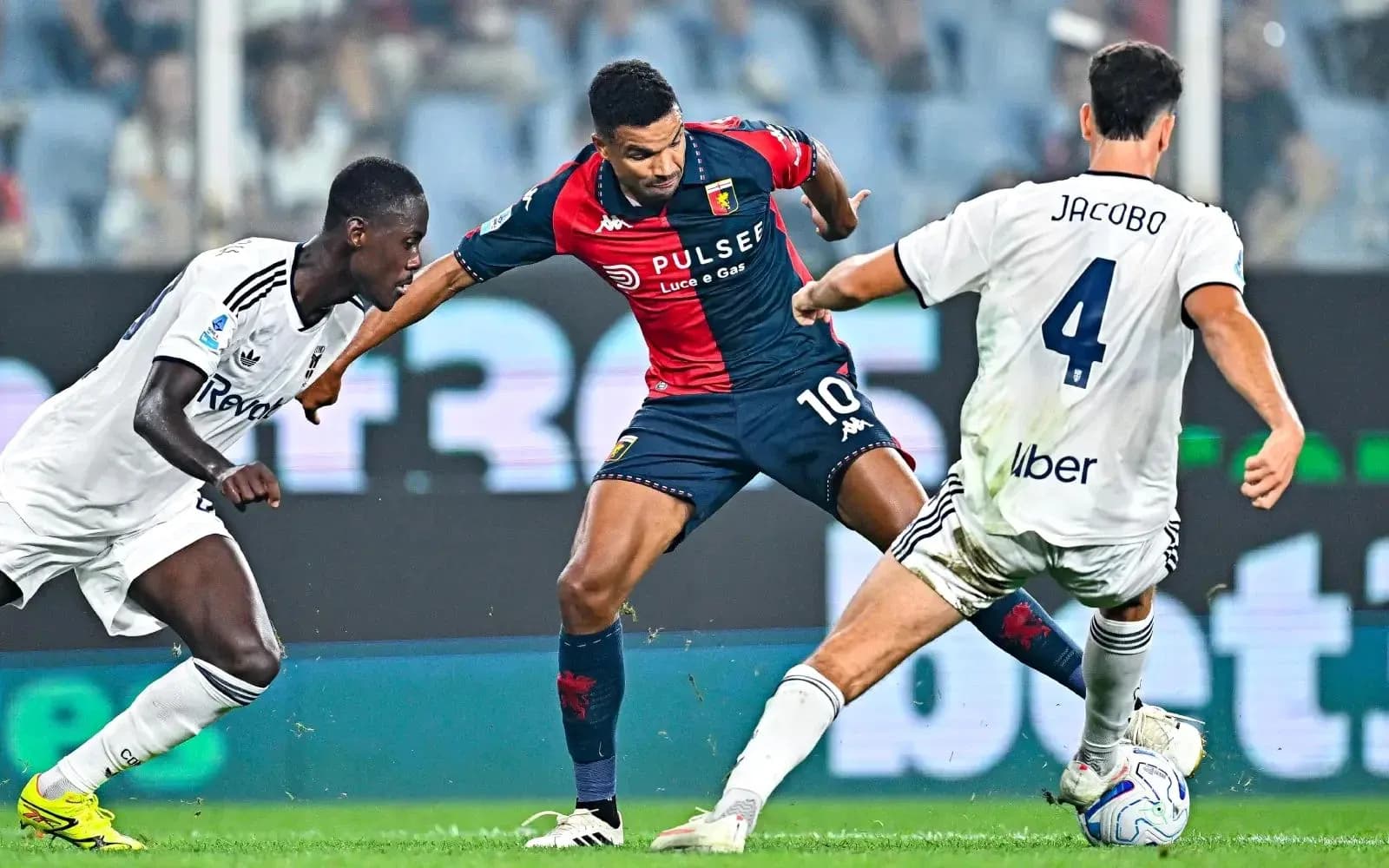
Under the lights of Stadio Luigi Ferraris, this was billed as a clash of trajectories: Genoa, rooted to 19th in Serie A, trying to halt an early-season slide, and newly vibrant Como, arriving in Genoa as one of the league’s early stories. By full time, the table told a brutal truth. Genoa’s 1-4 defeat left them with 0 points from 3 matches and a goal difference of -6, while Como’s polished away performance confirmed their place in 3rd with 7 points and a goal difference of 4.
The narrative of the night was written in the opening 45 minutes. Genoa’s 3-4-1-2, selected by Daniele De Rossi, was meant to compress space centrally and give license to the wing-backs. J. Bijlow anchored a back three of M. Ellertsson, L. Østigård and A. Marcandalli, with S. Sabelli and T. Baldanzi stretching wide and D. Sow and J. Vásquez tasked with screening. Ahead, M. Frendrup floated behind a front two of L. Colombo and M. Osmajić, a structure designed to press Como’s build-up from the first line.
Across from them, Cesc Fàbregas stayed loyal to Como’s 4-2-3-1, the shape that has underpinned their unbeaten start. J. Butez stood behind a back four of Yan Couto, Jacobo Ramón Naveros, T. Chalobah and Álex Valle. In front, the double pivot of M. Perrone and L. da Cunha was built to both shield and circulate, freeing an attacking line of Assane Diao, N. Paz and M. Baturina behind lone striker T. Douvikas.
Season Patterns
Heading into this game, the season’s patterns were stark. Genoa had played 3 league matches in total, losing all 3, scoring just 1 and conceding 7. At home, they had played 2, losing both, with 1 goal for and 6 against; on their travels, they had played 1, with 0 goals scored and 1 conceded. Their overall attacking output stood at 1 goal in 3 games, an average of 0.3 per match, and at home that average was 0.5. Defensively, they were leaking 2.3 goals per match overall, with a worrying 3.0 conceded on average at home.
Como, by contrast, arrived in Genoa with a total record of 2 wins and 1 draw from 3 matches, all away from home. They had scored 7 goals in total and conceded 3, averaging 2.3 goals for and 1.0 against both overall and away. There was no clean sheet yet, but they had also never failed to score. In other words, every Como away game so far had followed the same broad script: they score, and they concede a little, but they always leave with something.
Absences and Benches
The absences shaped the benches more than the starting XIs. Genoa were without C. Drameh (inactive), E. Havel (thigh injury) and L. Venturino (knee injury), thinning De Rossi’s defensive and midfield options. Como missed J. Addai with an Achilles tendon injury, removing one more attacking alternative for Fàbregas. Over 90 minutes, the depth of Como’s bench — which still featured options such as Luis Milla, M. Caqueret, A. Lahdo and M. Kean — contrasted with Genoa’s reliance on a small core of trusted starters.
Discipline
Discipline, too, was part of the pre-match story. Genoa’s season card profile showed a side already flirting with the edge: L. Østigård, Alexsandro Amorim and D. Sow had all been booked in the opening rounds, with Østigård collecting 3 yellow cards in 3 appearances. The team’s yellows were spread across the halves, with 16.67% of them in each of the 0-15, 31-45 and 61-75 minute windows and a further 33.33% recorded outside the standard 15-minute ranges — a sign of a side that can lose composure at any time. Como, by contrast, had only a single recorded yellow card incident in the 46-60 minute window, underlining a more controlled, game-state-aware approach.
Individual Duels
Within this frame, the individual duels were compelling. In the “Hunter vs Shield” matchup, Como’s attacking trident brought form and numbers. Assane Diao, with 2 goals and 1 assist in 3 appearances and an average rating of 7.6, arrived as one of Serie A’s early breakout attackers, combining 7 total shots, 12 dribble attempts and 6 successful dribbles. Alongside him, M. Baturina had also produced 2 goals and 1 assist, with 5 shots, 3 key passes and an 87% pass accuracy, while T. Douvikas had 2 goals from 9 shots and 8 fouls drawn, a classic penalty-box forward constantly occupying centre-backs.
Their task was to probe a Genoa back line whose season so far had been defined by strain rather than solidity. L. Østigård’s numbers — 4 tackles, 4 interceptions and 4 blocked shots, with 185 passes at 90% accuracy — painted a picture of a defender constantly under siege, often forced into last-ditch interventions. But the collective record of 7 goals conceded in 3 matches, and 6 at home, told the broader story: Genoa’s defensive structure was too exposed, particularly when their wing-backs were caught high.
Engine Room Battle
In the “Engine Room” battle, D. Sow and J. Vásquez were tasked with slowing Como’s technical axis of Perrone, da Cunha and Baturina. Sow’s own season profile — 91 passes at 91% accuracy, 2 tackles and 1 interception — suggested calm on the ball, but Genoa’s midfield has too often been reactive, chasing rather than dictating. Against that, Baturina’s 90 completed passes and 3 key passes, plus his ability to drift into half-spaces, gave Como a constant numerical and positional superiority between the lines. L. da Cunha and Perrone, though less heralded in the raw numbers, formed the platform that allowed Diao and Baturina to receive in advanced pockets, pinning Genoa’s wing-backs and forcing the back three to stretch.
Genoa’s Attacking Struggle
Up front for Genoa, L. Colombo was a symbol of their attacking struggle. Despite ranking among the league’s assist leaders with 1 assist and 4 key passes, he had yet to score in 3 appearances, taking only 2 shots, none on target. His work rate — 27 duels, 7 won, plus defensive contributions of 2 tackles and 1 blocked shot — spoke of a forward often working back toward his own goal. Next to him, M. Osmajić was asked to run channels and threaten depth, but the service lines from midfield were too intermittent to consistently trouble Como’s back four.
Tactical Intersection
Tactically, the decisive intersection lay between Como’s attacking peaks and Genoa’s defensive frailty. Como’s season attacking averages — 2.3 goals per match overall and on their travels — had already produced a biggest away win of 1-4. Genoa’s home defensive average of 3.0 goals conceded per game, coupled with no clean sheets and 2 matches at home without preventing the opponent from scoring, made a high-scoring away performance not just possible but probable. Even without detailed minute-by-minute goal distributions, the shape of the contest was clear: once Como established rhythm in possession, Genoa’s back three and double pivot would be forced into constant emergency defending.
From a disciplinary and game-management standpoint, Genoa’s tendency to accumulate cards at varied times contrasted with Como’s more contained aggression. With Østigård already on 3 yellows for the season and both Alexsandro Amorim and Sow carrying bookings, any attempt to raise the press or increase physicality risked leaving Genoa undermanned or timid in duels. Como, meanwhile, could lean on the controlled intensity of players like Yan Couto — 160 completed passes at 89% accuracy, 3 tackles and 2 interceptions — to progress play without inviting chaos.
Statistical Prognosis
Following this result, the statistical prognosis for both squads sharpened. Genoa’s overall record of 0 wins, 0 draws and 3 losses, with 1 goal for and 7 against, crystallized the task ahead: they must find a way to convert Colombo’s link play and Baldanzi’s advanced positioning into real penalty-box threat, while giving Østigård and Bijlow more protection. Their clean sheet count remained at 0 across all venues, and they had failed to score in 2 of 3 matches in total — a combination that will keep them in the relegation zone if not addressed.
Como, conversely, left Genoa with their identity reinforced. They had now played 3 matches in total, all away, without defeat, scoring 7 and conceding 3. The blend of Baturina’s craft, Diao’s directness and Douvikas’ penalty-area presence, underpinned by a stable 4-2-3-1 and a disciplined card record, positions them as a genuine contender for the Champions League league stage they are currently on track for. Their lack of clean sheets remains a minor caveat, but as long as their attacking unit continues to produce at this rate, Como will feel that the balance of risk and reward is firmly in their favour.