.svg&w=384&q=75 "GoalGist logo")
Gattuso Reflects on Italy's World Cup Failure: A Wound for Life
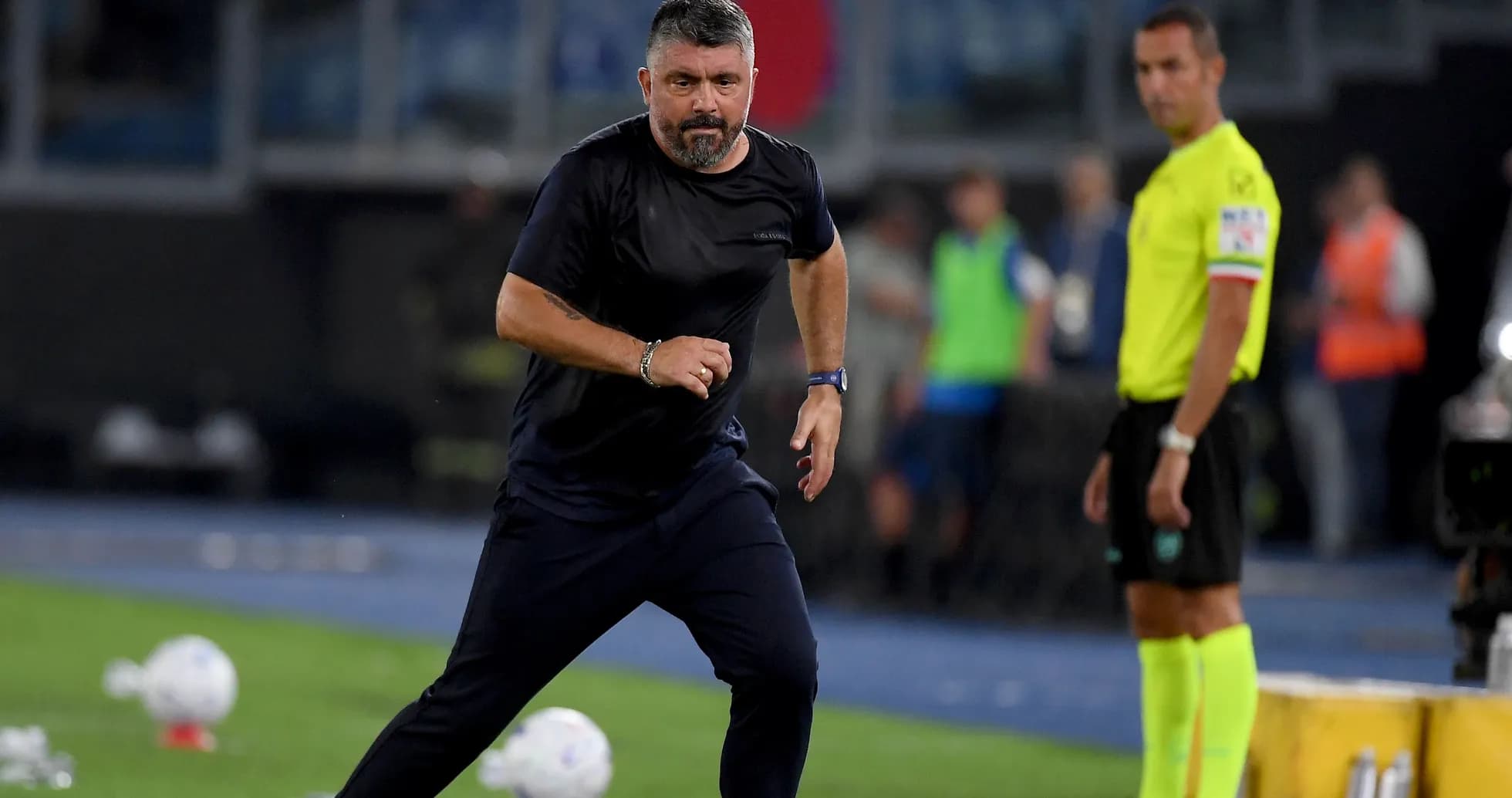
Gennaro Gattuso walked out of the Renato Dall’Ara with three points, a clean sheet and a debut Serie A win as Lazio coach. Yet his thoughts were miles away from Bologna.
They were back in March. Back to Bosnia-Herzegovina. Back to the night that, in his own words, left a mark he will carry forever.
“I had 10 wonderful months,” the former Italy boss said after Lazio’s 1-0 victory in their league opener. “The lads I coached gave me their all. And it's a wound that will remain for as long as I live, because it was a deep wound.”
No dressing it up. Failing to take Italy to the 2026 World Cup has cut Gattuso to the core.
A Third World Cup Miss and a Sudden Exit
Italy’s playoff defeat to Bosnia-Herzegovina did more than end a qualifying campaign. It condemned the Azzurri to a third consecutive absence from the men’s World Cup, an unthinkable scenario for a four-time world champion.
Days later, Gattuso walked away.
He resigned in April, closing a brief but intense spell in charge of the national team. Ten months, no World Cup, and a legacy defined not by a trophy, but by a scar.
Gattuso did not seek excuses. He spoke of commitment, of a group that “gave me their all,” but the outcome still burns. For a man who lifted the trophy in 2006, watching Italy fall short again has clearly hit harder than any tackle he ever made.
Mancini Returns to a Divided Landscape
The Italian Football Federation moved quickly. In July, it turned back to a familiar face: Roberto Mancini.
Mancini’s record with Italy is already etched into recent history. He rebuilt a broken side from 2018, led them to Euro 2020 glory, then oversaw the shock failure to reach the 2022 World Cup. A rise, a fall, and now a second act.
Gattuso, despite being the man replaced, did not hesitate to back his successor.
“I'd say he is a great coach with a wealth of experience,” he said. “He's a great manager; he's someone who has already won with the national team, and I obviously wish him all the best from the bottom of my heart.”
The message was clear: no bitterness, no feud, just support. The wound is his, but the responsibility now belongs to Mancini.
Pirlo, Ancelotti, Guardiola – and a Lost Deal
Mancini’s return was not inevitable.
In the chaotic days after Gattuso’s resignation, the federation cast its net wide. High-profile approaches went out to Carlo Ancelotti and Pep Guardiola. Both declined.
That opened the door for Andrea Pirlo, who quickly emerged as the leading candidate. The idea of another 2006 hero stepping into the dugout captured imaginations, but the move never materialised.
The deal collapsed over complications tied to an existing sponsorship agreement with a betting firm. Not tactics. Not philosophy. Commercial conflict.
While the federation wrestled with that, another powerful voice weighed in. Lega Serie A president Ezio Maria Simonelli revealed that the league strongly pushed for Antonio Conte to return for a second spell with the Azzurri. The bench, for a moment, looked like it might belong to another serial winner.
In the end, the federation turned back to what it knew. Mancini, the man who had already taken Italy to the top of Europe, got the call.
Gattuso Moves On, Italy Can’t Afford To
Gattuso has already thrown himself into his new life. In June, he signed on with Lazio, and his team has started by grinding out a hard-fought 1-0 away win at Bologna. The club game gives him fresh targets, fresh pressure, a new rhythm.
The national team, though, cannot simply move on. Not after three straight World Cups missed. Not with public trust frayed and patience thinning.
Simonelli has urged the entire Italian football community to close ranks around Mancini. No more factional battles. No more tug-of-war over names and legacies. Just backing for the man now charged with repairing the damage.
The next test comes quickly.
Nations League and the Weight of a Nation
Attention swings to the UEFA Nations League, where Mancini’s Italy will face Belgium on September 25. It is not a World Cup qualifier. It is not a final. But it matters.
For Mancini, it is the first step in a second tenure that must do more than entertain. He has to restore belief, rebuild identity and drag Italy back toward the summit of the international game.
For Gattuso, the scar of 2026 will not fade. For Italy, the question is sharper: how many more tournaments can a football nation of this size afford to watch from the outside?