.svg&w=384&q=75 "GoalGist logo")
Gabriel Martinelli's Last-Minute Winner Sends Brazil to Last 16
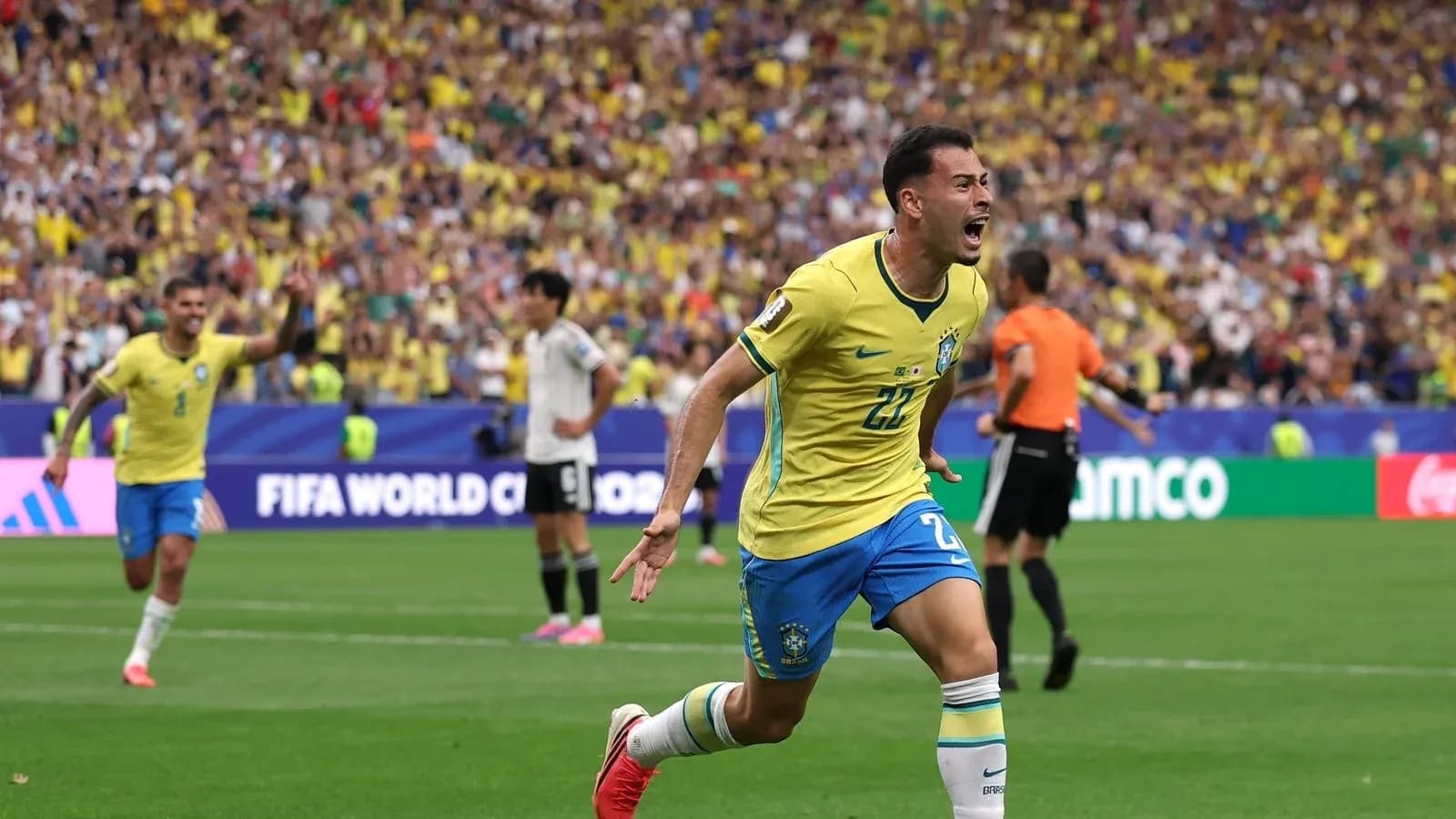
Gabriel Martinelli stepped out of the shadows and into World Cup folklore with a 96th‑minute winner, dragging Brazil past a stubborn Japan side 2-1 and into the last 16.
He had been waiting for a moment like this. Second World Cup, first goal. One chance in stoppage time, one finish that carried the weight of a nation.
Brazil rescued at the death
Carlo Ancelotti’s team walked into the Houston dressing room at half-time trailing and rattled. Japan had not come to play the underdog.
In the 29th minute, Kaishu Sano stunned the Selecao, arriving to put the Samurai Blue in front and reward Japan’s sharp, organised start. Brazil, sluggish and short of ideas, looked exactly what they were: a giant under pressure.
The response came after the interval. Eleven minutes into the second half, Brazil finally produced the kind of move their supporters demand. Gabriel, again trusted from the start and now a pillar of this backline, surged forward and delivered a superb cross to the back post. Casemiro met it with the timing of a veteran who has seen everything, powering his header home to drag Brazil level.
The tension never really left the stadium. Every misplaced pass drew groans, every Japanese counterattack a sharp intake of breath. Ancelotti turned to his bench.
On came Martinelli.
A Premier League move, a Brazilian finish
The clock ticked into added time, the game hanging on a knife edge. One mistake, one moment of quality, and the entire tournament could tilt.
The breakthrough came from a passage that would not have looked out of place on a Saturday afternoon in England. Bournemouth’s Rayan snapped into a challenge on the edge of the box to win the ball back, then quickly fed Bruno Guimaraes. The Newcastle United captain, calm in chaos, threaded a precise, piercing pass between tired Japanese legs and straight into Martinelli’s stride.
The winger took a touch. Just one. Then, with the kind of cold-blooded composure that separates good forwards from decisive ones, he slid the ball past Zion Suzuki. The shot kissed the post, then rolled into the net as if it had always known where it was going.
Brazil’s bench exploded. So did Martinelli.
Afterwards, he struggled to wrap words around the moment: he spoke of joy he “doesn’t even have a way to explain,” of seeing Brazilian fans and his family celebrating, of a previous shot that had hit the post and the feeling he would get another chance. This time, the post was his ally, not his enemy.
The goal marked his fifth for Brazil on his 26th cap. Gabriel, who has quietly become indispensable, moved to 21 caps, having started all four of Brazil’s World Cup games so far.
On Sunday, both can push those numbers higher. Brazil will face either Norway or Ivory Coast, a tie that could pit them against Martin Odegaard and guarantee Arsenal colours in the quarter-finals.
Havertz scores, then suffers again
While Brazil surged, Germany stumbled. Again.
Kai Havertz found the net but still walked away from another World Cup night with the look of a man carrying a nation’s frustration.
Against Paraguay, Germany fell behind three minutes before the break when Julio Enciso struck in the 42nd minute. It felt familiar: control without conviction, punished by a clinical opponent.
Havertz dragged them back. Attacking the box with conviction, he met a cross from Florian Wirtz and headed in the equaliser, restoring hope and briefly steadying German nerves.
They pushed on. Jonathan Tah thought he had turned the tide completely in extra-time, only to see his goal ruled out. The game drifted to penalties, where the pressure turned suffocating.
Paraguay held their nerve. Germany did not. Havertz was one of three German players to miss from the spot as another major tournament slipped away in a shootout.
His words afterwards cut through the noise: “I’m speechless. My second World Cup, and we’ve messed up for the second time. The last few tournaments were a disaster. The only thing I can say is I’m sorry. We players need to take a long, hard look at ourselves. We’re playing for a huge country with a rich football history."
On one side of the world, a forward in yellow rode the euphoria of a last‑gasp winner. On the other, a forward in white stared into the familiar void of German underachievement.
The World Cup keeps moving. Some careers are taking flight. Others are running out of places to hide.