.svg&w=384&q=75 "GoalGist logo")
France's Quest for Glory: Deschamps' Final Challenge
France do not so much arrive in North America as walk in with the air of a team that owns the place. World champions in 2018, beaten finalists in 2022: the recent history alone marks them out as the side everyone else measures themselves against.
And then you look at the talent sheet.
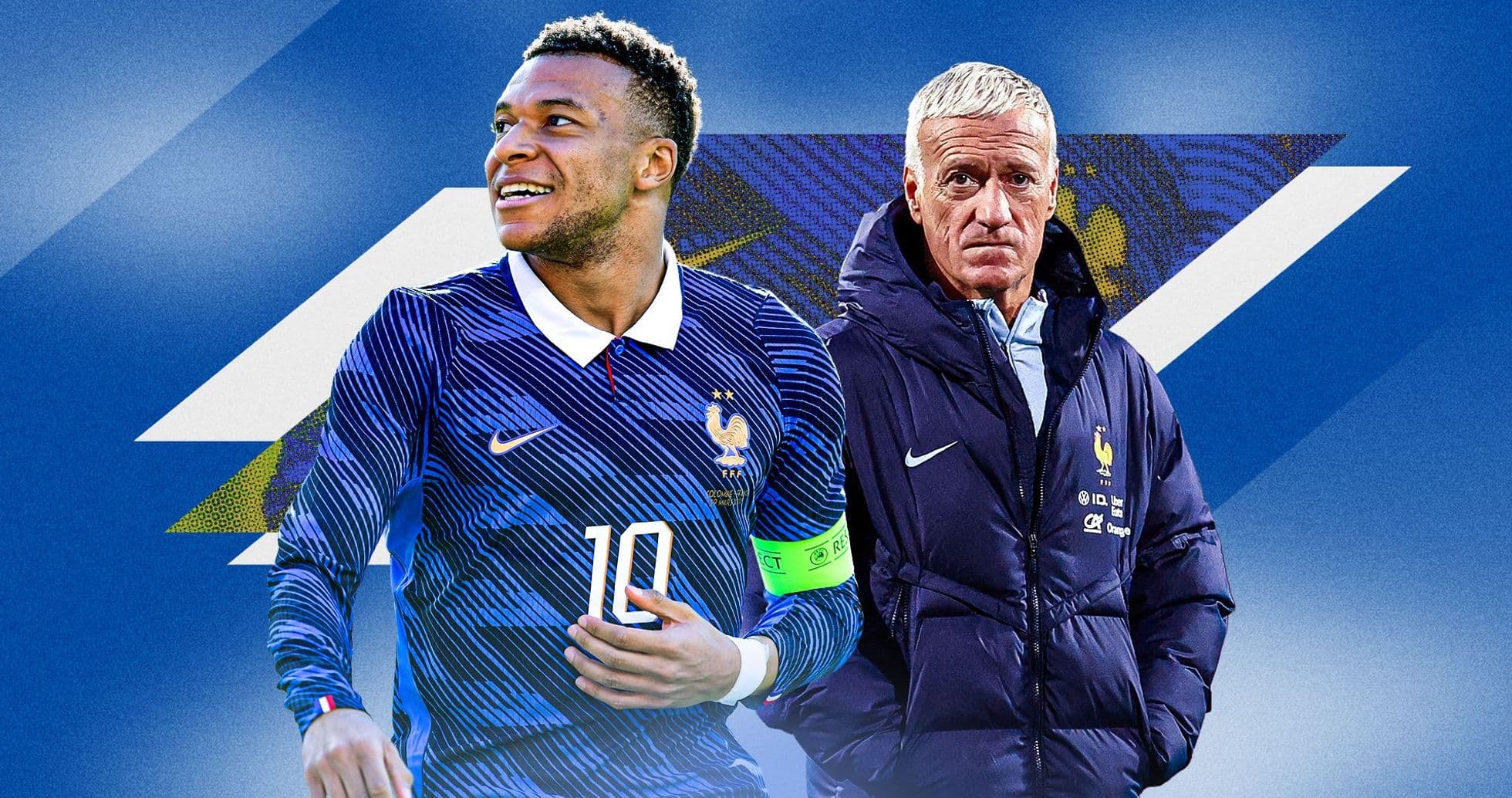
Kylian Mbappe, still a one-man avalanche of goals and chaos. Michael Olise, fresh from a breakout campaign at Bayern Munich. Desire Doue and Ousmane Dembele, twin livewires in Luis Enrique’s exhilarating Paris Saint-Germain attack. Four match-winners, all in form, all capable of deciding a tournament game in a single surge.
Stack that against any national team on the planet and France’s attacking depth holds up. More than that, it intimidates. Deschamps can change a game without weakening his side; he just changes the angle of the threat.
The doubts live at the other end of the pitch. The back line has creaked more often than Deschamps would like, and the fitness of William Saliba now hangs over the camp like a storm cloud. When France wobble, they tend to do it in transition, with space behind the full-backs and centre-backs dragged into uncomfortable races. Against elite opposition, that flaw can turn a procession into a dogfight.
There is also the old, familiar French question: can the dressing room stay calm when the stakes rise and the noise grows? This is a squad rich in personality and ego, not all of them easy to manage. If the unity holds, France look built to go all the way to that final in New Jersey. If it fractures, the exit could be brutal and sudden.
Deschamps’ last stand
Didier Deschamps has never been universally loved in France. His football is often labelled too pragmatic, his leadership too rigid, his ideas too conservative for a country that romanticises flair and expression.
The record is merciless in response.
Since taking over in 2012, he has turned a fractured, post-Laurent Blanc national team into a machine that lives in the latter stages of major tournaments. The 2018 World Cup in Russia, won against Croatia. The UEFA Nations League lifted in 2021 after beating Spain in Milan. Two more finals reached: Euro 2016, lost in Paris to Eder’s extra-time strike for Portugal, and the epic 2022 World Cup final, where Argentina survived on penalties after one of the greatest games the sport has seen.
That is an era, not a cycle.
It ends this summer. Deschamps’ contract runs out in July and will not be renewed. Whatever happens in North America, this is his last dance with Les Bleus, the final chapter of a tenure that has defined a generation of French football.
He leaves with a squad that reflects him: disciplined, ruthless, often more efficient than beautiful. But he also leaves with something he never truly had at the start – an embarrassment of creative riches.
Mbappe’s shadow, Olise’s rise
Naturally, the spotlight falls on Mbappe. Captain, number 10, face of the project. Every camera finds him first, every opponent builds a plan around him.
Yet the story of this summer could easily belong to Michael Olise.
At Bayern Munich, the 24-year-old has grown from promise into production. For the second straight Bundesliga season he hit double figures for both goals and assists, and he translated that form to the Champions League with numbers that place him among Europe’s elite wide forwards.
His performance in Bayern’s 6-1 dismantling of Atalanta in Bergamo told the story: two goals, one assist, and a display that felt like a statement. Olise didn’t just hurt Atalanta; he toyed with them, drifting inside, slipping passes between lines, then exploding into the box at just the right moment.
The French warm-up schedule only underlined his trajectory. A hat-trick against Northern Ireland, the kind of ruthless, confident showing that suggests a player arriving at his peak rather than merely approaching it.
Olise blends invention with end product. He creates, he finishes, he repeats. If he carries that rhythm into the tournament, he could emerge as France’s true MVP, the man who makes even Mbappe share the stage.
At 24, this feels like a hinge in his career: the season that can elevate him from rising star to global reference point, for both club and country.
A new weapon: Akliouche off the bench
Beyond the headline acts, Deschamps has quietly added another intriguing piece to his attacking puzzle.
Maghnes Akliouche earned his first senior call-up during the qualifying campaign and wasted no time making an impression. A goal against Azerbaijan, an assist against Iceland – small sample, big impact.
Shaped by Monaco’s academy, one of Europe’s most reliable talent factories, Akliouche finally burst through last season. Seven goals and twelve assists across Ligue 1 and the Champions League marked him out as far more than a prospect; they marked him as a problem for defenders.
Nominally a right-sided attacking midfielder, he fits naturally into a 4-2-3-1, but he can also slide inside as a central playmaker. Crucially, he is not the stereotypical slight, touch-only winger. Akliouche brings physical presence along with his technique, a combination modern coaches crave: strong enough to ride challenges, sharp enough to slip the decisive pass.
He will not start often. Deschamps is unlikely to rip up his hierarchy for a newcomer. But tournaments are rarely won by the starting XI alone. They are decided by the players who can change a game in 20 minutes.
Akliouche looks built for that role. A fresh, fearless option off the bench, capable of unlocking a low block or punishing a tired back four with one clean burst of quality.
France arrive in North America with history at their back, firepower everywhere you look and a coach on his farewell tour. The question is no longer whether they can go deep. It is whether anyone can stop this final Deschamps version of Les Bleus from turning a dominant era into something even more enduring.