.svg&w=384&q=75 "GoalGist logo")
The Journey of Football's Serial Movers
For every Ryan Giggs or Paolo Maldini who turns a career into a single-club love story, there is another kind of footballer entirely. No statue outside the ground, no testimonial year mapped out a decade in advance. Just a suitcase, a contract, and the next flight out.
Loyalty still has its modern standard-bearers – Bukayo Saka at Arsenal, Phil Foden at Manchester City – players who might yet spend their entire careers in one shirt. But at the other end of the game’s spectrum stand the serial movers, the prodigies and prospects who rack up a CV longer than some veterans before they’ve even hit their mid-20s.
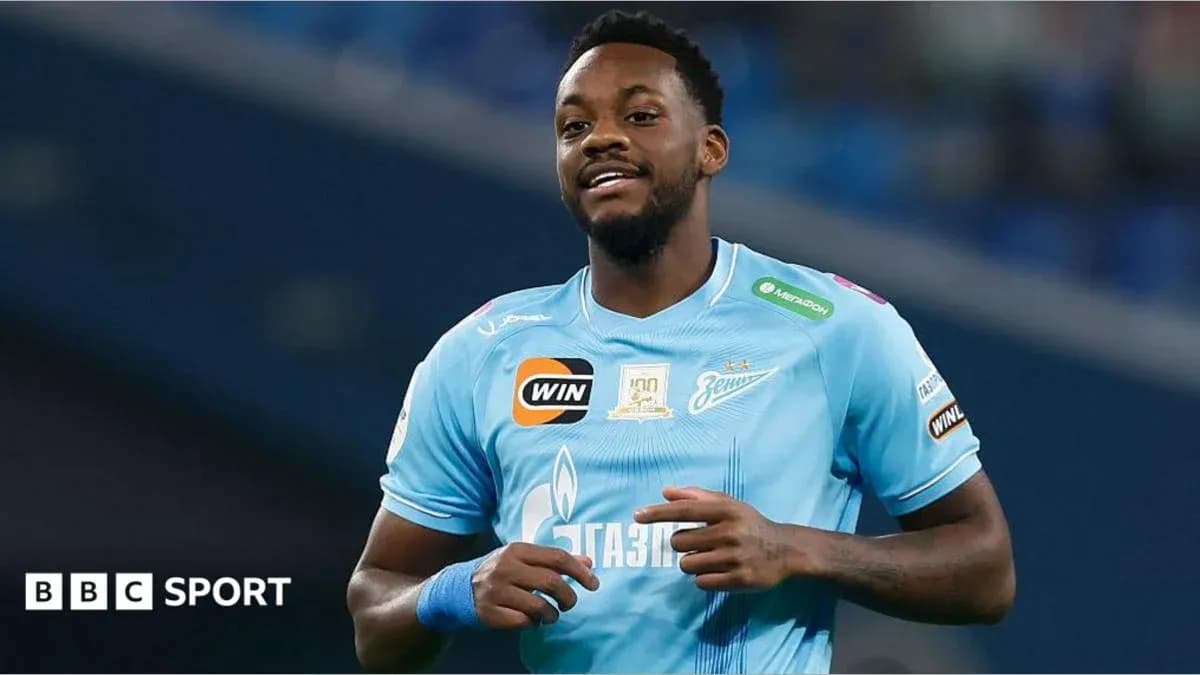
Jhon Duran is the latest to join that club.
At just 22, the former Aston Villa striker last week signed for the seventh team of his short career. Seven employers before most players have nailed down their first long-term deal. The “journeyman” tag used to be something that clung to ageing pros chasing one last contract. Now, some players carry it before they’ve fully grown into their reputations.
They’re not alone.
Freddy Adu: from “next Pele” to football’s cautionary tale
Few stories capture the volatility of early hype like Freddy Adu’s. Branded “the next Pele” while still a child, he signed with Nike at 13, stepped into Major League Soccer with D.C. United at 14, and made his debut for the United States at 16. The trajectory looked preordained: superstar status, global fame, the lot.
Instead, his teenage years became a blur of new cities and new crests.
Between 2004 and 2011, Adu signed for eight different clubs. By 22, he had already played in the United States, Portugal, Monaco, Greece and Turkey, and even squeezed in a trial at Manchester United in 2006. The moves kept coming, but the stability never really did.
In 2012, reflecting on one of the key turning points, Adu admitted that joining Benfica in 2007 had been “not a good decision”. At 18, he found himself in a pressure cooker, expected to deliver immediately while the club churned through three different coaches in a single year.
He is 37 now. His last competitive appearance came in 2021 for Osterlen FF in Sweden – a long way from the Pele comparisons, but a stark reminder of what relentless movement can do to a career that never quite settles.
Nathaniel Chalobah: seven clubs before a permanent home
Nathaniel Chalobah’s path looked more conventional on paper, yet he too had a well-travelled career before he’d even made a permanent move.
When Watford signed the 22-year-old midfielder from Chelsea in 2017 on a five-year deal, it was technically his first full-time transfer. By then, though, he had already worn six other badges on loan – including a previous stint with Watford in 2012. Seven clubs by 22, and only one of them truly his.
The early promise was real. Chalobah settled quickly at Vicarage Road, his form earning him a call-up to the senior England squad for the final round of 2018 World Cup qualifiers. In October 2018, he finally collected his only cap, coming off the bench in a 3-2 Uefa Nations League win over Spain. A high point, but not the launchpad many expected.
Now 31, Chalobah finds himself without a club after leaving Sheffield Wednesday at the end of the 2025–26 season. Another career paused, another player waiting for the next destination.
Josh McEachran: from Chelsea prodigy to search for “stability”
Josh McEachran once looked like the next elegant playmaker to glide through Chelsea’s academy and straight into the heart of their midfield. He broke into the first team at 17 in 2010 and made 22 senior appearances, enough to mark him out as one to watch.
The problem was what came next.
Loan spells followed: Swansea, Middlesbrough, Watford, Wigan. Then a season in the Netherlands with Vitesse Arnhem in 2014–15. The pattern became familiar – new league, new system, new manager, no long-term roots.
By 22, McEachran had already represented six different clubs. That summer, he signed for Brentford for an undisclosed fee, the seventh move of his career and his attempt to finally break the cycle. At the time, he spoke openly about needing “to get out” of Chelsea and seeking “stability” elsewhere.
Now 33, he spent last season with Bristol Rovers in League Two. The early buzz around his name has long since faded, but his story still speaks loudly about the cost of too many short-term solutions.
Ryan Bertrand: a Champions League final and nine loans
Ryan Bertrand’s journey shows that even those who hit the very highest stage can take the long road to get there.
He started his professional career at Chelsea, but by 22 he had already played for six different clubs, almost all via the loan system. There were two separate spells at Bournemouth, two more at Norwich City, plus stints with Oldham Athletic, Reading and Nottingham Forest. Each move offered minutes, yet each one also underlined that his future lay somewhere else.
The irony? In 2012, he made his European debut in the biggest club game of all – the Champions League final. Bertrand started for Chelsea in their victory over Bayern Munich, a night that would define most careers.
Even that didn’t anchor him at Stamford Bridge. He would be loaned out nine times in total before finally cutting the cord and signing permanently for Southampton in 2015, aged 25.
Bertrand left Leicester City in 2023 and has been out of the game since. For a player who conquered Europe, the sheer number of temporary homes still stands out.
Nicolas Anelka: trophies, turbulence and 12 clubs
Nicolas Anelka’s story belongs in a different category again. His moves didn’t stem from a lack of talent. If anything, they came because of it.
By 22, the French forward had already won the Double with Arsenal in 1998 and lifted the Champions League with Real Madrid in 2000. His medal haul outstripped most players’ entire careers before he had even reached his peak.
The cost was constant upheaval.
Anelka began at Paris St-Germain but walked away in 1997, frustrated by limited game time and concerned that a lack of first-team football would damage his international ambitions. At Arsenal, he dazzled but clashed with the environment around him, complaining about the English media and accusing them of inventing stories about him.
He moved to Real Madrid in 1999, yet life in Spain never quite fit. By 2000 he was back at PSG. A year later, he returned to the Premier League, this time on loan at Liverpool, still only 22.
By the end of his career, Anelka had played for 12 clubs across seven different countries. His legacy is a blend of brilliance and restlessness, proof that even the most decorated young stars can find themselves constantly on the move.
Football still celebrates the one-club men, the icons who never leave. But the modern game is just as much about the players whose careers are measured not in seasons at a single ground, but in stamps on a passport and names on the back of a succession of shirts.
For some, that journey leads to reinvention and revival. For others, it leaves a lingering question: what might they have become if they’d ever been allowed to stay put?