.svg&w=384&q=75 "GoalGist logo")
Football's Geopolitical Tensions in Dublin and Budapest
Budapest waits. Los Angeles braces. Dublin simmers. On a weekend when the Champions League final looms large, football keeps colliding with politics, identity and pressure in ways no fixture list can tidy up.
Dublin: Tennis balls and tension
In Dublin, Ireland’s 1-0 win over Qatar never felt like a routine friendly. The football almost slipped into the background.
Ireland’s forthcoming Nations League meetings with Israel – and in particular the game pencilled in for 4 October in Dublin – framed everything. Protesters repeatedly halted play in the first half, hurling tennis balls onto the pitch, each one stamped with the message: “stop the game”. The interruptions were brief but pointed, a rolling reminder that this national team now finds itself at the centre of a geopolitical storm it did not create.
Seamus Coleman had already voiced his unease, arguing that head coach Heimir Hallgrimsson and the players had been left exposed by decisions made above them. After the match, that feeling of being caught in the crossfire lingered.
Hallgrimsson did not dance around the issue. “Seamus spoke really well about it the other day. We all don’t agree with what’s going on. Ideally it’s not in our hands. It’s not a nice situation to be put into. Like I said, personally, none of us agree with what’s going on.”
The scoreline will be forgotten quickly. The image of green shirts waiting amid a blizzard of tennis balls will not. Ireland’s autumn calendar is inked in, but the debate over whether those games should be played is only just beginning.
Volpato’s late turn towards Australia
While Ireland wrestle with forces beyond the touchline, another international story is being shaped by a very different kind of choice.
At 22, Cristian Volpato is on the verge of a World Cup that once seemed destined to arrive in another shirt. The Sassuolo player, long tied to Italy’s system and an “actual Italian at the World Cup” in the eyes of many, has made a late, sharp turn.
He will switch allegiance from Italy to Australia, four years after declining the chance to represent the country of his birth at the tournament in Qatar. That earlier refusal felt like a definitive statement of intent. Now, it reads more like a pause.
Football Australia are racing the clock. They are still waiting for Fifa to sign off the paperwork on Volpato’s change of heart before Socceroos coach Tony Popovic names his 26-man World Cup squad by 1 June. The margins are fine. Miss the deadline and a potentially transformative attacking option stays home. Beat it and Popovic takes a bold, headline-making talent to the biggest stage of all.
For Volpato, the decision is already made. For Australia, the question is whether the bureaucracy can keep pace.
Pulisic, Pochettino and a bar set uncomfortably low
Elsewhere, one of the game’s most scrutinised careers continues to be prodded and measured.
Christian Pulisic is 27 now. For years he has carried the label of “the coming man”, the future of American football, the player who would drag the sport into a new era in the United States. That future is here. The judgment is harsher.
Mauricio Pochettino did not hide his frustration. He admitted he was “disappointed” with Pulisic for missing the Gold Cup, and said the player in turn was unhappy at being left out of two friendlies against Switzerland and Turkey. The relationship, at least in public, has an edge.
More striking is the target being floated. One goal. Just one. For a player of Pulisic’s profile and supposed ceiling, that sounds like a floor, not an ambition. Yet it underlines where he stands: caught between reputation and end product, between what he was meant to be and what he has actually delivered.
At 27, the excuses thin out. The next season will not be framed as a warm-up.
Havertz and Arsenal’s underdog echo
If Pulisic embodies promise under scrutiny, Kai Havertz knows what it looks like when a doubted side seizes its moment.
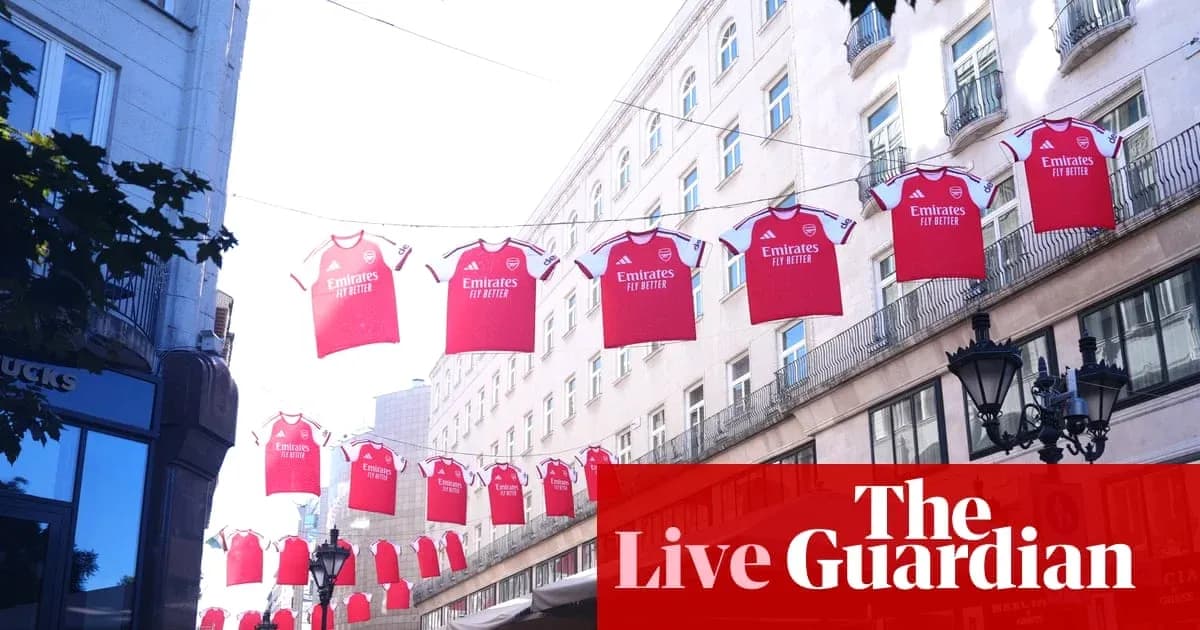
He is the man who once broke Manchester City hearts in a Champions League final, the cool finish in Porto that completed Chelsea’s ambush of Pep Guardiola’s Premier League juggernaut. Now he stands again on the brink of Europe’s biggest game, this time in Arsenal colours, staring down Paris Saint-Germain in Budapest.
Few give Arsenal much of a chance. PSG arrive loaded with talent and expectation; Arsenal are cast in a familiar role. Havertz hears the echoes.
“Havertz is looking ahead to Arsenal’s final against Paris Saint-Germain in Budapest on Saturday, when not many give them a chance of winning. It was the same when Chelsea, managed by Thomas Tuchel, took on a formidable City assembled by Pep Guardiola that had won the Premier League by 12 points. Chelsea had finished fourth, a further seven points adrift.
‘We were the underdogs on that day, for sure,’ Havertz says. ‘We hadn’t had the best season. But now it is completely different.’”
Different, but not simpler. Arsenal walk into Budapest carrying both that memory and the weight of a club desperate to convert promise into silverware.
Los Angeles: a World Cup under a shadow
The World Cup, less than a fortnight away, should be moving into pure football mode. Instead, one fixture in Los Angeles remains steeped in uncertainty and risk.
“Ever since the US and Israel attacked Iran on 28 February, there has been uncertainty surrounding this World Cup fixture in Los Angeles.
There were conflicting signals whether the Islamic Republic of Iran would allow the national football team to travel to the home of its attacker, and whether the US would welcome Team Melli. With kick-off now weeks away, it appears the game will go ahead as planned. Still, there is the possibility of protests by the large local Iranian population in ‘Tehrangeles’, many of whom fled the 1979 revolution, and acts of defiance by players. It’s more than a football story.”
That last line cuts to the heart of it. The match may proceed, the anthem may play, but every movement on and off the ball will sit inside a much larger narrative. For some players, the biggest decisions they make in Los Angeles might not involve the ball at all.
Arsenal’s tightrope against PSG
Back in Europe, the tactical microscope is fixed firmly on Budapest. If Arsenal are to upset PSG, the margins will be brutal.
Jonathan Wilson has already drawn on Agincourt to frame the battle. The numbers point to a clear pattern: PSG have scored more goals from non-penalty set plays than Arsenal in the Champions League this season – eight to five – yet corners and free-kicks may still represent Arsenal’s best route to a breakthrough.
The real danger lies elsewhere. PSG are devastating in transition. In Ligue 1, opponents tend to sit deep, wary of being ripped apart on the break. The evidence from their wins over Chelsea, Liverpool and Bayern Munich is stark: give them grass to attack and they shred you.
Arsenal’s full-backs, especially on the right, stand on a fault line. Ben White is out with a knee injury. Jurriën Timber is doubtful after a groin problem picked up against Everton in mid-March. That leaves whoever starts exposed to the raw pace and directness of Desiré Doué and Khvicha Kvaratskhelia – both rapid, both fearless dribblers, both happiest when running straight at a backpedalling defender.
Lose those duels and Arsenal’s structure collapses. Win them and the underdogs might just drag PSG into a slower, more uncomfortable game decided by set pieces and half-chances.
PSG’s calculated freshness
On the other side, PSG arrive with a squad that has been managed with this night in mind.
Luis Enrique has rotated relentlessly in Ligue 1, treating domestic fixtures as a resource to be spent in pursuit of European freshness. The numbers are striking. Ballon d’Or winner Dembélé has started only 11 of 34 league games. Neves, Mendes and Fabián Ruiz have 13 starts each. Kvaratskhelia has 18, Doué and Hakimi 16, and Marquinhos just 11.
They have not simply been impact substitutes either. Not one of those players has logged even half of PSG’s Ligue 1 minutes this season. The plan is obvious: keep the key men sharp, not merely fit, for nights like Budapest.
It is a gamble of sorts. Rhythm can be lost as well as fatigue avoided. But if PSG hit their stride early, Arsenal could find themselves chasing shadows against opponents who have been carefully kept just below boiling point for months.
All roads to Budapest
So the stage is set. Dublin’s protests, Los Angeles’s tensions, Volpato’s change of heart and Pulisic’s stalled ascent all feed into a wider picture of a sport that can never quite stay within its white lines.
On Saturday, though, it narrows to 90 minutes – perhaps 120 – in Budapest. Arsenal, patched up at full-back and carrying the underdog’s burden once more. PSG, expensively assembled and meticulously preserved for this very moment.
One club is fighting to turn a project into proof. The other is trying to show that all this planning, all this rotation, finally leads to the trophy they crave most.
Only one of them will step out of Hungary with their story strengthened.