.svg&w=384&q=75 "GoalGist logo")
FIFA Eases World Cup Bottle Ban Amid Fan Backlash
FIFA has rowed back on part of its controversial water bottle policy for the 2026 World Cup, allowing supporters to bring a single disposable bottle into stadiums in the USA and Canada after a wave of criticism over fan safety and costs.
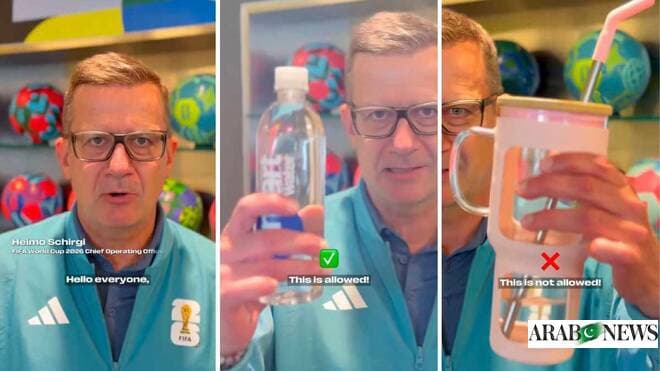
In a video message posted on FIFA’s X account, World Cup chief operating officer Heimo Schirgi confirmed that spectators will be able to carry in “one, soft, plastic 20 ounces (590ml), factory sealed disposable water bottle” to any match in the two host nations.
The governing body framed the move as a “clarification” rather than a U-turn, but the timing tells its own story. Just two days earlier, FIFA had updated its stadium code of conduct to ban all refillable bottles, a change that would have left fans entirely dependent on in-stadium purchases in what is expected to be a brutally hot tournament.
The reaction was swift. With forecasters warning of extreme heat at several open-air venues across the United States, Canada and Mexico, critics accused FIFA of ignoring basic health needs and pricing out ordinary supporters. The outcry forced the organization to re-open the conversation.
The safety argument, though, remains FIFA’s anchor point.
In a statement to AFP, officials stressed that outside bottles are already prohibited at several World Cup venues on security grounds and that the same standard is being applied “across its tournament stadiums” to “prevent risk and injury to players and attendees.”
Schirgi doubled down on that in his video, making it clear that while a soft disposable bottle will be allowed, “fans will not be permitted to bring in hard sided, reusable water bottles due to safety and security reasons,” as he displayed examples of what will and will not pass through the turnstiles.
So the compromise is narrow. One sealed, soft plastic bottle per person. No metal flasks, no rigid reusable containers, no large jugs.
The backdrop is a World Cup that could test the limits of player and fan endurance.
Research from the World Weather Attribution group last month estimated that 26 of the 104 matches are likely to be played in conditions where the Wet Bulb Global Temperature (WBGT) exceeds 26 degrees. WBGT blends temperature, humidity, wind and sunlight into a single measure of heat stress on the human body, and once it climbs past that threshold, the risk of heat-related illness rises sharply.
Supporters in the United States already had a taste of what that can mean. At last year’s FIFA Club World Cup, fans complained of searing temperatures while being barred from bringing in their own water, a combination that fuelled anger and anxiety ahead of 2026.
FIFA insists it has learned from that experience. The organization says “misting stations, fans, hydration stations and cooling tents” will be set up within the “stadium footprint” to help spectators cope with the conditions. Bottled water will be on sale inside the grounds at prices that, according to FIFA, “remain consistent with other events held at each stadium.”
That final detail will be watched closely. Allowing one disposable bottle at the gate eases some pressure, but with long matches, extra time, and travel fatigue all in play, many fans will need far more than 590ml to get through a day at the World Cup.
The policy now draws a tight line: limited personal provision, strict controls on materials, and heavy reliance on venue infrastructure. With the heat already a talking point months out, the next flashpoint may not be what fans can bring in, but what they can afford once they’re inside.