.svg&w=384&q=75 "GoalGist logo")
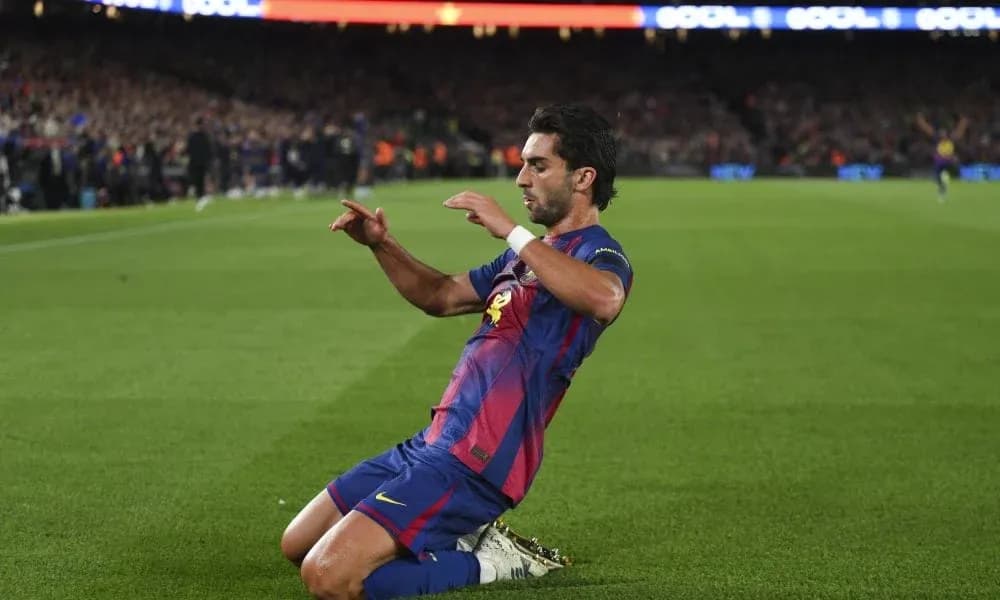
Ferran Torres Transfer: Barcelona's Strategic Move to PSG
When Barcelona moved for Ferran Torres in early 2022, they did so from a position of weakness rarely seen in the club’s modern history.
The institution was reeling. Years of financial chaos under previous regimes had finally detonated. Lionel Messi had walked away the previous summer. Cash was scarce across two, even three transfer windows in the aftermath of the pandemic. The club that once dictated the market was suddenly scrambling for room to breathe.
And in that chaos, Barça still found a way to strike a deal with Manchester City: around €55 million for a Spanish forward they believed could help launch a new era.
From symbol of a rebuild to a strategic sale
Fast forward. Four and a half seasons later, Ferran Torres is on his way out of Camp Nou, bound for Paris and a reunion with Luis Enrique at PSG.
Barcelona and PSG have reached an agreement in principle: €50 million, fixed fee, for a 26-year-old entering the final year of his contract. No variables. No add-ons. On the surface, a straightforward transfer. Underneath, a deal shaped heavily by the fine print of that original agreement with Manchester City.
According to Nil Sola and Santi Ovalle on Cadena SER, if Ferran’s sale had hit €55 million, Barcelona would have owed City an extra €10 million. That clause effectively turned the structure of the PSG move into a financial tightrope.
Push the fee up to or beyond €55m, and Barça trigger an additional obligation. Stay at €50m, with no bonuses, and they not only bank a sizeable sum but also dodge that extra payout. In pure numbers, an extra €5m from PSG could have opened the door to a €10m bill from Manchester. The maths is brutal. And simple.
So €50m, clean, begins to look smarter than a bigger headline figure.
Player on board, negotiations accelerated
The deal moved quickly once PSG made their intentions clear. The French champions informed Barcelona they already had an agreement on personal terms with Ferran. From that moment, the tempo changed.
The two clubs spent several days locked in talks, ironing out the details until they reached an initial understanding. Now, it’s down to paperwork. Documentation is expected to be exchanged as they push to finalise the transfer over the weekend.
For Barcelona’s sporting department, speed matters. Closing Ferran’s sale early in the window gives them clearer visibility on what they can do next, with major incoming operations still on the table. One door closes, and it immediately frames how wide they can open the next.
Ferran leaves at his peak Barcelona value
The timing of the move is not accidental. Ferran departs at what can fairly be called the high point of his Barcelona career.
Across his final two seasons, he scored 40 goals, finally delivering the end product that had often been demanded of him. On the international stage, he returned from Spain’s World Cup triumph as one of the tournament’s standout figures, having scored in the final and cemented his status as a big-game player.
That surge in form matters. It has allowed Barça to recover a substantial portion of their original outlay at a moment when his contract situation could easily have weakened their hand. Letting a player run down his deal is a luxury this Barcelona simply cannot afford.
So the €50m fee, seen in the full context of his contract length, his performances, and the Manchester City clause, looks more than respectable. It is not just about what they gain, but what they avoid losing.
If pushing for a slightly higher fee risks triggering a much larger payment to City, the logic is ruthless: take the €50m, keep the books cleaner, and move on.
End of an early-era pillar
Ferran Torres was one of the first signings of Barcelona’s attempted reset, a visible bet on youth and potential at a time when the club was desperately trying to redefine itself after Messi.
He leaves now with a catalogue of strong performances, 40 goals across his final two seasons, and a World Cup winner’s medal that changed how he is viewed across Europe.
For Barça, his departure is more than a line on a balance sheet. It is a reminder of how tight the margins still are, and how even key figures of the “new era” can become assets to be traded when the numbers demand it.
For Ferran, the story continues in Paris, under a coach who knows exactly what he can offer. For Barcelona, the question is sharper: with one of their early rebuild pillars cashed in, how quickly can they turn this €50 million into a squad that finally looks like a finished product rather than a work in permanent transition?