.svg&w=384&q=75 "GoalGist logo")
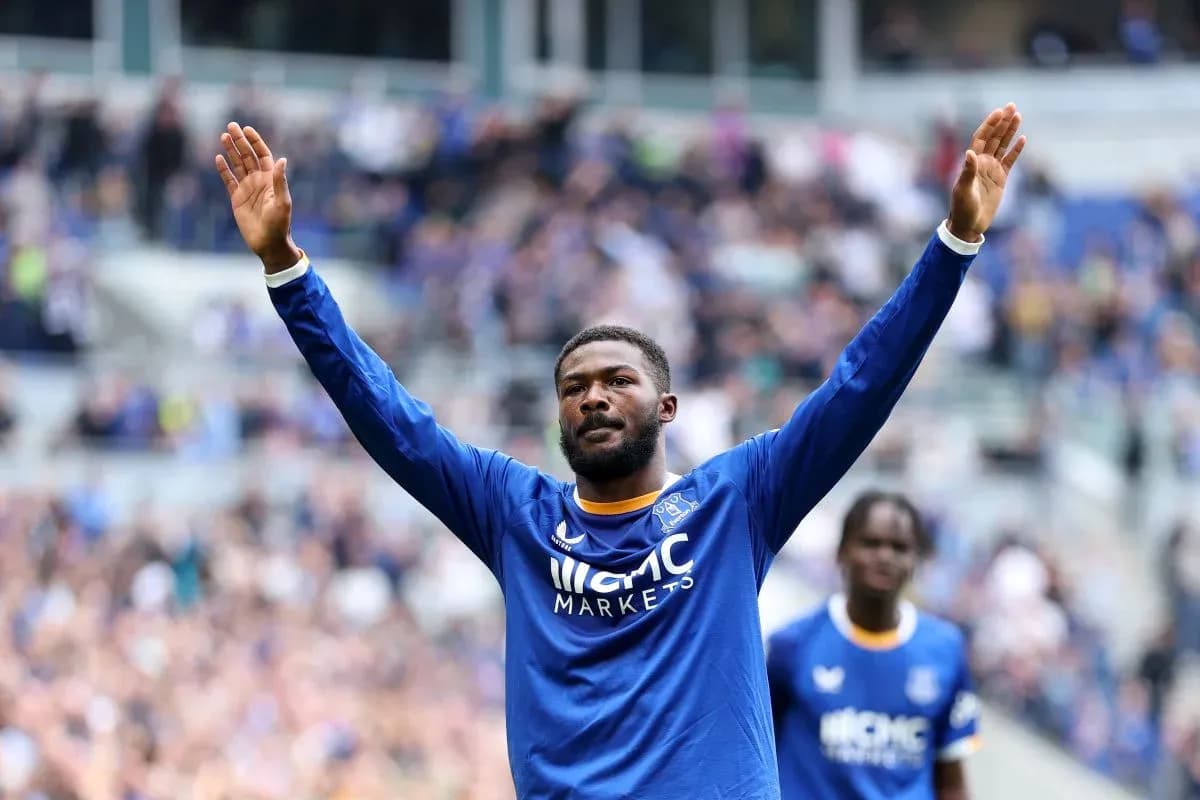
Everton vs Manchester United: Tactical Analysis of Two 4-2-3-1 Systems
The Hill Dickinson Stadium had barely settled after a breathless 2-2 draw when the numbers began to sketch a clearer picture of who these two sides are becoming. Following this result, Everton sit 8th with 5 points and a goal difference of 2 (5 scored, 3 conceded) from 3 matches, while Manchester United are 11th with 4 points and a goal difference of 1 (7 scored, 6 conceded). Both are unbeaten in their own ways: Everton without a loss, United without a dull game.
This was a meeting of two teams already leaning into clear seasonal identities. Everton, under Leighton Baines, are building a compact, structured 4-2-3-1 that has given them stability: overall they have 1 win and 2 draws from 3 fixtures, with 5 goals for and only 3 against. At home they have been particularly solid, with 4 goals scored and 2 conceded across 2 matches, averaging 2.0 goals for and 1.0 against at Hill Dickinson Stadium. Manchester United, by contrast, are chaotic but dangerous: overall they have 1 win, 1 draw, 1 defeat, with 7 goals for and 6 against, averaging 2.3 goals scored and 2.0 conceded per match.
I. The Big Picture – Two 4-2-3-1s, two different moods
Both managers set up in a mirrored 4-2-3-1, but the personalities of the systems could not be more different.
Everton’s shape is pragmatic. Jordan Pickford anchors a back four of M. Rohl, J. Tarkowski, J. Branthwaite and V. Mykolenko, a line that has conceded only 3 goals in total this campaign. The double pivot of H. Armstrong and J. Garner is built to screen and circulate, allowing a fluid trio of B. Johnson, K. Dewsbury-Hall and T. George to work pockets behind lone forward T. Barry. The numbers back the balance: overall Everton average 1.7 goals scored and 1.0 conceded per match, with 1 clean sheet and, crucially, no fixture yet where they have failed to score.
United’s 4-2-3-1 is tilted aggressively forward. S. Lammens starts in goal behind a back four of D. Dalot, H. Maguire, L. Martinez and L. Shaw. The double pivot of K. Mainoo and Y. Tielemans is technical but not naturally destructive, which helps explain why United have conceded 6 goals in total, including 4 on their travels, with an away average of 2.0 goals conceded. Ahead of them, B. Mbeumo and M. Rashford flank Bruno Fernandes, with M. Cunha leading the line. This attacking unit is prolific: United’s home average is 5.0 goals scored, and even away they manage 1.0 per match.
II. Tactical Voids – Absences and discipline
Both sides had to negotiate notable absences. Everton were without C. Norgaard, missing through injury. In a system that leans heavily on control in central zones, his absence increases the burden on Armstrong and Garner to both break play and launch transitions.
Manchester United’s list is longer and more structural: C. Baleba (ankle injury), A. Diallo, T. Heaton, M. Ugarte (knee injury) and M. de Ligt all missed out. The absence of Ugarte and de Ligt is particularly telling: United lack a natural destroyer in front of the defence and a dominant organiser at centre-back. That fragility is reflected in the numbers: overall they have no clean sheets, and they have already failed to score once away from home, which hints at volatility rather than control.
Disciplinary trends also shape the tactical picture. Everton’s yellows are spread almost evenly across the match, with 20.00% of their cautions in each of the 0–15, 31–45, 46–60, 61–75 and 91–105 minute windows. This suggests a team that fouls to manage phases rather than panicking late. Manchester United’s pattern is more combustible: 40.00% of their yellow cards arrive between 76–90 minutes, with further spikes at 31–45 (20.00%), 61–75 (20.00%) and 91–105 (20.00%). They become increasingly stretched and reactive as matches wear on.
Individually, B. Johnson and P. Dorgu both sit on 1 yellow card this season. Johnson, who has committed 4 fouls in 3 appearances, brings edge to Everton’s press from the right. Dorgu, also on 1 yellow and 4 fouls committed, is a high-contact option for United from the bench, and his introduction typically raises the intensity but also the risk profile.
III. Key Matchups – Hunter vs Shield, and the engine room
The headline duel is Bruno Fernandes against Everton’s central shield. Bruno is among the league’s most influential players so far: 3 goals and 1 assist in 3 appearances, with 9 shots (4 on target), 203 passes at 84% accuracy, and 8 key passes. He has also scored 1 penalty from 1 taken this season, a 100.00% record from the spot. Everton, who have conceded only 3 goals in total and kept 1 clean sheet, will rely heavily on Armstrong and Garner to compress his space between the lines and deny him time to thread passes into Cunha and the wide runners.
The flanks provide a secondary battleground. B. Mbeumo, with 2 goals, 5 key passes and 7 shots (4 on target), attacks from the right into V. Mykolenko’s corridor. Mykolenko’s positioning and the covering work of T. George will be critical to prevent United overloading that side. On the opposite flank, M. Rashford’s inside runs test M. Rohl and J. Tarkowski’s ability to defend the half-space without exposing the channel for overlapping full-backs.
For Everton, the creative responsibility is more distributed. K. Dewsbury-Hall’s role as the central playmaker in the 4-2-3-1 is to connect with T. Barry and the wide pair. Off the bench, H. Hackney looms as a quiet but significant influence: 1 assist already this season, 3 key passes and 75 completed passes at 89% accuracy in just 122 minutes. His introduction typically raises Everton’s passing tempo and gives them a calmer outlet when protecting or chasing a result.
At the back, the duel between J. Branthwaite and M. Cunha shapes United’s ability to turn possession into shots. Everton’s defensive record – 1.0 goal conceded on average both at home and away – suggests their centre-backs are winning the majority of first contacts. Cunha will look to drag them wide, creating lanes for Bruno’s late arrivals and Mbeumo’s diagonal runs.
IV. Statistical Prognosis – Attack vs structure
Overall, the numbers frame this as a clash between United’s attacking ceiling and Everton’s structural reliability. United’s 7 goals from 3 matches and 2.3 goals-per-game average indicate they will create and convert chances, especially with Bruno in current form. But their defensive record – 6 conceded overall, 4 away – and the complete absence of clean sheets leave them vulnerable to any side that can sustain pressure.
Everton, by contrast, are quietly efficient. They score in every match, have never failed to find the net this season, and at home average 2.0 goals scored. Their goal difference of 2 from 3 fixtures underscores a side that manages risk well and rarely loses control for long spells.
Overlaying these profiles, the tactical forecast leans towards another open contest rather than a cagey stalemate. United’s late-game disciplinary spikes suggest that if Everton can keep the match level into the final quarter-hour, they are well placed to exploit tired legs and rushed challenges. Meanwhile, United’s individual quality in the final third, especially through Bruno Fernandes and B. Mbeumo, ensures that even against a well-drilled Everton block, they will carry constant threat.
In pure statistical terms, United’s higher scoring rate is offset by Everton’s superior defensive solidity and home comfort. The equilibrium we saw in the 2-2 scoreline feels less like an accident and more like an accurate reflection of where these squads stand: one side searching for control in the chaos, the other quietly mastering the art of balance.