.svg&w=384&q=75 "GoalGist logo")
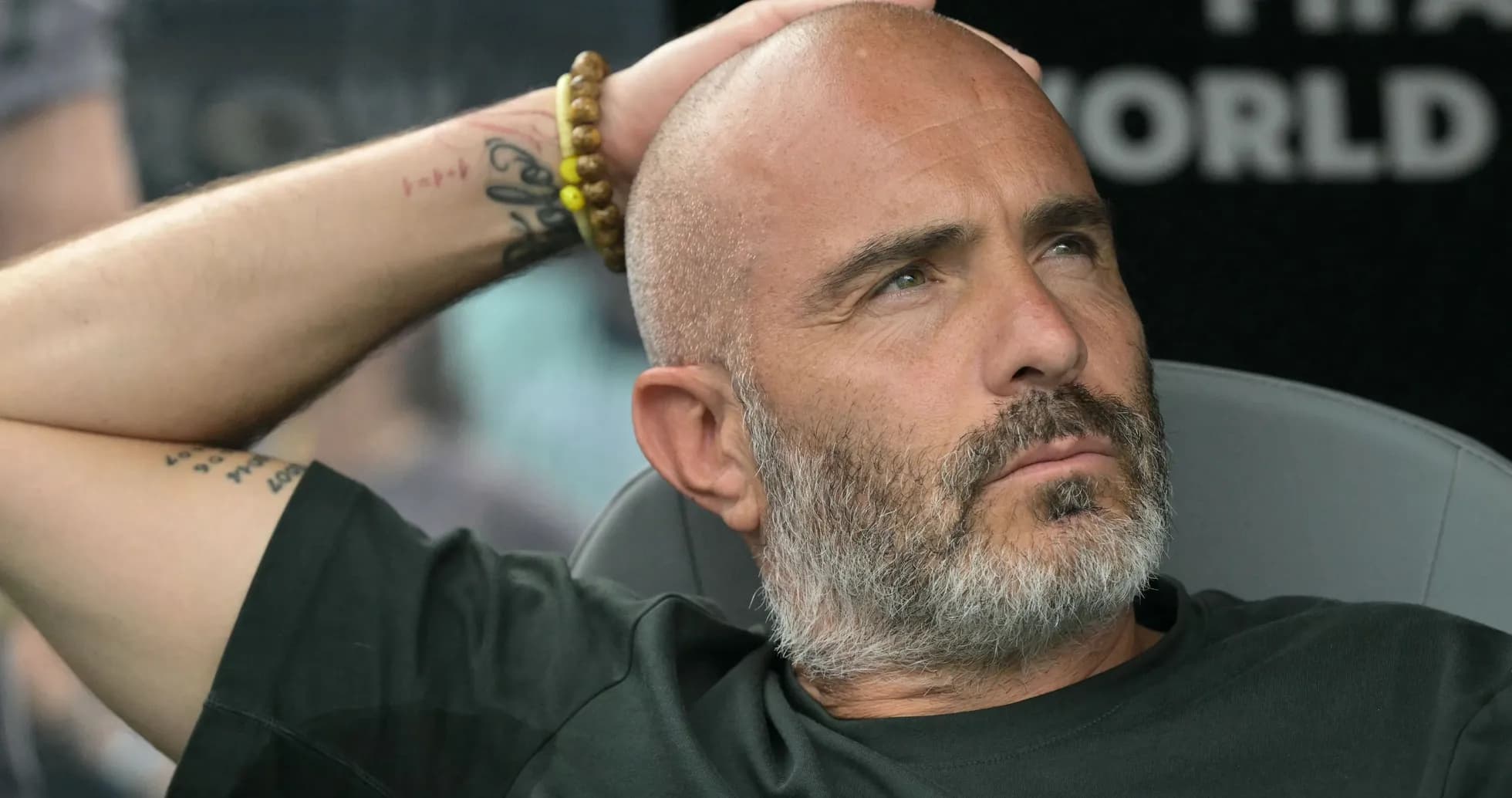
Enzo Maresca Returns to Manchester City: A New Era Begins
Enzo Maresca sat down, took a breath, and before a word about tactics or transfers, went somewhere else entirely.
“Before we begin, I would like to send a message and a warm embrace to Kevin Keegan's family at this moment.”
The room fell quiet. Only then did the new Manchester City head coach begin to talk about himself, about coming back, about the size of the task he has just accepted.
“I feel as though I have returned home,” he said. “My feeling has been wonderful from day one. I am very happy to be here.”
For Maresca, this is not a fresh start in a strange place. It is a return to a club he already knows from the inside, a club whose corridors and conversations shaped his ideas long before this unveiling.
A familiar face for a ruthless machine
This is Maresca’s third spell at City. He has coached the elite development squad, he has worked on Pep Guardiola’s staff, and now he walks back through the door as the man asked to extend an era that has redefined English football.
He arrives with his own medals. Leicester City’s Championship title in 2023–24. A UEFA Conference League and a FIFA Club World Cup with Chelsea in 2024 and 2025. His reputation has grown quickly, and City have moved decisively.
The Italian made it clear why the call from Manchester was impossible to ignore.
“I know the institution well, and I have known the people inside the club for years,” he said. “The club's stability, and the fact that only three coaches have succeeded one another over almost twenty years, reflects the strength of the administrative structure and its belief in giving projects time. From the moment Manchester City contacted me, I had no doubt about accepting this challenge.”
That stability is not a throwaway line. Maresca kept returning to it, almost as if he was reassuring himself as much as anyone else.
“The institution is the most important factor,” he stressed. “This club has had only three coaches succeed one another over around 17 years, and that is extremely rare. That gives me confidence in our ability to continue the journey that began with Roberto Mancini, then Manuel Pellegrini, and finally Pep Guardiola.”
Living in Guardiola’s shadow
Succeeding Guardiola is not a job. It is an examination of character.
Maresca did not try to downplay it.
“First of all, it is a great privilege that this club has chosen me,” he said. “I have said more than once that Pep is perhaps the best coach in the world over the past twenty or twenty-five years. At the same time, it represents a wonderful challenge.”
He reached for the only real reference points available.
“If we look at the history of coaches who stayed for many years at their clubs, such as Sir Alex Ferguson and Arsène Wenger, we will find that they faced great challenges. My goal now is to do the right things from the very beginning for the sake of the club and the fans.”
There was no grand promise to reinvent City. No talk of ripping up blueprints. Instead, a coach trying to walk the line between continuity and identity.
He knows he was hired, in part, because his football already looks familiar to the Etihad.
“I had a clear identity at Leicester and Chelsea, and perhaps that was one of the reasons Manchester City signed me, because some of the ideas are similar to what the previous coach used to deliver,” he said. “We always try to press hard when we lose the ball, to control the match, and to impose our style, while striving to achieve the most important thing in football, which is winning matches.”
Transfers, tweaks and a restless market
Maresca did not pretend City’s squad is complete. The champions rarely stand still, and he has no intention of being the first coach to try it.
“I think there is always something that can be done, because we are aiming to achieve certain objectives, but it also depends on the dynamics of the transfer market,” he explained. “There may be some things that need to be completed, and we are already working on them.”
The window will shape his first months. So will the health and future of his stars.
Rodri’s name came up quickly, as it always does when Europe’s elite circle around a midfield cornerstone. Exit rumours have swirled, but Maresca brushed them aside.
“Big players are always surrounded by rumours, and this is natural, especially after he won the World Cup and delivered wonderful performances,” he said. “Any coach in the world would want to sign Rodri, but he will undergo surgery on Monday, and he needs rest and recovery, after which he will return to us.”
One line mattered more than any speculation: “after which he will return to us.”
On Chelsea, and the statement the London club released after his departure, Maresca refused to bite.
“I feel fortunate that I worked at Leicester and Chelsea, and we achieved successes and a clear identity at both clubs, and I am grateful for those two experiences,” he said. “But my focus now is entirely on Manchester City, and there is nothing I have to add.”
The door behind him is closed. The one in front is wide open.
Grealish, Trafford and the edge of uncertainty
Jack Grealish sits at the intersection of talent, expectation and market noise. Maresca was asked where the England international fits.
“Jack is here, and he is a Manchester City player,” he replied. “My position is always clear: as long as the player belongs to the club, it is my duty to work with him. I have a good relationship with him, because he has a big heart and a wonderful personality, and we will see what happens later.”
That last phrase will follow Grealish through the summer. For now, he stays in the plans. For now, Maresca works with what he has.
The same goes for James Trafford, a goalkeeper the Italian knows from City’s youth ranks.
“I know James well, as he was my goalkeeper when I was coaching the under-23 team,” Maresca said. “But the transfer window is open, anything is possible, and we will see what happens, but at present he is one of our goalkeepers.”
Certainty is rare in July. The new head coach is not pretending otherwise.
Building with kids, waiting for the cavalry
Maresca will not see his full squad until the curtain is almost up.
“The last group of players will join three or four days before the Community Shield match, and after that the entire team will be present,” he said.
Until then, his sessions are powered by youth.
“Until that time, I am working with a large number of young players, and they have great energy, and some of them are delivering very impressive levels, and I am happy with what I am seeing.”
It is a familiar path for him. City’s academy is a world he understands instinctively, and it gives him a testing ground to lay down principles before the senior internationals return.
Those principles will have to evolve. Maresca is under no illusion about how quickly football moves.
“Everything changes over time, and you have to adapt to that,” he said. “There is development in playing styles, such as set pieces and man-to-man defending, and it is our duty as coaches to find the appropriate solutions.”
Long balls, Donnarumma and Haaland: another City weapon?
One question cut straight to the tactical intrigue. With Gianluigi Donnarumma behind and Erling Haaland ahead, could City lean more on the long ball?
Maresca did not dismiss the idea.
“That could be one of the solutions,” he admitted. “Sometimes you need to play short, and other times you need long balls, depending on what the opponent imposes. Having a goalkeeper like Donnarumma and a striker like Haaland gives us a great advantage, but this will not be the only solution, as we must find varied solutions that suit different matches.”
There it was: a glimpse of a slightly different City. A team still obsessed with control, still committed to pressing and possession, but not afraid to go over the top when the picture demands it.
The Guardiola era was built on a ruthless consistency of idea. Maresca’s challenge is to protect that core while adding his own edges, his own answers to new questions.
He has called this a return home. Very soon, the Etihad will decide whether it feels that way for them too.

