.svg&w=384&q=75 "GoalGist logo")
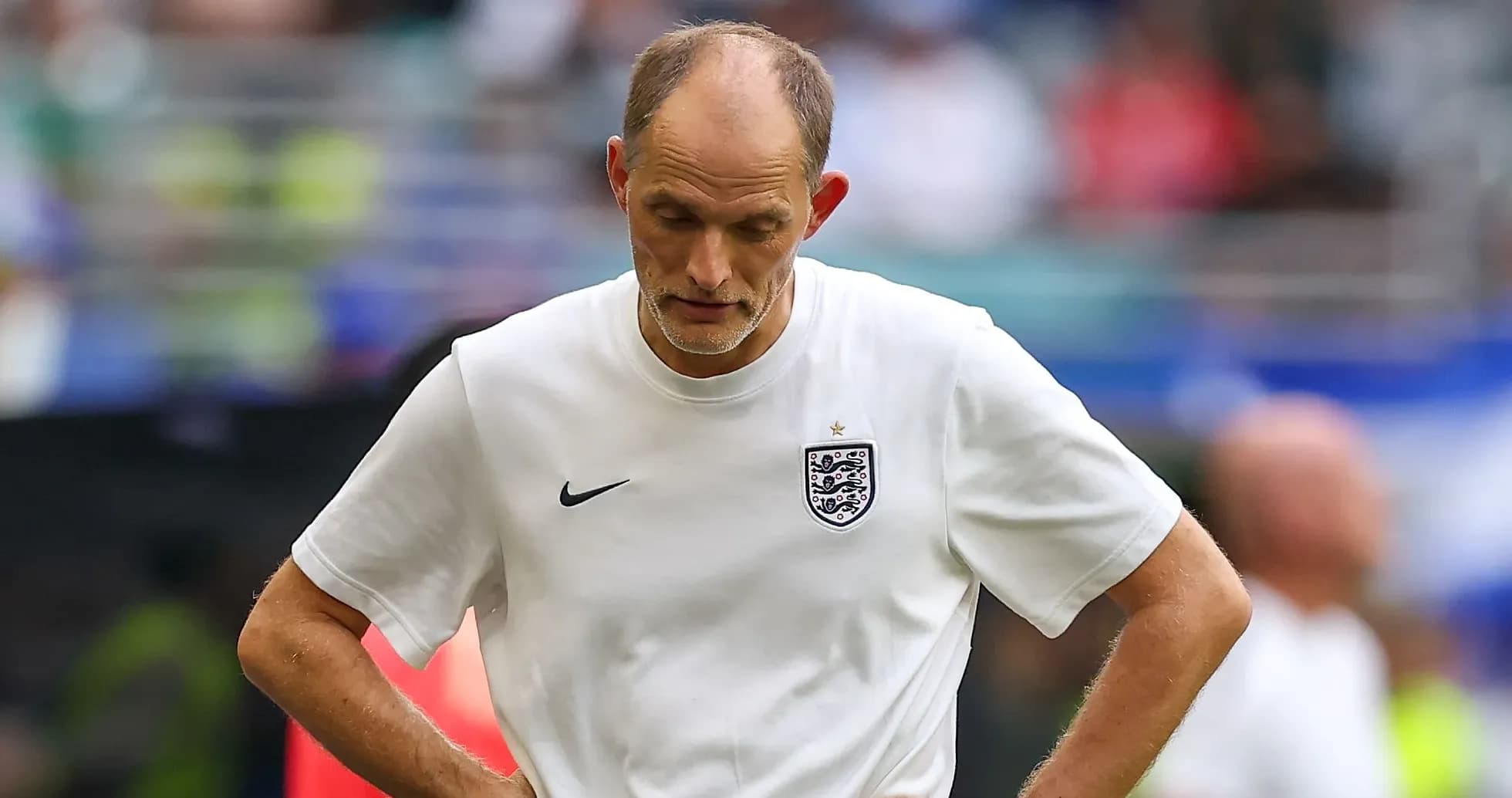
England's World Cup Regret: Tuchel Reflects on Tactical Blunders
Anthony Gordon’s strike had England dreaming. For a while, it felt real. The Three Lions were ahead, Argentina were rocking, and a World Cup final seemed close enough to touch.
Then it all fell apart.
A late Argentine surge ripped through England’s composure and turned a controlled performance into a collapse. In the immediate aftermath, the England manager pointed the finger at something deep-rooted, blaming the defeat on a national flaw: an inability to keep the ball when it mattered most.
Now he says he was wrong.
Tuchel’s tactical regret
Speaking on the FA’s Reflections: England's World Cup Journey documentary, Thomas Tuchel admitted the turning point was not some ingrained English weakness, but a tactical decision he made on the touchline.
Feeling his players were drained by a brutal schedule that had dragged them across time zones and altitudes — Congo, Miami, Norway, then Mexico’s thin air — Tuchel reacted to the tension, not the clock. He saw tired legs, nervous faces, and chose safety.
It backfired.
"We conceded a chance just before the water break. I thought we will not survive. This is death," he said. "I thought: ‘OK, let’s change to a back five, a 5-4-1.’ It was too early for that mindset. We were super tired."
That retreat invited Argentina on. With England sinking deeper, the South Americans seized control, pushed the tempo, and turned the game into the kind of frantic contest they relish. The initiative was gone, and with it, England’s grip on the semi-final.
A scar that still burns
Time has not dulled it for Tuchel. The game lives with him.
On the documentary, he revealed he still cannot sit through the full 90 minutes. Only recently did he force himself to watch short clips with his staff at St George’s Park.
"Agony of epic proportions. I watched the clips with my coaches just last week when we were at SGP," Tuchel said. "My mind always works forward, forward. Painful. I see it now for the first time from the commentators’ point of view. It’s my scar, the players’ scar, I have to live with it. No-one is hurt more than me. It is torture."
The word “scar” hangs over everything he says. This wasn’t just a defeat; it was a defining wound.
The tackle that changed everything
Tuchel insists England were in the game. The first half, in his eyes, was balanced, disciplined, promising.
"We prepared so well. I think we did quite well in the first half, it was quite an even match and I felt we were there," he explained.
Then came the second half, and one moment he cannot shake: the tackle from Djed Spence.
From the outside, it looked like just another full-blooded challenge in a World Cup semi-final. For Tuchel, it was something else. A psychological jolt.
"From the start of the second half, I saw a change. The famous tackle of Djed Spence. And it did something to me, it did something to the players and it was a shift in the mindset. We played like we had four minutes left but there was half an hour left."
England stopped playing the game in front of them and started playing the clock. They rushed, panicked, and clung on instead of building attacks. That mental shift, Tuchel believes, opened the door for Argentina.
Argentina take control
England leaned on spirit, on togetherness, on big players finding big moments. It had carried them through much of the tournament. This time, it wasn’t enough.
"We relied on our brotherhood, our mentality. Individual quality," Tuchel said. "Argentina have that as well - brotherhood, mentality, they bring it all to the table and it means the world to them. Argentina played very, very quickly. They had nothing to lose."
With England sitting back in a 5-4-1, Argentina sensed fear and accelerated. Every second ball, every loose touch, felt like it belonged to the men in blue and white. The comeback, once it started, felt relentless.
The gamble to protect the lead had turned into a surrender of territory and tempo. Argentina punished it.
Pride, pain and a promise
The story did not end with that defeat. England regathered themselves, beat France to take third place, and left the tournament with a medal — not the one they wanted, but not empty-handed either.
Tuchel, though, keeps circling back to the lesson.
"You learn as a coach. You have to play as if it is 0-0. That includes me as well," he said. "I have a lot of people who want to see my medal. We did not achieve what we wanted. But I am still very proud of what we achieved. These players will come back hungry."
The scar remains. So does the regret over that early switch to a back five. But so, too, does the conviction that this group is not finished.
The question now is simple: when the next defining moment comes, will England hold their nerve — and keep playing, not just surviving?